
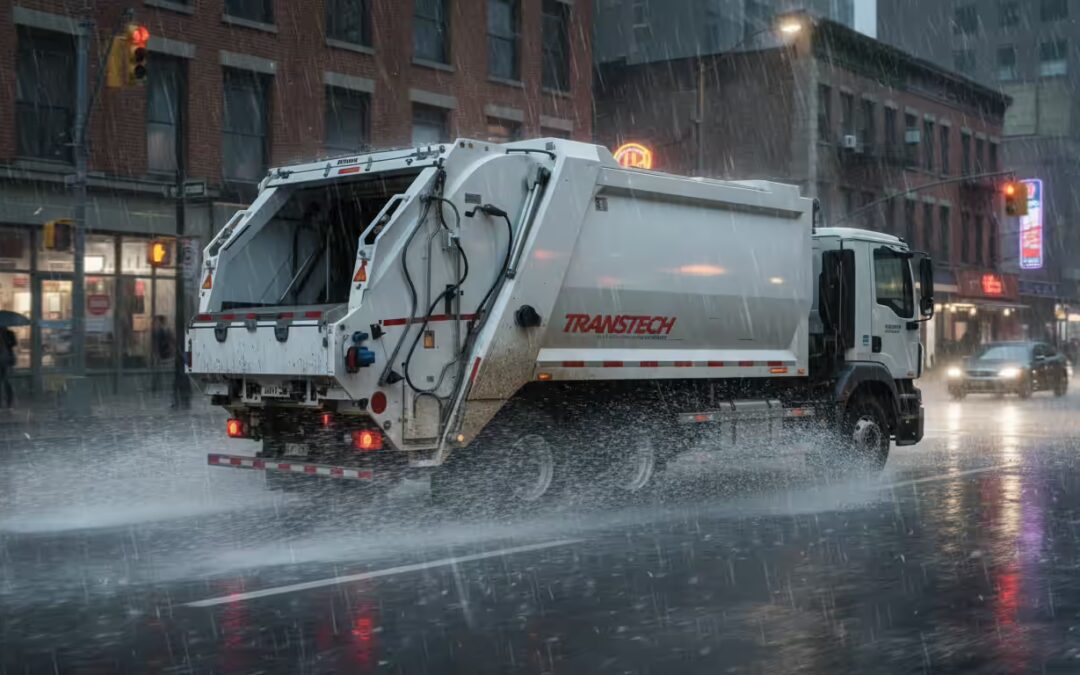
Dustbin trucks—known as rubbish lorries in the UK and trash trucks in the United States – are the backbone of daily waste removal. These specialised vehicles collect solid waste and move it to landfills, recycling centres or transfer stations.
Modern garbage truck platforms already carry cameras, telematics and compaction systems. Adding AI builds on that hardware to cut missed collections, reduce spillage and improve routing for faster, cleaner service.
Key automation themes include on‑board vision for materials sorting, smarter route planning for fewer miles, and intelligent compaction to handle varying content. These features help operations lower the amount of waste sent to landfill.
This guide is practical: fleet managers will find advice on choosing a truck platform, integrating software and guiding crews while keeping safety central. Dependable vehicles and trained staff remain essential as neighbourhoods differ in volume and composition.
Read on for history, how AI augments the vehicle, an implementation playbook, platform choices, safety measures and metrics to track success.
From early compactors to automated side loaders: why AI is the next leap
From steam carts to hydraulic packers, the evolution of collection vehicles readies them for intelligent control.
The technical story begins in 1897 when Chiswick ordered steam dust‑carts and runs through key years such as 1929 and 1938. The hopper of 1929 and George Dempster’s 1937 Dumpster moved lifting from muscle to mechanism.
In 1938 the Garwood Load Packer added a hydraulic compactor, doubling payload and cutting trips. The Dempster Dumpmaster front loader arrived in 1955 and front loaders grew common for commercial dumpster rounds.
Milestones that shaped collection vehicles
By the 1970s, wheelie bins and mechanically emptied containers became widespread. Then, in 1969 Scottsdale introduced the first automated side loader, letting crews service large containers fast without leaving the cab.
Terminology across markets
Names differ by region: in the UK you’ll hear ‘dustbin’ or ‘bin lorry, while in the US people say garbage truck or trash truck. Elsewhere the term refuse trucks’ or ‘dustcarts’ are used. These distinctions map to specific loaders—front loaders for dumpsters, rear packers for bags, and side loaders for automated residential rounds.
- Why it matters: standardised cycles and robust mechanical platforms make waste handling ideal for AI upgrades.
How AI augments modern collection: vision, routing, and intelligent compaction
Algorithms fuse vision, telematics and compaction controls so each stop becomes faster and cleaner.
On‑board cameras and computer vision help the loader identify bins, check lid position and spot contamination such as mixed materials or bagged garbage in recycling. Vision models can confirm a successful tip and flag spills in real time. This reduces re‑visits and gives crews clear, actionable prompts at the kerb.
Telematics and dynamic route optimisation
Telematics feeds vehicle load, traffic and time‑window data into a route optimisation system. The result is balanced rounds that respect payload limits for solid waste and limit delays on mixed recycling days. Dynamic re‑routing cuts idle time and keeps collection punctual.
Smart hydraulics and pack‑on‑the‑go compaction
AI tunes compactor cycles and pressure using pack‑on‑the‑go hydraulics. The system right‑sizes compaction for each load type, saving fuel and reducing wear on the compactor. When integrated with a front loader or side loader arm, the truck computer coordinates lift, tip verification and compaction for smoother stops.
- Safety first: predictive models spot pedestrians or obstructions and alert the operator before hazardous moves.
- Operational insights: material classification and secure video annotations drive better training and diversion decisions.
Implementing AI in dustbin trucks — a step‑by‑step playbook
First, quantify the waste mix on representative rounds so technology choices match real operational needs.
Assess your waste streams. Conduct a materials audit that separates municipal solid waste, recyclables and bulky items. Set measurable goals such as reduced contamination and fewer overflow items.
Audit the fleet. Review rear loaders, front loaders and manual or automated side loaders to see which platforms support cameras, sensors and bin tippers.
Select hardware and products. Specify robust cameras, proximity sensors, GPS/IMU and bin tippers. For dual streams consider split‑body systems or automated arms that match your container set.
Integrate software and systems. Link routing, contamination alerts, preventative maintenance and safety into one back‑office dashboard so each truck shares materials and performance data.
Pilot, measure, scale
- Design a controlled pilot on one representative route and set baselines.
- Track capture rate, contamination flags, stop time variance and driver workload across participating trucks.
- Train operators with simple in‑cab prompts and clear overrides for unusual bins or bulky items.
- Standardise configurations by depot and scale iteratively, aligning KPIs across the fleet.
Choosing the right platforms: rear, front, and side loaders for automation
Platform choice drives lift ergonomics, route rhythm and the success of vision and compaction systems.
Automated side loaders (ASLs) need only one operator and speed rounds on dense, kerbside streets. They pair well with standard wheeled bins and reduce repetitive lifting injuries.
Manual side loaders (MSLs) give crews access from both sides and may use semi‑automatic lifts. They work where narrow access or varied container positions demand human judgement.
ASLs vs MSLs vs M/ASLs: matching streets, bins, and lifting to your routes
Compare arm reach, lifter type and bin compatibility to match street geometry. A mixed ASL/MSL fleet can balance efficiency and flexibility.
- Front loaders suit commercial routes with uniform dumpsters; vision systems check alignment before the fork lifts a container into the hopper.
- Rear platforms excel on bag‑heavy or bulky routes where crew flexibility and manual sorting help reduce spillage.
- Specify PTO and hydraulic settings so arm motion and compaction stay smooth, avoiding stalls or bounce during lifts.
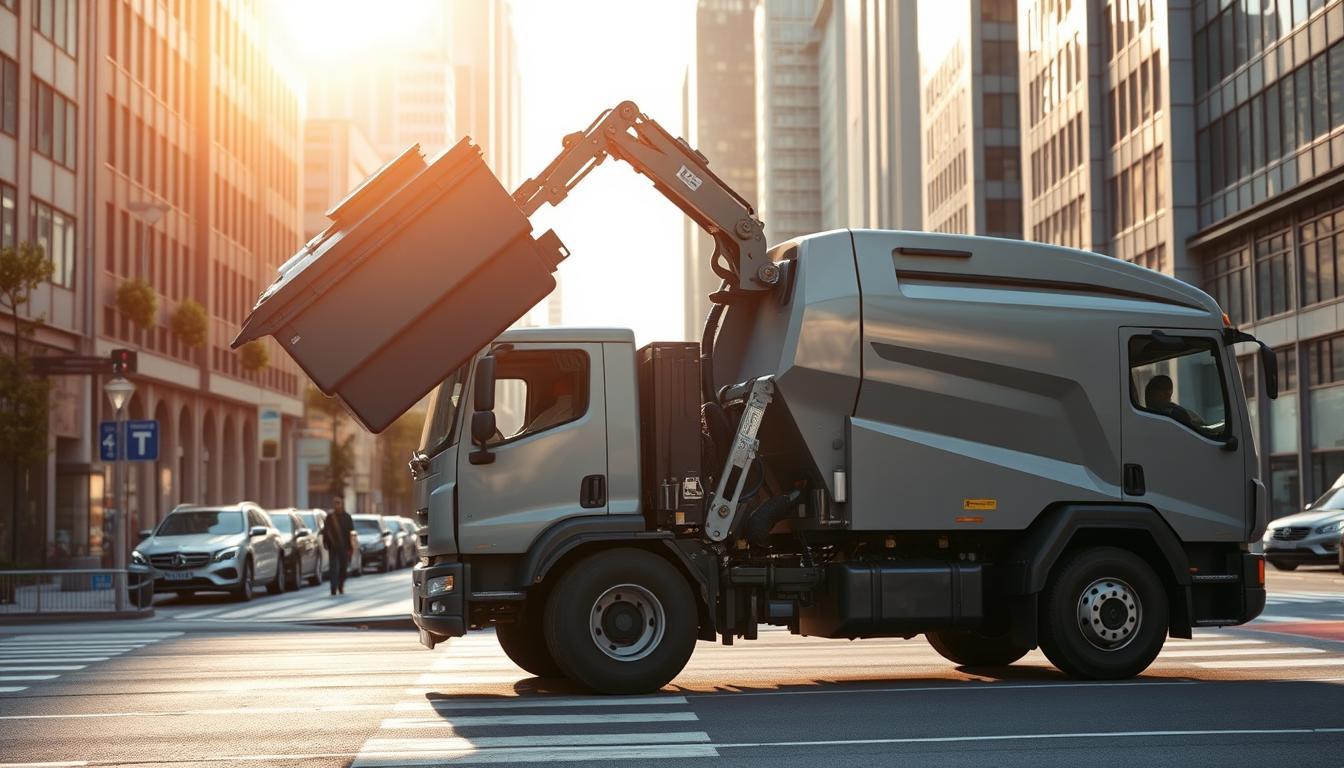
Split body configurations for dual‑stream recycling and contamination control
Split‑body trucks carry separate compartments so general waste and recycling do not mix. A gate directs the tip from a side loader into the chosen compartment.
| Platform | Best fit | Key benefit | Considerations |
|---|---|---|---|
| ASL | Dense residential rounds | Single‑operator speed | Arm geometry vs parked cars |
| MSL / M/ASL | Irregular placements | Access from both sides | Lower automation; higher crew need |
| Front loader | Commercial dumpsters | High payload; driven compaction | Requires uniform container wheelbase |
| Rear loader | Bag‑heavy or bulky routes | Flexible handling | Manual lifts remain common |
Match platform, container and route density so operators spend less time repositioning and more time completing safe, predictable lifts. This alignment improves stop times, preserves compactor life and reduces wasted fuel on each truck.
Safety, health, and compliance built in
Well‑designed safety systems protect crews, road users and property while keeping rounds efficient.
Vehicle safeguards should include full camera coverage, reversing sensors, backup alarms and reflective markings. AI improves these tools by detecting pedestrians, hazards and unsafe reverses and sending timely in‑cab prompts.
Protecting crews from lifting risks
Heavy manual lifting links to musculoskeletal disorders. Fit bin tippers and automated assists so crews avoid repeated strain on the back and shoulders.
Training remains essential. Use in‑cab prompts and refresher drills that teach safe lifting, how to handle metal pieces, and when to override automation.
Practical safety playbook
- Pre‑trip checks: lights, camera lenses and reversing sensors.
- Stopping protocol: park for visibility, set alarms and use cones where needed.
- Incident reporting: link video clips to reports so supervisors can coach with evidence.
- Alert tuning: configure notifications so only actionable warnings reach the operator to reduce fatigue.
| Area | Recommended feature | Benefit |
|---|---|---|
| Visibility | 360° cameras + reflective tape | Reduces blind spots and improves pedestrian detection |
| Audible warnings | Backup alarms + selective alerting | Warns bystanders while minimising operator fatigue |
| Lifting safety | Bin tippers + in‑cab guidance | Limits manual lifts and lowers injury risk |
| Compliance | PPE policy, load limits, lighting checks | Meets regulations and supports insurance requirements |
Final note: blend policy, training and AI nudges so your collection teams stay safe and your fleet remains compliant while handling waste efficiently.
Proving the value: routes, emissions, and recycling performance
Measure what matters. Start with a compact KPI set so you can show clear gains from automation and cameras.
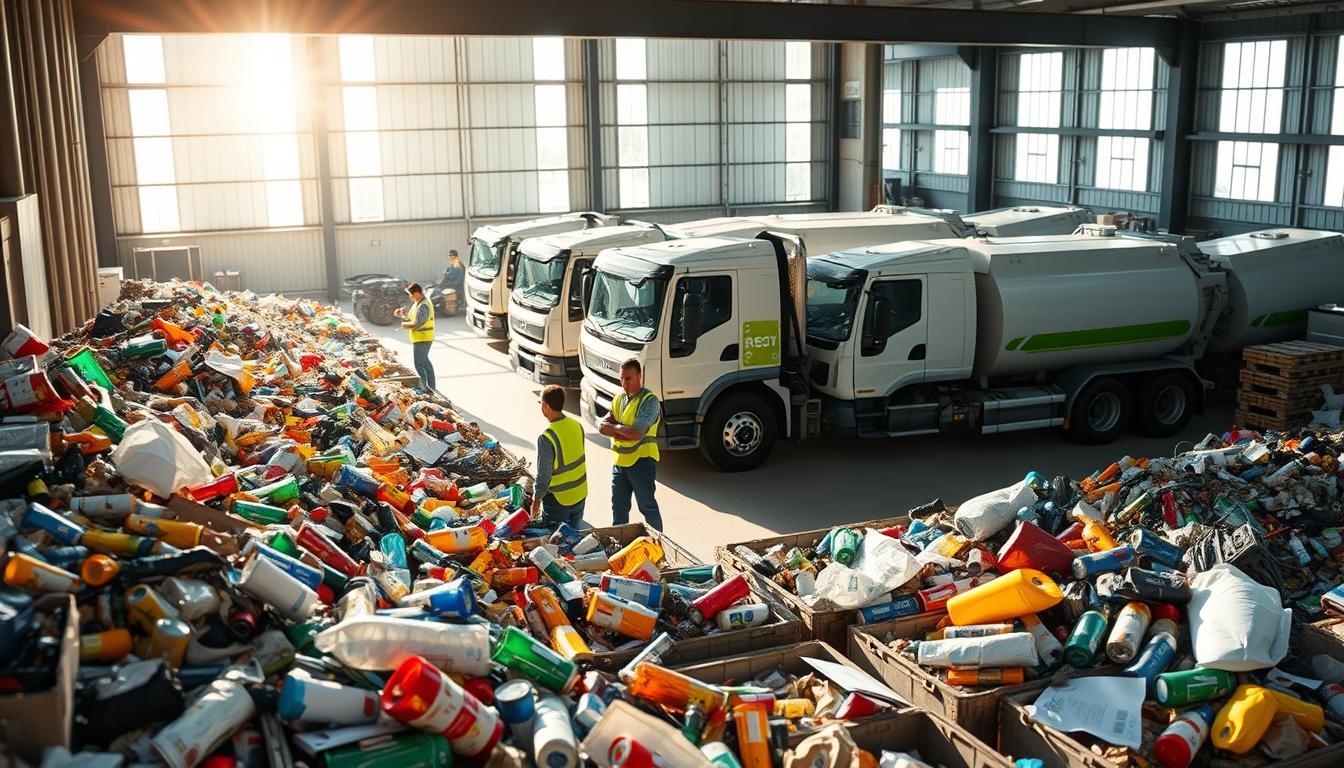
Route KPIs should include stop time, distance per lift and compaction cycles. These reveal how packing while driving and route balancing reduce idle time and duplicate passes.
Environmental and cost metrics track fuel per tonne, emissions and maintenance intervals. Better packing and split‑body collection cut dead‑runs and lower fuel use per collection, improving the business case.
Recycling performance is best shown via contamination rate, recyclable materials capture and garbage recycling diversion. Use camera‑derived content signals to target education and reduce contamination.
- Safety KPIs: near‑misses, camera‑assisted reverses, and manual lift counts.
- Cost KPIs: tyre wear, loader service hours and parts spend.
- Material gains: metal separation rate and bulky item passes saved.
| KPI | What it shows | Target |
|---|---|---|
| Average stop time | Efficiency per lift and dwell reduction | Decrease by 10–20% |
| Fuel per tonne | Operational carbon and cost intensity | Reduce 8–15% with better packing |
| Contamination rate | Quality of recycling and need for outreach | Under 5% for curbside streams |
| Compaction cycles per route | Compactor wear and cycle optimisation | Optimise to lower cycles without over‑compacting |
Scorecard approach: consolidate these KPIs into a simple weekly dashboard for leadership and community reporting. Clear, actionable metrics help justify further investment in automation and waste management improvements.
Bringing it all together for smarter waste management
By merging classic hopper and arm designs with vision and routing algorithms, operators get more predictable, higher‑quality service. Modern dustbin trucks pair proven mechanics—arm lifts, hoppers and a calibrated compactor—with AI to cut stops, spills and miles.
Start with a clear action plan: pick robust products, configure the system for your route set and train crews with simple in‑cab prompts. Pilot, capture before‑and‑after content, then scale what works.
Health and safety matter. In‑cab guidance protects the back and reduces lifting incidents while keeping collection fast. Match containers to arm geometry to prevent damage and keep materials in the right compartment.
Choose the right platform: rear for flexibility, front loaders for commercial rounds, and side loaders for automated residential service. Small, measured roll‑outs in the United States build confidence and show measurable gains in trash and recycling KPIs.
Start small, measure well, and scale. That approach keeps your fleet safer, cleaner and more efficient for years to come.
FAQ
What is the role of AI and automation in modern dustbin trucks?
How did collection vehicles evolve to support automation?
What terminology should I know when comparing vehicles across markets?
How do onboard cameras and computer vision help with collections?
What benefits do telematics and route optimisation provide?
How does intelligent compaction improve payload and emissions?
What steps should a council or operator take to implement AI in their fleet?
Which hardware is essential for retrofitting automation?
How do software systems integrate with vehicle hardware?
What are the differences between ASLs, MSLs and M/ASLs?
When is a split‑body configuration preferable?
What safety features should be standard on automated collection vehicles?
How does automation reduce manual lifting risks for crews?
Which KPIs best demonstrate the value of AI in collection operations?
How should a pilot be structured to test automation on a city route?
What are common challenges when deploying AI in waste collection?
Which suppliers and brands are known for reliable waste‑collection automation?
How does automation support recycling performance and contamination control?
What maintenance changes when a fleet adds sensors and AI systems?
Can automation work on narrow streets and varied kerbside layouts?
Note: Prices and specifications shown are for reference only and may change without notice. For the latest information, please contact Transtech directly on 021 948 4746.