
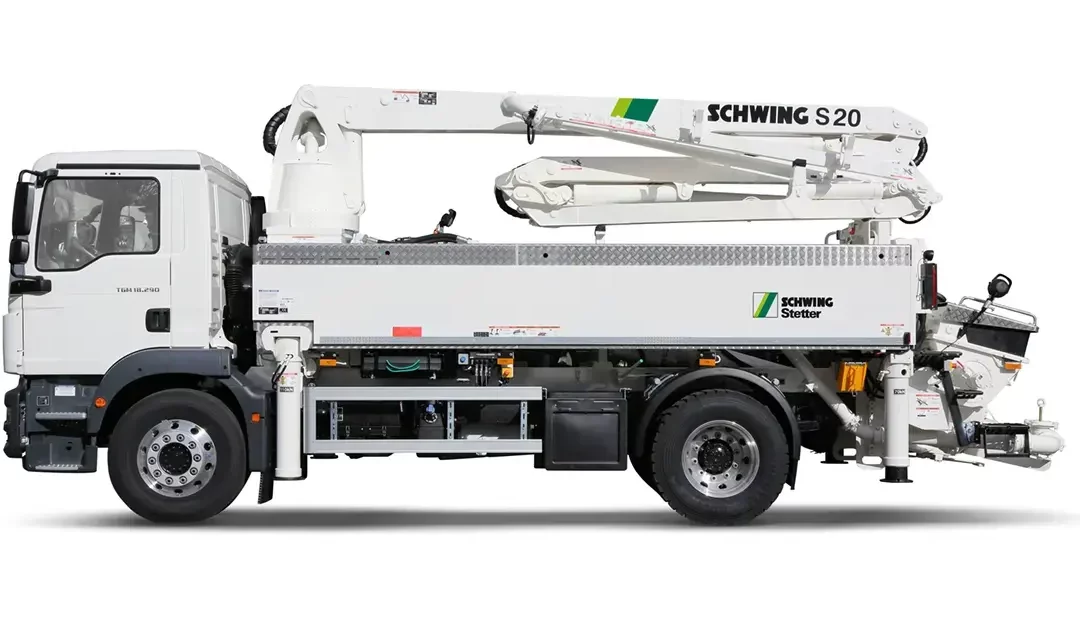
When planning for your construction projects, you might ponder the choice between buying or renting a concrete pump. The array of concrete pumps, including boom and line pumps, demands a thorough evaluation of your project’s needs and your budget. This step is critical for making a well-informed decision.
Concrete pumps have revolutionized the construction industry by boosting efficiency and speed. This advancement allows for quicker concrete placement, which is vital for meeting project deadlines. Modern pumps also feature automated cleaning systems, reducing downtime and increasing productivity. By choosing the right industrial concrete pump, you can significantly cut down on manual labor and project costs.
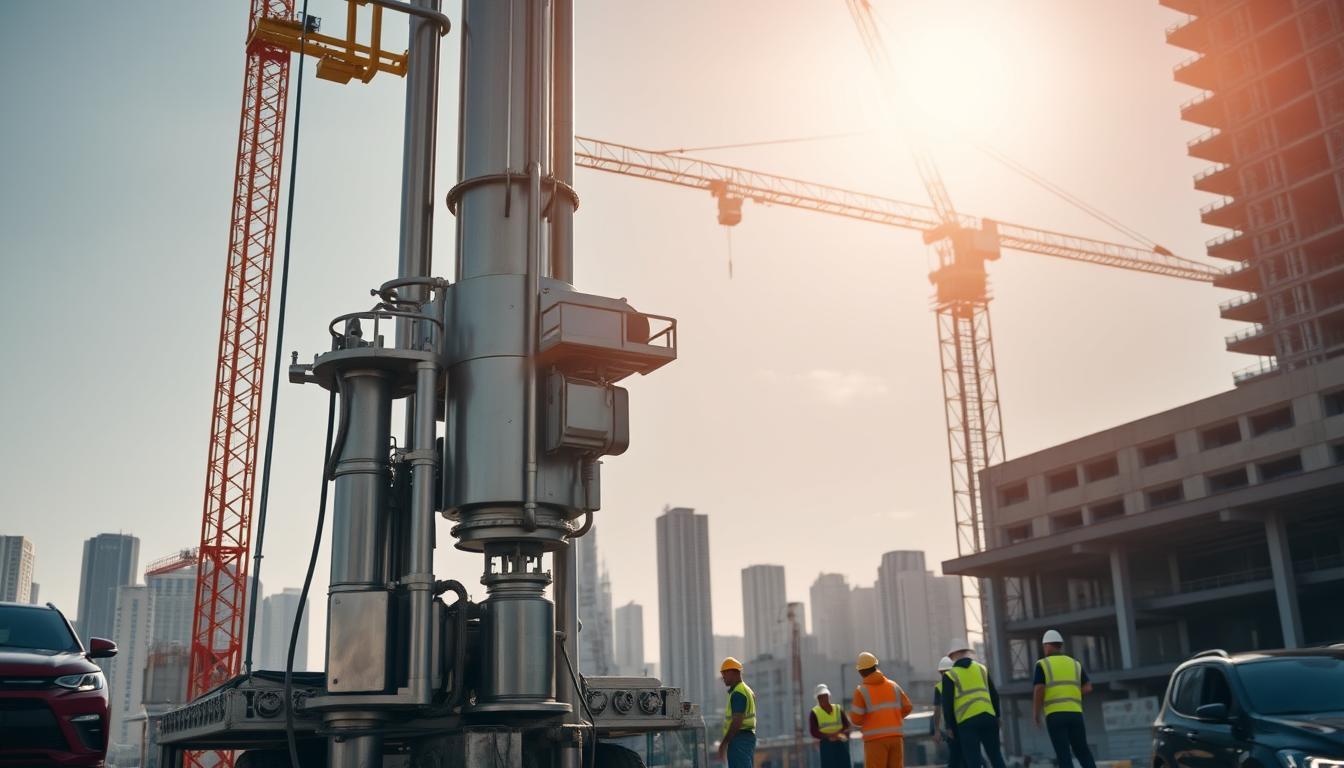
Transtech, a prominent supplier of Schwing Stetter concrete mixer trucks and pumps in Cape Town, offers valuable guidance and support. Reach out to them at 021 948 4746 or via email at info@transtech.co.za to discuss your concrete pumping equipment needs. By carefully weighing your options, you can select the most suitable choice for your construction endeavors, ensuring efficient project completion.
Understanding Different Types of Concrete Pumps in Today’s Market
In concrete pumping, you have different choices like trailer-mounted pumps, boom pumps, and electric pumps. Each type has its own features, benefits, and uses, so it’s important to know how they differ before making a selection. A proper pump ensures efficiency and reduces work schedules and operational expenses. Concrete output rating, delivery range, and maneuverability must therefore all feature in your selection. Inadequately selecting will mean delayed work, high operational expense, and even compromised integrity in buildings.
The marketplace is filled with a variety of concrete pumps, including trailer-mounted, boom, and electric pumps, each for a specific type of construction purpose. What you use will depend on site size, site location, and the environment involved. For instance, a trailer-mounted one best performs in restricted access environments in terms of maneuverability. These pumps are lightweight, making them ideal for use in urban development and constructions with limited space. However, they require hoses and an additional installation period to access the location for concrete pumping. Boom pumps, for instance, best fit high-value constructions with high volumes and require concrete placement at high angles and long reaches. Heavy-duty robotic boom arms enable extended reaches, reduced manpower, and accuracy in high-rise buildings and bridge constructions. Electric concrete pumps, alternatively, enable a less environmentally destructive option for construction indoors and in environmentally sensitive environments, with no exhaust fumes and less noise, respectively.
Choosing the best concrete pump necessitates a proper consideration of a job, working site conditions, and cost-effectiveness. In a high-rise residential development and in a tunnel, choosing your pump based on your specific requirements for a job will result in high performance, reduced waste, and efficient working processes.
Trailer Mounted Concrete Pumps: Mobility and Flexibility
Trailer-mounted concrete pumps have been known for ease of operation and versatility for a long time and are contractors’ favorite machines for application in small and medium projects. They are easy to mobilize and move, even in congested areas where larger machines cannot navigate around comfortably. Trailer-mounted pumps, unlike boom pumps, take minimal space for mobilization and can be set up in congested areas, for example, in urban construction, residential construction, and in redevelopments.
The most important advantage of trailer-mounted pumps is that they can handle a range of concrete mixes, including aggregates of different sizes. They have high-pressure pumping capacities and high efficiency in pumping concrete at long distances and at a range of heights, including in foundations, slabs, tunnels, and even some types of precast work. They have lower operating costs compared to boom pumps, with lower fuel consumption and lower maintenance costs.
They have many advantages, but trailer-mounted pumps have a disadvantage in that extra mobilization and manpower in terms of hoses have to be dealt with in transferring concrete between the pump and point of discharge. However, for contractors, who desire efficiency in operation but not necessarily at high cost and with much complication, trailer-mounted pumps present a reasonable alternative.
Boom Pumps: Reaching New Heights
High-reach and long-reach concrete placement work utilizes boom pumps. Boom pumps have a distinguishing feature of a boom, or articulation arm, powered hydraulically, 63 meters in length, and a necessity for high-rise structures, bridge construction, and big infrastructure work. Boom pumps reduce the need for unnecessary manpower by delivering concrete directly to the point of use, resulting in less segregation and increased efficiency.
Boom pumps’ most advantageous feature is their ability to reach complex locations with minimal site disruption. Boom agility helps operators position accurately, delivering concrete in a uniform state in out-of-the-way locations. Boom pumps are ideal for high-rise structures, deep piling, and long, expansive concrete slabs for which traditional pumping is not feasible. Boom pumps have included a feature of remotely operated working in current times, with increased security and accuracy in concrete delivery.
Boom pumps, while saving manpower, require proper installation and a dedicated working room to function effectively. Boom pumps and boom pumps’ weight make them ideal for working in big jobs in locations with ease of access not a problem. Boom pumps have a high buying price and maintenance price compared to trailer pumps, but for jobs with a lot of concrete delivered in a quick and efficient manner, boom pumps pay for themselves with increased efficiency and productivity.
Electric Concrete Pumps: The Sustainable Choice
Electric concrete pumps are a green option, with less noise and less emission compared to traditional diesel-based pumps. Electric pumps can operate perfectly in urban construction, tunnels, confined spaces, and ecologically sensitive areas in terms of managing air and sound pollution in such spaces. With an electric motor, no combustion of fuel occurs, and hence no emissions related to fuel, offering a cleaner and more efficient option, especially in environmentally sensitive areas with stringent restrictions in terms of environmental regulations and controls.
Electric concrete pumps have the major advantage of offering consistent performance with no performance fluctuations due to fuel consumption variations and engine wear and tear. Electric pumps give a steady flow of concrete, which helps prevent blockages and interruptions. They are a convenient and efficient choice for moving large amounts of concrete over long distances. This makes them ideal for commercial building projects, prefabrication sites, and high-rise constructions.
Electric pumps have a disadvantage in terms of access to a continuous source of power, but in terms of long-term savings, they have lower operational costs in terms of fuel consumption and maintenance, and additionally, less sound output reduces working environment complexities for onsite personnel, making them an ideal option for work in sensitive areas like residential apartments and hospitals. Despite initial installation issues related to compatibility with electrical infrastructure, long-term benefits in terms of efficiency, less emission, and cost-effectiveness make them a forward-looking option in contemporary constructions.
.

The table below outlines the key attributes and advantages of each concrete pump type:
| Type of Pump | Features | Benefits |
|---|---|---|
| Trailer Mounted Concrete Pump | Mobile, compact design | Ideal for small to medium-sized projects, restricted access |
| Concrete Boom Pump | Hydraulic arm, high reach | Ideal for large projects, high-rise buildings |
| Electric Concrete Pump | Electric motor, sustainable | Ideal for high-volume projects, environmentally friendly |
The Financial Impact: Purchase and Rental Costs Comparison
Comparing financial implications between buying and leasing a concrete pump, one has to look at costs and benefits. Purchasing a concrete pump is expensive, but leasing one is an expensive investment. The most important factors are your budget and the return on investment (ROI).
The concrete pump manufacturers provide a variety of options, including new and older pumps. Purchase price, assembly, and installation are part of the initial investment. All these can be expensive, depending on the model, size, and grade of the concrete pump. Renting concrete pumping is a flexible and cost-effective alternative.
ROI for a concrete pumping device is based on its reliability, efficiency, and maintenance costs. Maintained pumps have less downtime and save one money in maintenance and fixing costs. It also minimizes defects, enhances accuracy in a project, and maximizes productivity.
- Costs involved in buying a concrete pump
- Costs for maintenance and repairs
- The rental fee for a concrete pumping device is
- Costs of operations, such as fuel and manpower costs
Comparing these and balancing them with your budget and your needs for a project will allow you to make a financially sound decision— one that will be in line with your financial goals and allow you to achieve your goals.
Key Maintenance Requirements for Owned Concrete Pumps
As a concrete pump owner, one understands the need for routine maintenance. It is critical in extending your gear life and efficiency. Routine maintenance allows one to avoid expensive maintenance, save downtime, and ensure safe operations for operators.
Scheduled routine maintenance for concrete pumps is a necessity. Hydraulic hoses, E-STOP buttons, and decal stickers need daily inspections. Weekly inspections for the boom and hydraulic system identify faults early enough.
Regular Maintenance Schedules
Here is a maintenance schedule for your concrete pump:
- Daily: Check E-STOP buttons, labels, and hoses.
- Weekly: Check the boom and hydraulics.
- Every 3 weeks: Complete examination of the pump and its components
- Every 6 weeks: oil change and complete examination
Maintaining your concrete pump in such a routine keeps it working and safe. Scheduled maintenance will extend your equipment’s life, and maintenance and replacement will cost a minimum.
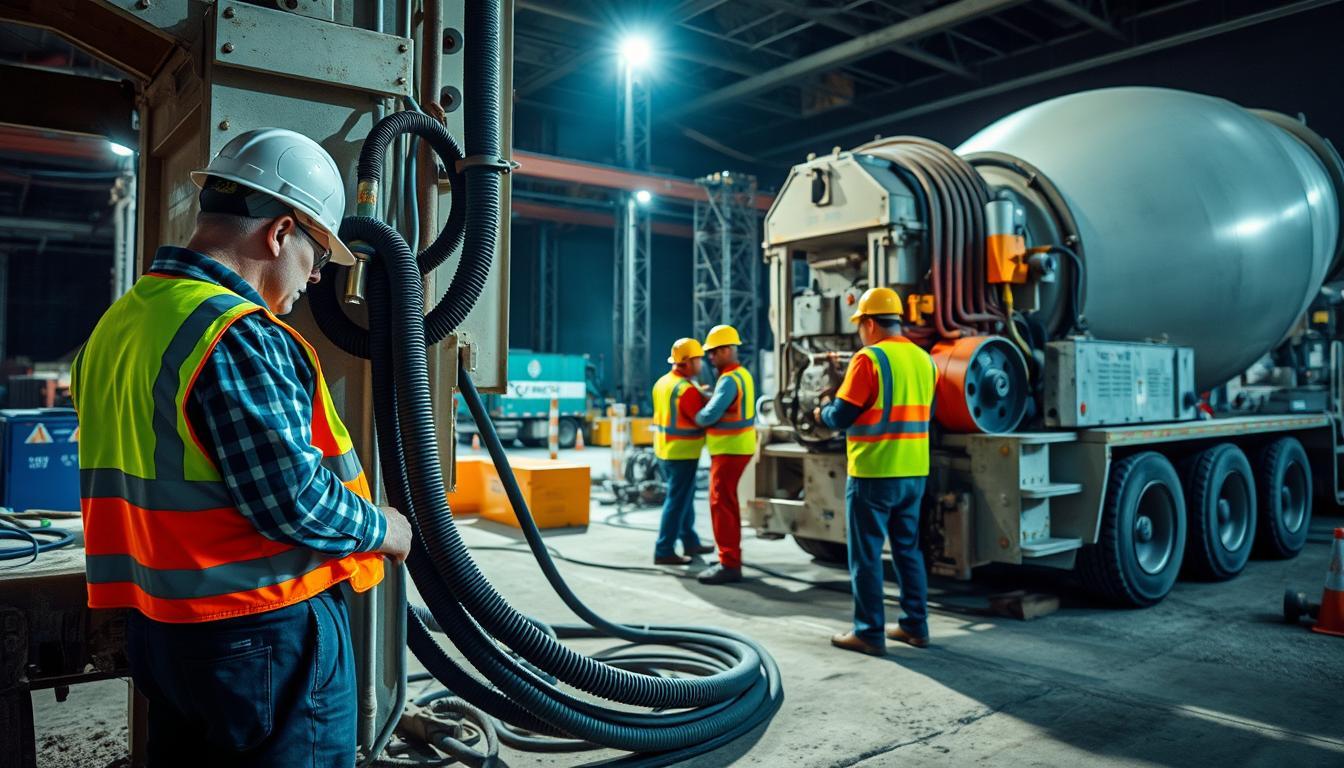
Always use manufacturer-certified technicians for repairs and maintenance. This ensures your concrete pump is serviced correctly, preventing accidents and ensuring safety compliance.
Common Repair Issues and Solutions
Common concrete pump repair issues include hydraulic leaks, worn-out seals, and damaged hoses. Regular maintenance helps catch these problems early.
For concrete pumping equipment, including industrial concrete pumps, maintenance is critical. A regular maintenance schedule and addressing common issues extend your equipment’s life and reduce downtime.
When Renting Makes More Business Sense
When assessing your project needs, consider the advantages of concrete pump rental. Renting can be more economical, ideal for short-term projects or tight budgets. It allows you to cut down on initial costs and enhance operational flexibility.
Key benefits of renting a concrete pump include:
- Reduced upfront costs, as you only pay for the rental period
- Access to newer equipment, which can improve efficiency and reduce maintenance costs
- Flexibility to choose from a range of concrete pump manufacturers and models, depending on your project needs
- Opportunity to try out different types of concrete pumps, such as boom pumps or line pumps, to determine which one works best for your business
Renting a concrete pump also offers a chance to test equipment before buying. This is beneficial, as it lets you evaluate the condition and performance of a used concrete pump before purchase.
The choice between renting or buying a concrete pump hinges on your business’s specific needs and objectives. Weighing the advantages and disadvantages of each option, considering factors like project duration, budget, and equipment needs, will guide you to the best decision for your business.
Making Your Decision: Key Factors for South African Construction Companies
The concrete pumps market in South Africa is rapidly changing. Construction companies must weigh their choices for concrete pumping equipment carefully. With the construction sector expected to grow over 3% annually from 2024 to 2027, the choice between buying or renting a industrial concrete pump is critical. It can greatly affect project outcomes and profitability.
Consider several factors when deciding what you need. These include the project’s size, the site’s conditions, the concrete mix, and the pumping distance. Also, think about your budget and the long-term costs. Owning a pump might give you more control and flexibility. On the other hand, renting could provide quick access to new technology and lower maintenance costs.
Working with a trusted supplier, like Transtech, can be incredibly beneficial. They offer valuable insights and support in the concrete pumps market. Their knowledge can help you make a choice that matches your business goals and ensures project success.
Note: Prices and specifications shown are for reference only and may change without notice. For the latest information, please contact Transtech directly on 021 948 4746.