

Looking to choose the right unit and unsure where to begin? If you’re evaluating a compactor garbage truck for sale, this roundup brings together the most popular configurations, brands, and price bands buyers in South Africa are considering right now.
We’ll compare leading garbage truck options across new and used markets and spotlight common body sizes like 13 Cube and 21 m³. You’ll see which chassis and drivetrains suit daily stop-start routes.
Expect clear takes on PTO and hydraulic setups, transmissions, and axle layouts that matter on local runs. We include brand snapshots of FAW, Nissan UD, Isuzu, Mercedes-Benz, MAN, and Fuso to help quick matching.
Regional availability and examples from Gauteng, Pretoria, Kempton Park, Boksburg, and Richards Bay are noted so you can find nearby inventory fast.
Practical checklists and budget guidance round out this intro, so you can shortlist units, vet hopper blades, ram seals, liner wear and chassis rust, and plan ownership costs before you call a seller.
South Africa’s compactor truck market at a glance in the present
Buyers now find a broad mix of new 2025 FAW models and reliable used Nissan UD, Isuzu, Mercedes-Benz and MAN units. Inventory spans manual and automatic drivetrains and body sizes suited to both tight suburban runs and heavier routes.
Key market notes:
- Stock is concentrated in Gauteng hotspots: Pretoria West, Kempton Park, and Boksburg, with coastal supply around Richards Bay.
- 21 m³ bodies dominate heavier routes; 13 Cube builds remain popular in suburbs.
- POA listings are common, yet many FAW, Nissan UD and Isuzu examples show fixed pricing to help benchmark offers.
The market moves steadily as municipal renewals and private waste contractors update fleets. Used options range from low-mileage late models to older budget entries, letting buyers match condition to contract needs.
| Model | Drivetrain | Example Price (ZAR) |
|---|---|---|
| FAW J5N 28.290 FL 21m3 | manual | POA |
| FAW JH6 28.320 | automatic | POA |
| Nissan UD CWE330 | automatic | POA |
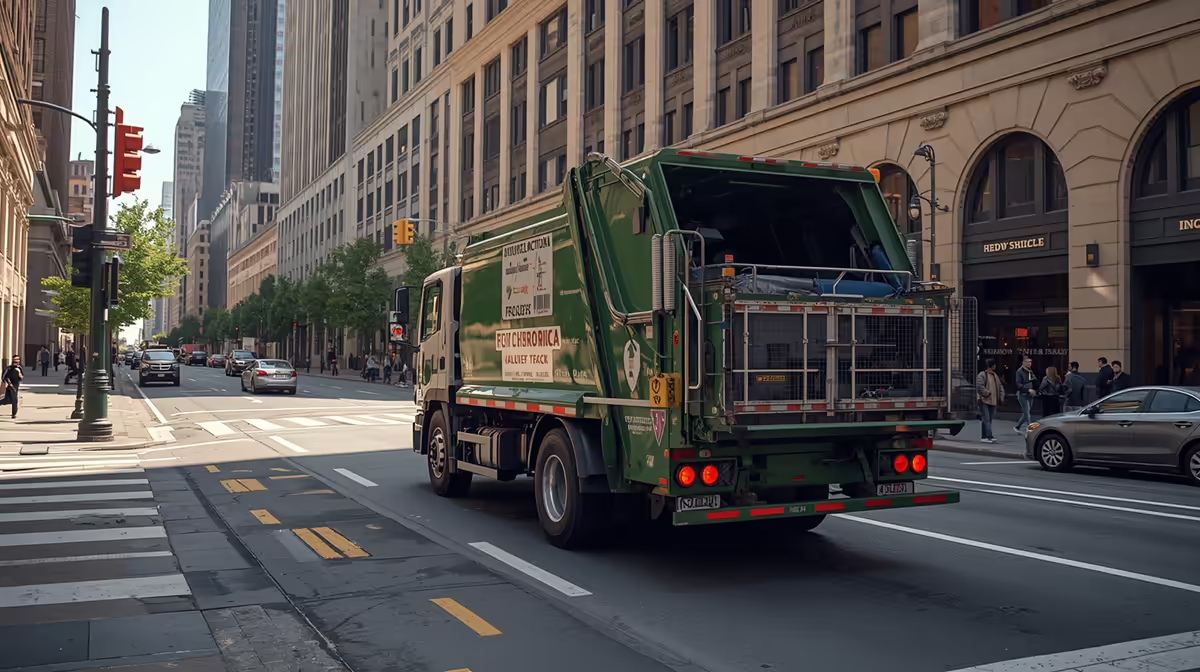
compactor garbage truck for sale: what buyers are searching for right now
Current enquiries focus on proven chassis pairings, reliable PTO systems, and the right body cube for each route. Buyers want clear service histories and parts access to keep fleets moving in South Africa.
Commercial intent decoded: refuse, garbage, and municipal waste use cases
Municipal fleets target uptime and predictable maintenance windows. Private contractors look for models that cut driver fatigue and speed cycle time on dense routes.
Common priorities include automatic drivetrains on UD Quester CWE330 and Isuzu FXZ 28-360 for stop-start city runs, plus 13 Cube units like UD90 for lighter rounds and 21 m³ bodies for bulk wards.
Key specs to prioritize: capacity, 6×4 driveline, PTO and hydraulics
- Body capacity matched to route: 13 cubes, or 21 m³.
- 6×4 driveline for heavier loads and gradients; 4×2 for tight urban work.
- PTO engagement, leak-free hydraulics, and hopper/blade integrity.
- Check bin lifter fits, control ergonomics, safety interlocks, and recent refurb history.
| Spec | 13 Cube | 21 m³ |
|---|---|---|
| Use case | Suburban rounds | High-volume wards |
| Typical chassis | UD90, lighter axles | FAW J5N, 6×4 driveline |
| Driver preference | Automatics common | Often heavy-duty manuals or automatics |
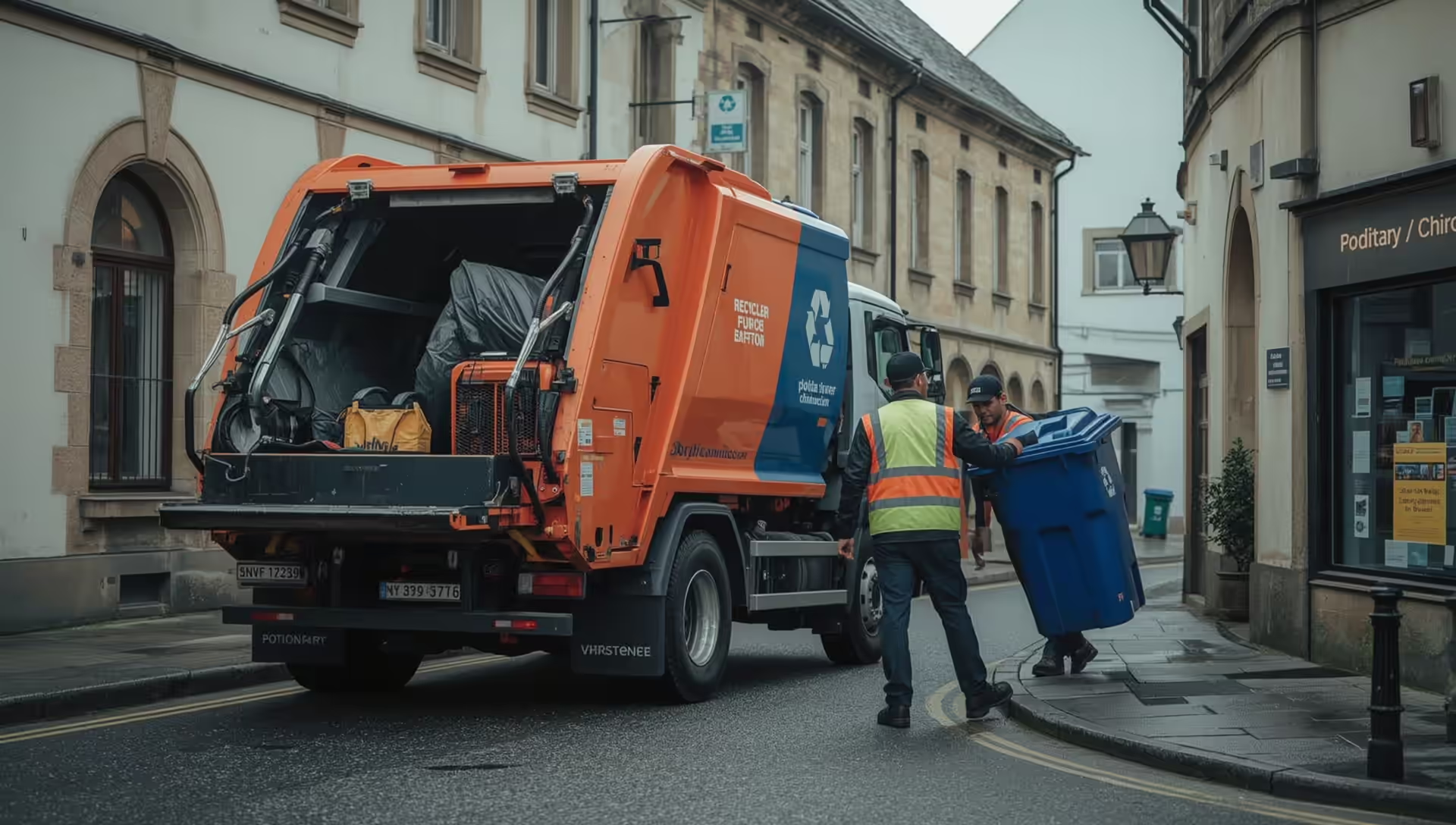
How to search smarter: filters that surface the right garbage trucks
Use targeted filters to speed up finding suitable units. Start by toggling condition and budget to compare new FAW J5N 28.290 FL models against proven used options like Nissan UD CWE/CW 26-370 and Isuzu FXZ 28-360.
Set price bands that allow POA listings to appear alongside fixed-price units. Note that new 21 m³ builds usually sit in mid to upper tiers while older units can offer entry-level value.
By body and cube size
Filter body capacity to 13 Cube or 21 m³ to match weekly lift counts and transfer schedules. This prevents over- or under-spec’ing and aligns payload with operational needs.
By region and drivetrain
Target regional clusters in Gauteng—Kempton Park/Croydon, Boksburg/Witfield, Pretoria West—and Richards Bay to cut inspection travel and speed delivery.
- Use transmission and axle filters to separate urban-ready automatics from manuals and to surface 6×4 candidates for heavier payloads.
- Cross-check dealer ratings and inventory depth to find sellers able to pre-deliver PTO checks or bin lifter installs.
- Shortlist by mileage and service history and save searches with alerts to catch new or discounted listings fast.
| Filter | Why it matters | Example values |
|---|---|---|
| Condition | Matches warranty needs and budget targets | New, Used, POA |
| Body capacity | Aligns payload to route frequency | 13 Cube, 21 m³ |
| Region & drivetrain | Reduces logistics time; ensures correct axle layout | Gauteng clusters, Richards Bay; 4×2, 6×4, Auto/Manual |
Top deals on compactors today: highlights from current listings
Today’s listings spotlight a tight crop of high-value units that match municipal schedules and contractor budgets. Below are standout examples buyers are viewing right now in South Africa.
FAW J5N 28.290 FL 21 Cube new models
The 2025 FAW J5N 28.290 FL 21 m³ offers immediate availability, clear pricing and OEM support.
Nissan UD CWE330 6×4 automatic options
The 2025 Nissan UD CWE330 FC in 6×4 automatic spec blends torque and axle capacity for medium-to-heavy municipal cycles. The UD CWE 350 with Zoeller Euro 5 bodies adds strong local aftersales and integrated body-chassis fitment.
Isuzu FXZ 28-360 and FX-Series used workhorses
Used Isuzu FXZ 28-360 automatics (2014–2015 examples) remain popular for predictable running costs and parts accessibility. These units suit fleets that prioritise uptime on repetitive stop-start routes.
- Upgrade path: FAW JH6 28.320/33.320 brings automatic transmissions and higher-spec cabins at a premium (example R 2,275,850).
- Pre-delivery checks: Dealer-fitted bin lifters, PTO and hydraulic testing reduce early downtime.
- Negotiation tips: Use listed prices and recent refurb work (liner relines, seal replacement) as bargaining anchors.
| Model | Key feature | Example price (ZAR) |
|---|---|---|
| FAW J5N 28.290 FL 21 m³ | Immediate stock, OEM support | R 1,775,500 |
| FAW JH6 28.320/33.320 | Automatic, higher-spec cabin | R 2,275,850 |
| Nissan UD CWE330 / CWE 350 | 6×4 automatics, Zoeller bodies | POA (dealer lists) |
New vs used compactor trucks: which delivers the best value?
Value depends less on sticker price and more on downtime risk, warranty, and recent refurbishment history.
Depreciation, warranty, and immediate availability
New models such as the FAW J5N 28.290 FL 21m³ offer full warranty cover and predictable uptime. That reliability helps meet strict waste contract SLAs and reduces early-service surprises.
Used units (Nissan UD, Isuzu FXZ, Mercedes‑Benz Axor, MAN TGS) often save cash up front. Expect varied mileage—typically 120,000–300,000 km—so factor residual life into bids.
Service records, mileage, and refurbishment checks
Inspect service logs and compaction hours, not just odo readings. Compaction cycles wear hydraulics faster than highway mileage alone.
- Check hydraulic seals, ram and hopper wear, liner condition, and PTO engagement under load.
- Demand documentation of reseals, hose replacement, and any liner relines before buying.
- Balance expected depreciation against contract length: short contracts can justify used buys; multi-year deals often favour new units.
| Aspect | New (example) | Used (typical) |
|---|---|---|
| Typical models | FAW J5N 28.290 FL | Nissan UD, Isuzu FXZ, MAN TGS, Axor |
| Warranty | Full OEM cover | Limited or dealer-backed |
| Availability | Immediate stock on some builds | Varies; inspection needed |
| Common mileage | 0–50,000 km | 120,000–300,000 km |
Drivetrain and axles: choosing between 6×4 and 4×2
Picking the right axle layout starts with route realities. Short, dense urban rounds need nimble handling and quick serviceability. Longer peri‑urban runs, steep gradients, or heavy payloads demand extra traction and load capacity.
Traction and payload considerations
6×4 layouts add traction and payload headroom, making them well suited to heavier compaction cycles and soft approaches near transfer or landfill sites. Many UD Quester CWE330 listings use 6×4 drivetrains for this reason.
4×2 platforms fit lighter weekly lifts and tight residential streets. They cost less to maintain and turn more sharply in cul‑de‑sacs.
Urban maneuverability vs landfill approach demands
Match axle choice to bin mix and route profile. Heavier glass or organic loads that compact densely often justify a 6×4 to avoid overload and stability issues when full.
- Check legal axle loads after the body is fitted to avoid fines or route suspensions.
- Driver experience matters; 6×4 rigs handle differently in tight areas—consider training or automatic transmissions to ease operation.
- Inspect tire wear and suspension on used units; uneven wear often signals past overloading.
- When routes mix city streets and rural stretches, a 6×4 automatic can balance payload needs with drivability.
| Feature | 6×4 | 4×2 |
|---|---|---|
| Best use | Heavy loads, gradients, landfill access | Urban, tight routes, lower payloads |
| Traction | High, better on soft surfaces | Moderate, best on paved roads |
| Maintenance | Higher (extra axle components) | Lower (simpler drivetrain) |
| Driver handling | Different feel in tight turns; needs experience | Easier turning; more familiar to city drivers |
Consider parts support and regional dealer coverage when choosing. Popular 6×4 models usually have broader spare availability across South African networks, which reduces downtime and keeps routes running.
Capacity matters: 13 Cube, 21 m³, and route productivity
Choosing the right body volume shapes daily route efficiency and long‑term costs. Listings most often show 13 Cube and 21 m³ bodies, with UD90 common for lighter suburban rounds and FAW J5N 28.290 FL used on higher-volume runs.
Match capacity to route: underspec and you’ll add tip stops; overspec and you’ll carry unused space and higher fuel bills.
Consider throughput, not just nominal litres. Bin lifter speed, hopper cycle time, and compaction ratio define real productivity. Check liner thickness in high-volume bodies on used units to avoid early relines.
- 13 Cube: best for tight streets and lower daily tonnage, keeps the rig nimble.
- 21m3: suits longer routes and variable density that spikes midweek.
- Review wheelbase and overhang to protect manoeuvrability and legal limits.
- When mixed recycling or seasonal surges occur, a larger body with an automatic aid cadence reduces driver fatigue.
| Feature | 13 Cube | 21 m³ |
|---|---|---|
| Use case | Dense suburban runs | High-throughput wards |
| Typical chassis | UD90 (light truck) | FAW J5N 28.290 FL (6×4) |
| Key benefit | Nimble, lower fuel per stop | Fewer tip visits, better on peak days |
Transmission choices: automatic vs manual for stop-start waste work
Choose a transmission that suits daily stop-start routes and driver availability in South African cities.
Automatic gearboxes reduce driver fatigue and clutch wear on intense stop-start runs. Look at the UD Quester CWE330 and Isuzu FXZ 28-360 automatics, and the newer FAW JH6 automatic options. Modern units often deliver competitive fuel use in congested conditions.
Manual gearboxes lower acquisition costs and simplify routine servicing. Many FAW J5N 28.290 FL models are manual and suit less-congested routes or fleets with experienced manual drivers.
- Train drivers: automatics widen the pool of operators and speed onboarding.
- Check used automatics for cooling, smooth shifts under PTO load, and service history.
- On manuals, inspect clutch life, pedal feel, and noise when the body is under compaction.
- Align transmission choice with SLAs; automatics often help meet tight inner-city windows.
| Aspect | Automatic | Manual |
|---|---|---|
| Best use | High-frequency urban routes (UD Quester, Isuzu FXZ, FAW JH6) | Less-congested routes; lower purchase cost (FAW J5N) |
| Maintenance focus | Transmission cooling, shift quality under PTO | Clutch wear, pedal feel, gearbox synchros |
| Resale | Higher demand in secondary market | Good value where operator preference remains manual |
Decide with routes, driver skills, and contract timelines in mind to get consistent daily performance from your vehicle fleet.
Brand landscape: FAW, Nissan UD, Isuzu, Mercedes-Benz, MAN, Fuso
Choosing a marque shapes uptime, parts access and daily running costs. Pick a brand that matches your route profile and local dealer presence.
Strengths by brand and typical pairings
- FAW: J5N 28.290 FL gives accessible pricing and stock. The JH6 28.320/33.320 adds automatic comfort and power. Both often pair with 21 m³ bodies for municipal waste.
- Nissan UD: CWE/CW platforms are proven in compaction duty. They are commonly specified as garbage trucks on 6×4 automatics for demanding routes.
- Isuzu: FXZ 28-360 and FTR850 are noted for durable drivelines and easy service. They suit mid-life body refits and 13 Cube pairings like UD90.
- Mercedes‑Benz: Axor 3335 shows up as a trusted used option with strong parts networks and a robust chassis.
- MAN: TGS 33-480 offers high torque and modern cabins for mixed terrain and heavier payloads.
- Fuso: FJ units appear as cost-effective used alternatives for operators seeking simple, reliable basics.
| Brand | Typical pairing | Best use |
|---|---|---|
| FAW | 21m3 bodies (J5N/JH6) | Municipal routes, higher volume |
| Nissan UD | 6×4 automatics (CWE/CW) | Demanding stop‑start rounds |
| Isuzu | 13 Cube (FTR) / FXZ refits | Suburban and mid‑life rebuilds |
Tip: Choose by dealer proximity, parts access and your preferred body builder to streamline maintenance and keep the fleet moving.
Spotlight on FAW compactor lineup in 2025
For fleets needing reliable daily uptime, FAW’s 2025 range offers clear, buyable options. The range splits into value-focused manuals and higher-spec automatics to match routes and driver needs.
J5N 28.290 FL manual — 21 m³ configurations
J5N 28.290 FL in 21 m³ manual spec headlines value. Dealers across Gauteng and coastal hubs stock these units, which speeds delivery and inspections.
These builds suit high‑volume routes that favour simple servicing and predictable running costs. Body integration supports common bin lifter systems and proven PTO/hydraulic layouts.
JH6 28.320 / 33.320 automatic refuse compactors
JH6 automatics add cabin comfort and smoother shifts, helping cadence on dense urban runs. They deliver extra power where operator comfort equals throughput.
6×4 options in the FAW line give traction on heavier gradients without sacrificing cabin ergonomics. Many dealers list multiple chassis-body combos and transparent pricing, making comparison straightforward.
- Dealer packages: first service, driver familiarisation and body calibration are commonly offered.
- Parts & support: FAW’s growing footprint improves uptime for expanding fleets.
| Model | Drive | Key benefit |
|---|---|---|
| J5N 28.290 FL | manual | Value, wide stock (21 m³) |
| JH6 28.320 / 33.320 | automatic | Power, comfort, urban throughput |
Nissan UD and UD Quester compactor favorites
Many operators choose UD units because they balance durability with driver-friendly automation. Listings show late-model, low-kilometre examples that suit municipal schedules across South Africa.
CWE330 6×4 and CW330 automatic variants
UD Quester CWE330 automatics in 6×4 format are popular for reliability and smoother operation under PTO load. The 2025 CWE330 FC 6×4 and CWE 350 Euro 5 Zoeller examples pair strong torque with proven body vendors.
These combinations deliver steady cycle times and easier hill starts, which helps fleet uptime. Confirm gearbox and PTO service records before bidding.
UD90 13 Cube builds for lighter municipal duties
The UD90 with a 13-cube body suits school zones and narrow residential rounds. It stays nimble in tight streets and cuts fuel use on lighter loads.
Look for dealer-installed bin lifters and verify bin compatibility to avoid retrofit issues.
- Key checks: axle and suspension condition, PTO history, and bin lifter fit.
- Operator note: many drivers prefer UD automatic calibration for consistent launches.
| Model | Drive | Key benefit | Typical use |
|---|---|---|---|
| UD Quester CWE330 | 6×4 automatic | High torque, steady PTO | Heavier municipal rounds |
| UD CWE 350 (Zoeller, Euro 5) | 6×4 automatic | Emissions-compliant, durable body fit | Medium-to-heavy wards |
| UD90 13 Cube | automatic | Nimble, lower fuel per stop | Tight suburban routes |
Trusted used options: Axor 3335, Isuzu FTR/FXZ, and MAN units
Trusted secondhand picks can deliver strong uptime when backed by documented work and dealer support. Mercedes‑Benz Axor 3335 examples (2018, ~120,000 km) are common and offer wide parts access and simple servicing.
Isuzu FTR850 and FXZ 28-360 automatics appeal for balanced running costs and good availability of reman parts. MAN TGS 33-480 LWB units bring extra power and modern braking aids for rolling terrain.
- Compare compaction body hours to odometer readings — body wear often leads chassis mileage.
- Inspect liner wear, mounting‑point corrosion and hydraulic leaks to avoid early downtime.
- Seek documented relines, ram seal kits and fresh hoses to lower first‑year maintenance exposure.
- Match a used unit to contract length; mid‑life trucks can cover 2–3 years with planned work.
- Verify dealer support and post‑sale agreements to keep response times tight.
| Model | Key strength | Typical note |
|---|---|---|
| Axor 3335 | Parts network | ~120,000 km common |
| Isuzu FTR/FXZ | Reman parts, uptime | Good for hydraulic refreshes |
| MAN TGS 33-480 | Power & brakes | Best on mixed corridors |
Careful vetting helps protect margins on waste contracts and keeps garbage rounds reliable on day one.
Essential buyer checks for refuse compactors
Start every inspection with a clear checklist and a hands-on cycle test. Many listings note “complete with PTO and hydraulics”, but only a live run proves condition.
Compaction body, PTO, hydraulics, and liner condition
Run the PTO and a full compaction cycle under load and listen for pressure dips. Watch for oil at fittings and hose joints. Confirm cycle times meet the spec used by the operator.
Inspect the liner for thickness, scoring or patched repairs. Excess wear signals near-term relining costs that affect budgeting in South Africa.
Hopper, blade, and ram seals inspection
Check hopper blades for straightness and edge wear. Verify ram seals are dry—any weep suggests seal kits will be needed soon. Confirm blade travel matches manufacturer cycle times.
Chassis rust, suspension, and brake health
Review chassis rails around body mounts and reinforcement plates for rust and cracking. Inspect crossmembers closely.
Test suspension ride height and bushes; uneven stance can mean past overloading. Brake checks must include pad/shoe life, drum/disc condition, and air system integrity.
- Check bin lifter mounts, locking pins and hydraulic arms for play.
- Scan electrical and body-control systems for intermittent faults.
- Ask for documented hose, seal and liner work to reduce early downtime.
| Focus | What to check | Why it matters |
|---|---|---|
| PTO & Hydraulics | Run under load; inspect hoses | Shows real pressure and leak points |
| Body & Liner | Liner thickness; blade straightness | Predicts relining and repair costs |
| Chassis & Brakes | Rust at mounts; brake pads | Ensures legal safety and route uptime |
Where to buy: key dealer hubs and availability
Dealers cluster across Gauteng and the coast, making it easy to compare inventory and book same-day inspections. Use these hubs to speed up your search and reduce delivery lead times.
Gauteng and Pretoria corridors
Pretoria West, Germiston (Tunney), Centurion and Randburg host high-turn inventory and short test-drive routes. Start here when you want quick inspections and a larger pool to search.
Kempton Park and Boksburg clusters
Kempton Park (Croydon, Pomona) and Boksburg (Witfield, Bardene) offer side-by-side comparisons of new FAW and late-model Nissan UD units. These pockets often show mixed-year stock to match budgets and timelines.
Richards Bay and coastal options
Richards Bay dealers list JH6 and J5N models with coastal delivery options. Coastal support helps municipalities along the eastern seaboard with parts and mobile service.
- Plan multi-dealer routes to compare comparable trucks in a single day and negotiate from a position of insight.
- Verify lead times on units awaiting body fitment or refurbishment and align delivery with tender start dates.
- Ask about dealer support packages: initial services, hydraulic checks, and bin lifter calibration.
- Prioritise dealers with national footprints for remote operations to ensure parts and mobile coverage.
| Hub | Typical stock | Local benefit |
|---|---|---|
| Pretoria West & Germiston | Late-model used | Fast inspections, high turnover |
| Kempton Park & Boksburg | New FAW, Nissan UD | Side-by-side comparisons |
| Richards Bay | New coastal stock | Delivery & coastal support |
Sustainability and durability: local compactor manufacturing
Regional production lets engineers tune mounting, weight distribution and hydraulics to South African road and load profiles. That focus reduces delays and improves uptime for municipal and private fleets.
Zoeller’s South African presence and long-term reliability
Zoeller Waste Trucks manufactures locally in South Africa and brings 77 years of global expertise to regional builds.
Their local factories produce compactors that resist abrasive waste streams and daily stop‑start cycles. This lowers relining and seal costs over the body life.
- Faster parts flow: shorter lead times and simpler logistics.
- Better service: quicker warranty response and technical support.
- Efficiency gains: hydraulic designs that cut energy losses during compaction.
| Advantage | What it delivers | Fleet benefit |
|---|---|---|
| Local manufacture | Tailored builds and faster delivery | Reduced downtime, easier parts access |
| 77 years engineering | Proven body longevity | Lower cycle costs |
| After‑sales & training | Operator coaching and field support | Fewer breakdowns, steadier route performance |
Price bands and total cost of ownership for refuse trucks
Begin by mapping typical capex tiers so you can compare new, high-spec models with well‑refurbished used units. New 21 m³ FAW examples sit around R 1,775,500 (J5N 28.290 FL), while higher‑spec automatics such as the JH6 28.320 list near R 2,275,850. POA listings remain common, and used pricing varies widely by mileage, refurbishment and body condition.
Budgeting for body maintenance and fuel on stop-start routes
Plan annual body spend around liners, ram seals, hydraulic hoses and bin lifter wear. These items form predictable maintenance lines that affect lifecycle costs more than occasional chassis repairs.
Fuel and operational costs rise on stop‑start runs; automatics can help stabilise consumption if driven consistently. Tyres, brakes and suspension wear faster under compacted loads, so budget higher OPEX for high-frequency routes.
- Capex note: new 21 m³ units in mid‑upper bands; automatics add a premium.
- Used market: body condition often moves value more than chassis age or make.
- 6×4 benefit: higher purchase cost but less component stress at high payloads, improving reliability.
- Downtime: factor in parts access and dealer support—fast service can save more than a small purchase discount.
| Cost area | Typical range (ZAR) | Impact on TCO |
|---|---|---|
| New base 21 m³ | ~R 1,775,500 | Higher capex, lower early downtime |
| High-spec automatic | ~R 2,275,850 | Premium comfort, possibly lower fuel variance |
| Used (varied) | POA / depends on mileage | Lower capex, higher near-term body spend |
| Annual body & OPEX | Variable (repair cycles) | Major driver of lifecycle cost |
Ready to compare trucks and request availability today with Transtech, call 021 948 4746 or email info@transtech.co.za
Ready to move from research to inspection and booking? Reach out, and we’ll show side-by-side options across 13 Cube municipal builds to 21 m³ heavy-duty compactors.
We’ll help match route profiles with the right axles, transmissions, PTO and hydraulic setups. Our team also checks bin lifter compatibility and offers practical advice on waste handling and daily cadence.
Get clear guidance on pricing bands, POA expectations and negotiation anchors drawn from current market snapshots. Ask for inspection checklists and test-compaction scheduling to confirm body condition and cycle times.
If you need TCO planning, we’ll map maintenance intervals, parts strategies and expansion options to keep your fleet productive. Call Transtech at 021 948 4746 or email info@transtech.co.za to book inspections or request tailored recommendations.
Note: Prices and specifications shown are for reference only and may change without notice. For the latest information, please contact Transtech directly on 021 948 4746.
Note: Prices and specifications shown are for reference only and may change without notice. For the latest information, please contact Transtech directly on 021 948 4746.