
Concrete Pump Hire: Complete Guide for Construction Projects
Concrete pump hire helps you place concrete quickly, accurately, and with far less labour than traditional methods. If you are planning a building project, understanding how concrete pumping works will help you choose the right equipment, control costs, and avoid delays on site.
Contractors, builders, developers, and homeowners across South Africa use concrete pump hire for foundations, slabs, driveways, retaining walls, commercial buildings, and infrastructure projects. The method allows concrete to move through pipes or booms directly to the area where it is needed, even when access is difficult.
This guide explains how concrete pump hire works, the types of pumps available, when you need one, typical costs, site preparation requirements, and the advantages of pumping concrete instead of moving it manually.
What Is Concrete Pump Hire
Concrete pump hire means renting specialised equipment that pumps liquid concrete from a mixer truck to the location where it must be placed.
Instead of moving concrete using wheelbarrows, buckets, or cranes, the pump pushes the concrete through a pipeline or articulated boom.
A standard setup usually includes:
-
A concrete pump machine
-
Steel or rubber delivery pipes
-
A placing boom or flexible hose
-
An experienced pump operator
Concrete arrives on site in a ready-mix truck. The truck pours the concrete into the pump hopper. The pump then pushes the mixture through the pipes and delivers it exactly where the crew needs it.
This process saves time and labour and allows concrete to reach areas that would otherwise be difficult to access.
Why Concrete Pump Hire Is Widely Used in Construction
Modern construction projects depend heavily on concrete pumping because it improves speed, efficiency, and accuracy.
Faster concrete placement
Large volumes of concrete can be placed quickly. This reduces delays and keeps the project moving according to schedule.
Reduced labour requirements
Without a pump, workers must transport concrete using wheelbarrows or buckets. Pumping reduces the number of workers required to move the material.
Access to difficult locations
Concrete pumps can deliver concrete to:
-
Upper floors of buildings
-
Basements
-
Narrow building sites
-
Areas behind obstacles
-
Locations far from the mixer truck
Consistent concrete flow
Pumping provides a continuous flow of concrete, which improves the quality of slabs and structural pours.
Better accuracy
The operator controls exactly where the concrete lands. This reduces waste and improves placement precision.
Types of Concrete Pumps Available for Hire
Several different types of pumps exist. Choosing the correct one depends on the size of the project, site access, and the distance concrete must travel.
Boom Pumps
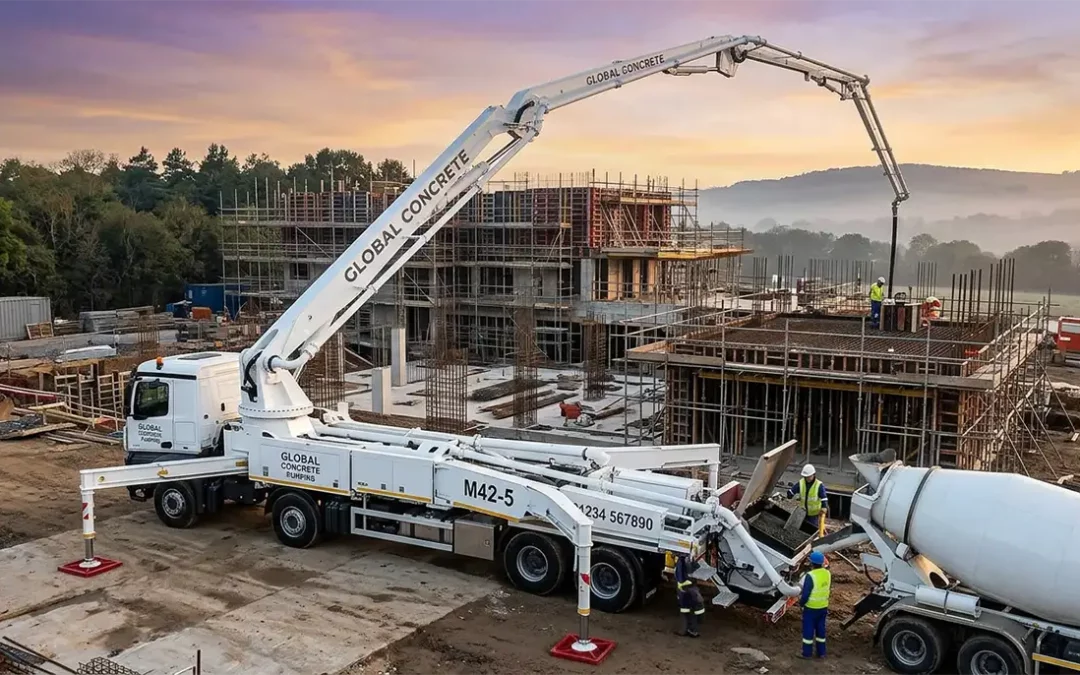
Boom pumps are mounted on trucks and include a robotic arm that places concrete directly where needed.
The boom consists of several hydraulic sections that unfold and extend.
Common boom lengths range between:
-
24 metres
-
32 metres
-
36 metres
-
42 metres
-
52 metres
Boom pumps work well for:
-
High-rise buildings
-
Large commercial slabs
-
Bridges
-
Industrial projects
-
Large foundations
Advantages of boom pumps include:
-
Very fast setup
-
Long reach
-
Accurate concrete placement
-
High pumping capacity
Line Pumps
Line pumps push concrete through flexible hoses or steel pipes that workers position manually.
They are typically mounted on trailers or trucks.
Line pumps work well for:
-
Small residential projects
-
House slabs
-
Swimming pools
-
Driveways
-
Sidewalks
-
Foundations
Advantages of line pumps include:
-
Lower hire cost
-
Flexible hose placement
-
Ability to reach tight spaces
-
Suitable for smaller pours
Trailer Pumps
Trailer pumps are portable units that can be moved between job sites using a vehicle.
They are often used with long pipelines.
Trailer pumps are suitable for:
-
Medium-sized construction projects
-
Remote sites
-
Projects requiring long horizontal pumping distances
Truck-Mounted Pumps
Truck-mounted pumps combine a pump and boom on a single vehicle.
They are commonly used for:
-
Commercial construction
-
High-volume concrete pours
-
Multi-storey structures
These pumps offer speed and high pumping capacity.
How Concrete Pumping Works
The pumping process relies on hydraulic pressure and a valve system that moves concrete through pipes.
The process follows these steps.
Step 1: Concrete delivery
A ready-mix truck arrives on site with the required concrete mixture.
Step 2: Loading the hopper
The truck pours concrete into the pump hopper.
Step 3: Pumping cycle
Inside the pump, hydraulic pistons draw concrete into cylinders and push it into the pipeline.
Step 4: Delivery through pipes
Concrete travels through steel pipes or hoses.
Step 5: Placement
Concrete exits the end hose and flows into the formwork or area being poured.
Workers guide the hose to control placement.
When You Need Concrete Pump Hire
Concrete pumps are useful in many construction situations.
Large concrete pours
Projects involving large volumes of concrete benefit from the speed of pumping.
Examples include:
-
Warehouse floors
-
Parking structures
-
Commercial foundations
Limited site access
When trucks cannot reach the pour location, a pump can move concrete over obstacles.
High or elevated construction
Concrete pumping allows placement on upper floors without cranes or buckets.
Long-distance placement
Pumps can move concrete hundreds of metres horizontally.
Fast project schedules
Pumping significantly reduces placement time.
Typical Concrete Pump Hire Applications
Concrete pumps serve many construction sectors.
Residential construction
Concrete pumping helps build:
-
House foundations
-
Driveways
-
Patios
-
Swimming pools
-
Boundary walls
Commercial construction
Large commercial projects rely heavily on pumping.
Common examples include:
-
Shopping centres
-
Office buildings
-
Parking garages
-
Factories
Civil engineering
Infrastructure projects often require high-capacity pumping.
Examples include:
-
Bridges
-
Roads
-
Tunnels
-
Water treatment plants
Concrete Pump Hire Costs
Concrete pump hire costs vary depending on several factors.
Type of pump
Boom pumps cost more than line pumps because of their size and reach.
Pump size
Larger pumps with longer booms have higher hire rates.
Duration of hire
Hire costs often include:
-
Hourly rate
-
Minimum booking time
-
Setup fee
Distance from supplier
Transporting the pump to the job site may add a delivery fee.
Project complexity
Projects requiring long pipelines or special equipment may increase costs.
Example cost components
| Cost Component | Description |
|---|---|
| Pump hire rate | Hourly or daily equipment hire |
| Operator | Skilled pump operator |
| Setup time | Pump positioning and pipeline installation |
| Transport | Delivery to the construction site |
| Pipeline | Extra pipe length if required |
Actual prices vary between contractors and locations.
Preparing Your Site for Concrete Pump Hire
Proper site preparation helps avoid delays on the day of the concrete pour.
Provide access for the pump truck
The pump truck needs sufficient space to park and extend stabilisers.
Make sure the access road:
-
Supports heavy vehicles
-
Has enough turning space
-
Is free from overhead obstacles
Plan the pump position
The pump should stand as close as possible to the pour area.
This reduces pipeline length and improves pumping efficiency.
Prepare the formwork
Concrete formwork must be fully prepared before the pump arrives.
Delays during pumping can cause problems with concrete consistency.
Coordinate concrete deliveries
Ready-mix trucks must arrive in the correct sequence.
Continuous pumping requires steady concrete supply.
Confirm concrete mix design
Not all mixes pump equally well.
Your supplier should provide a mix suitable for pumping.
Advantages of Concrete Pump Hire
Concrete pumping offers several major benefits.
Faster project completion
Pumping speeds up concrete placement and reduces labour.
Reduced physical strain
Workers do not need to move heavy wheelbarrows.
Greater accuracy
Concrete flows exactly where it is needed.
Improved quality
Continuous placement reduces cold joints in concrete slabs.
Lower labour costs
Fewer workers are required for transport.
Challenges of Concrete Pumping
Although concrete pumping offers many advantages, it requires proper planning.
Pump blockages
Concrete can block pipes if the mix is incorrect or pumping stops too long.
Equipment setup
Large pumps need space for stabilisers and boom movement.
Skilled operators
Concrete pumps require trained operators.
Site coordination
Concrete supply must match pumping speed.
Safety Considerations for Concrete Pump Hire
Construction safety remains a priority when using heavy equipment.
Pump stabilisers
Boom pump trucks use stabilisers to prevent tipping.
The ground must support the weight of the machine.
Operator training
Only trained operators should control the pump.
Hose control
Workers must handle the end hose carefully to prevent accidents.
Clear communication
Workers and the pump operator must maintain clear communication during the pour.
Protective equipment
Workers should wear standard construction safety gear, including:
-
Hard hats
-
Safety boots
-
Gloves
-
Eye protection
Choosing the Right Concrete Pump for Your Project
Selecting the correct pump depends on several project factors.
Size of the pour
Large pours may require boom pumps.
Small residential pours often use line pumps.
Pumping distance
Projects involving long distances require high-pressure pumps.
Site access
Tight or narrow sites may favour line pumps.
Height requirements
Tall buildings require pumps with longer booms.
Concrete Mix Requirements for Pumping
Concrete used in pumping must meet certain conditions.
The mix must flow smoothly through pipes without separating.
Key characteristics include:
-
Proper aggregate size
-
Adequate cement content
-
Correct water ratio
-
Suitable slump
Ready-mix suppliers normally design mixes specifically for pumping.
Maintenance and Cleaning of Concrete Pumps
Cleaning the pump after each job is necessary to prevent blockages and equipment damage.
Typical cleaning methods include:
-
Flushing pipes with water
-
Using cleaning balls or sponges
-
Removing hardened concrete
Proper maintenance extends the lifespan of the equipment.
Environmental Benefits of Concrete Pumping
Concrete pumping can reduce environmental impact.
Reduced fuel usage
Fewer machines operate on site.
Lower material waste
Precise placement reduces excess concrete.
Reduced noise and dust
Less manual handling means less site disturbance.
The Role of the Concrete Pump Operator
A skilled operator plays a major role in successful pumping.
Responsibilities include:
-
Setting up the pump safely
-
Controlling pumping pressure
-
Monitoring concrete flow
-
Adjusting the boom position
-
Communicating with workers
Experience helps prevent blockages and delays.
Concrete Pump Hire for Residential Projects
Homeowners increasingly use concrete pumps for smaller projects.
Common residential uses include:
-
House slabs
-
Driveways
-
Swimming pools
-
Garden walls
Even relatively small pours benefit from pumping because it saves time and labour.
Concrete Pump Hire for Commercial Projects
Commercial construction often involves large volumes of concrete.
Examples include:
-
Shopping malls
-
Warehouses
-
Apartment buildings
-
Parking structures
Boom pumps are commonly used for these projects because of their reach and pumping capacity.
Future Developments in Concrete Pump Technology
Concrete pumping equipment continues to evolve.
Manufacturers are introducing:
-
Pumps with longer reach
-
Remote control operation
-
Improved hydraulic systems
-
Lower fuel consumption
These developments improve productivity and safety.
Conclusion
Concrete pump hire has become an essential part of modern construction. By pumping concrete directly to the placement area, contractors save time, reduce labour, and improve the quality of their pours.
Different types of pumps exist for different project sizes and site conditions. Boom pumps handle large commercial projects, while line pumps work well for residential construction and smaller pours.
Successful pumping depends on proper planning, correct concrete mix design, and skilled operators. When these factors align, concrete pumping provides one of the most efficient methods of placing concrete on modern construction sites.
For builders, contractors, and developers, concrete pump hire remains one of the most practical solutions for delivering concrete quickly and accurately across a wide range of construction projects.
Note: Prices and specifications shown are for reference only and may change without notice. For the latest information, please contact Transtech directly on 021 948 4746.