
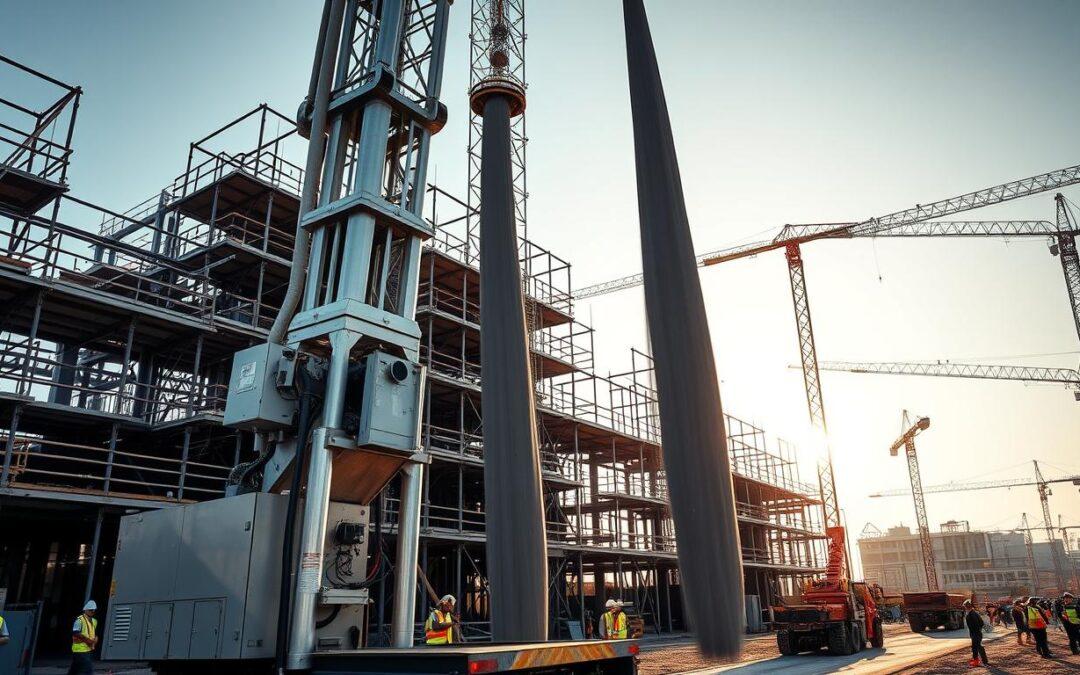
Did you know that modern construction projects rely heavily on concrete pumps to deliver high-quality results efficiently? These machines have changed how we build. They make it possible to quickly place concrete in complex projects.
The use of construction equipment like concrete pumps is key for a country’s infrastructure. This includes roads, bridges, and tunnels. These machines help build fast and accurately, meeting the needs of growing cities.
As the construction industry grows, the need for efficient concrete pumping services is clear. They are vital for finishing infrastructure projects on time and to the right standard.
What Are Concrete Pumps?
In construction, concrete pumps are key. They help place concrete in hard-to-reach spots. These machines move liquid concrete through pipes, making it easier to access areas that are hard to get to.
Definition and Function
A concrete pump moves concrete through a pipeline to where it’s needed. It makes placing concrete faster and easier, saving manual labor. Concrete pumps are great for big projects where lots of concrete is needed quickly.
Types of Concrete Pumps
There are many types of concrete pumps for different jobs. The main kinds are:
- Boom pumps have a boom for precise concrete placement.
- Line pumps are versatile and work on many projects.
- Trailer pumps, or truck-mounted pumps, pump long distances.
Knowing the types of concrete pumps helps pick the right one for a project. The right pump depends on the project size, pumping distance, and site needs.
Common Applications
Concrete pumps are used in many construction projects, like:
| Application | Description |
|---|---|
| Infrastructure Development | Highways, bridges, and tunnels |
| Building Construction | Residential and commercial buildings |
| Specialized Projects | Swimming pools, foundations, and repair works |
For companies renting or selling concrete pumps, knowing these uses is important. Whether for big projects or small sites, concrete pumps are essential for efficient work.
The Role of Concrete Pumps in Construction
Concrete pumps are key in construction, bringing speed and precision. They are essential for infrastructure projects. Here, placing concrete quickly and accurately is vital.
Enhancing Efficiency
Concrete pumps make placing concrete precise, cutting down on manual labor and waste. This is very important in complex projects.
Reducing Labor Costs
Using concrete pumps lowers labor costs by automating concrete placement. It makes construction faster and safer, reducing the chance of accidents.
| Aspect | Traditional Method | Concrete Pumping Solution |
|---|---|---|
| Precision | Limited | High |
| Labor Costs | High | Low |
| Speed | Slow | Fast |
Key Benefits of Using Concrete Pumps
Concrete pumps are key in modern construction, bringing big wins in efficiency and safety. They are vital for building roads, bridges, and tunnels. Their role in infrastructure development is unmatched.
Concrete pumps shine in two main ways: they save time and boost safety. They make placing concrete fast, cutting down project times.
Time-Saving Advantages
Concrete pumps are great at saving time on projects. They help teams place concrete quickly, hitting deadlines easily.
For example, in building tall structures or complex projects like bridges and tunnels, pumps are essential. They pump concrete far and high, cutting down on manual work and accident risks.
“The efficiency brought about by concrete pumps has transformed the construction landscape, enabling projects to be completed faster and with greater precision.”
Improved Safety Standards
Concrete pumps also make sites safer. They cut down on the need for manual concrete handling, lowering injury risks.
For tunnels, pumps are a game-changer. They safely place concrete in tight spaces, making the job safer.
| Benefit | Description |
|---|---|
| Time-Saving | Rapid placement of concrete reduces project timelines. |
| Safety | Minimizes manual handling, reducing the risk of accidents. |
| Efficiency | Enables the placement of concrete over long distances and heights. |

In summary, concrete pumps bring big wins to infrastructure projects. They save time and make sites safer. As construction evolves, pumps will keep playing a key role.
Different Types of Concrete Pumps
Concrete pumps vary in type, each suited for specific construction needs. The right pump depends on the project’s size, distance, and site access. This ensures the concrete is placed accurately and efficiently.
Boom Pumps
Boom pumps are versatile and widely used. They have a robotic arm, or boom, for precise concrete placement. They’re perfect for big projects like high-rise buildings and complex infrastructure. Boom pumps can move 360 degrees, covering a lot of ground without moving the pump.
Line Pumps
Line pumps, or trailer-mounted pumps, are also popular. They’re easy to move, making them great for many projects. They’re best for smaller to medium projects or when a boom pump can’t fit. They’re often used in homes, repairs, and renovations.
Trailer Pumps
Trailer pumps are like line pumps but on a trailer. They’re good for pumping concrete far or to hard-to-reach places. They’re versatile for many tasks, from foundations to road paving. Their mobility and power are key on construction sites.
In summary, the right concrete pump is key to a project’s success. Knowing the different types helps contractors and managers plan better. This ensures projects are done on time and within budget.
Choosing the Right Concrete Pump for Your Project
The right concrete pump is key to a project’s success. There are many types, like boom pumps and trailer pumps. Picking the right one is important.
Factors to Consider
Many things matter when picking a concrete pump. The project type, terrain, and site needs are all important.
Size and Capacity
The pump’s size and capacity are critical. A pump too small won’t meet project demands. One too big is unnecessary and expensive.
To succeed, consider these:
- Project Requirements: Know what your project needs, like concrete volume and distance.
- Terrain and Accessibility: Think about the site’s terrain and access for the best pump type.
- Rental or Purchase: Decide if renting or buying is better for your budget.
In South Africa, reliable concrete pump suppliers offer great advice and equipment. Whether it’s a big project or a small one, picking the right pump is essential.
By thinking about these points and using concrete pump rental services, your project will go smoothly.
Key Points to Remember:
- Assess your project’s specific needs.
- Consider the terrain and site accessibility.
- Evaluate the cost-effectiveness of renting versus purchasing.
Follow these tips to choose the best concrete pump for your project.
Innovations in Concrete Pump Technology
Concrete pump technology has seen big changes, making construction work better. New advancements have changed how we do big projects. Now, things are more efficient and done right.
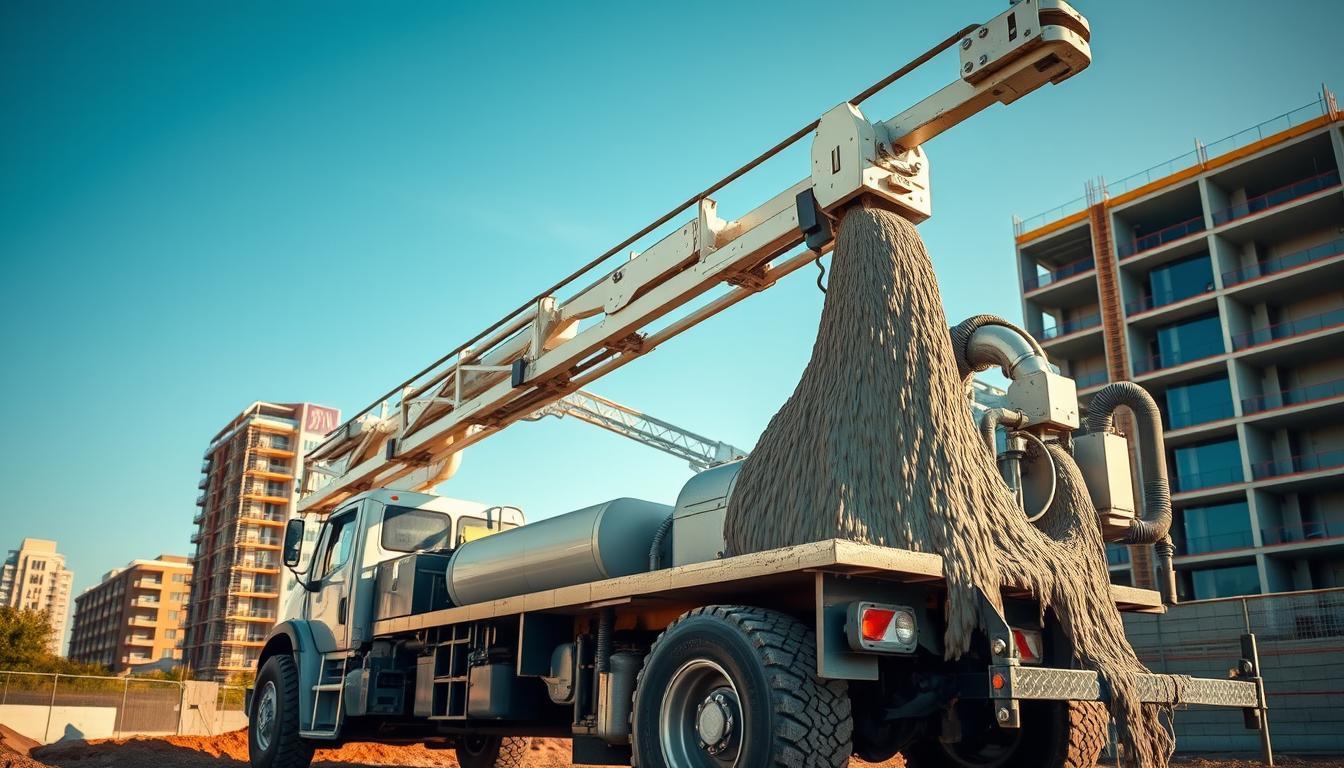
New tech has made concrete pumps work better. Automated systems and remote controls are big improvements. They give better control and make work safer.
Automated Systems
Automated systems in concrete pumps cut down on mistakes. They let:
- Precise control over the pumping process
- Real-time monitoring of the concrete flow
- Automatic adjustment of pump settings for optimal performance
These systems make work faster and cheaper. They’re key for today’s construction projects.
Remote Controls
Remote controls add safety and flexibility to concrete pumping. Operators can:
- Manage the pumping process more safely, away from hazards
- Adjust settings in real-time to meet project needs
- Improve efficiency by cutting down on on-site changes
Remote controls also lower accident rates and make work safer.
In summary, new tech in concrete pumps, like automated systems and remote controls, has boosted the construction world. They make work safer, more efficient, and productive. These advancements will keep being important for building our infrastructure.
Maintenance and Care for Concrete Pumps
The life of concrete pumps depends on regular care and maintenance. In infrastructure projects, these machines are key. Keeping them in good shape is vital for meeting project deadlines.
Regular upkeep extends the life of the equipment and keeps it running well. For concrete pumping services companies, this means less time off and better service.
Routine Inspections
Regular checks are a must for maintenance. They include looking at the hydraulic system and checking for wear on parts. It’s also important to make sure all mechanical parts work right.
During these checks, look for leaks, hose damage, and control system issues. Finding problems early helps avoid big breakdowns that can stop infrastructure projects.
Troubleshooting Common Issues
Even with regular care, problems can pop up. Knowing how to fix common issues is key to keeping things moving. For example, if a pump isn’t pumping well, it might be blocked or have hydraulic system trouble.
For concrete pump rental companies, being able to solve these problems quickly is important. Issues like clogs, faulty valves, and engine or hydraulic system problems can happen. Knowing how to fix these helps keep projects on track.
Understanding and fixing these common problems helps keep equipment running smoothly. This ensures construction projects can continue without pause.
Regulatory Compliance and Safety Standards
Regulatory compliance and safety standards are key for the safe use of concrete pumps in building roads, bridges, and tunnels. It’s important to follow these rules to avoid accidents and keep the work area safe.
OSHA Regulations
The Occupational Safety and Health Administration (OSHA) has rules for using concrete pumps on construction sites. These rules help reduce risks from heavy machinery. Some important OSHA rules are:
- Regular checks and upkeep of equipment to avoid breakdowns.
- Training operators well so they know how to use the equipment safely.
- Wearing personal protective equipment (PPE) to protect against dangers.
Industry Best Practices
Following industry best practices also boosts safety and efficiency. These include:
- Doing detailed risk assessments before starting work.
- Having safety plans ready for emergencies.
- Keeping workers up-to-date with new technologies and methods.
By following both rules and best practices, construction projects with concrete pumps can lower accident risks. This makes the work environment safer for everyone.
Future Trends in Concrete Pumping
The construction world is on the verge of a big change. This is thanks to new concrete pump technology. As projects get more complex, we need better and greener construction tools.
Sustainable Practices
Now, making the environment a priority is key in concrete pumping. Companies are making pumps that use less energy and harm the planet less. This move towards being green will change how we build things.
Technological Advancements
New materials and methods are changing the game. We’re seeing better concrete and pumping tech that makes buildings last longer. Adding digital tech to construction equipment is making things more efficient and productive.
Looking ahead, we’ll see big leaps in how we pump concrete. By following these trends, builders can make top-notch projects and protect our planet at the same time.
FAQ
What are the benefits of using concrete pumps in infrastructure projects?
What types of concrete pumps are available for infrastructure projects?
How do I choose the right concrete pump for my infrastructure project?
What are the latest innovations in concrete pump technology?
How can I ensure the longevity and optimal performance of my concrete pump?
What are the regulatory compliance and safety standards for using concrete pumps?
How do concrete pumps contribute to eco-friendly infrastructure development?
Can concrete pumps be used for complex infrastructure projects, such as roads, bridges, and tunnels?
Note: Prices and specifications shown are for reference only and may change without notice. For the latest information, please contact Transtech directly on 021 948 4746.