

The construction industry in South Africa is booming, with commercial projects on the rise.
Did you know that the efficiency of concrete equipment can make or break a project’s timeline?
Concrete pumps are key in modern construction. They help move liquid concrete efficiently to where it’s needed.
Choosing the right concrete pumps for your commercial projects boosts productivity. It also ensures high-quality results.
Understanding Concrete Pumps
In industrial construction, knowing about concrete pumps is key for project success. These machines move liquid concrete through pipes to where it’s needed. They are vital in today’s construction world.
There are many types of concrete pumps, like boom, line, and trailer pumps. Each has its use and benefits. Knowing how they work helps builders choose the right one for their project.
What are Concrete Pumps?
Concrete pumps are specialised construction machinery for moving liquid concrete. They’re ideal for reaching hard spots or long distances. Their use is common on construction sites because they save time and money.
How Do Concrete Pumps Work?
Concrete pumps use a hydraulic or mechanical system to push concrete through pipes. The process starts with concrete in a hopper, then it’s pumped to its final spot. The right pump depends on the project’s needs, like how much concrete and how far it must go.
Knowing how concrete pumps work is important for construction projects. The right pump choice can speed up work, make it safer, and keep the concrete quality high.
Types of Concrete Pumps for Commercial Use
Different commercial projects need different concrete pumps. Each pump has its benefits. Knowing these differences helps pick the best pump for a project, ensuring it’s done well and on time.
Boom Pumps
Boom pumps are ideal for big projects. They can reach far and are flexible. This makes them perfect for tall buildings and big projects.
Key Features of Boom Pumps:
- Long reach and flexibility
- Ideal for large-scale projects
- Reduces labor costs due to efficient concrete placement
Line Pumps
Line pumps are useful for many projects. They work well in tight spaces and can pump concrete far. They’re also good with different kinds of concrete.
Advantages of Line Pumps:
- Versatile and adaptable to different project needs
- Suitable for projects with limited space
- Can handle various concrete mixes
Trailer Pumps
Trailer pumps are ideal for hard-to-reach places. They’re easy to move around. This makes them perfect for tough terrains.
Benefits of Trailer Pumps:
- Highly mobile and easy to transport
- Ideal for remote or hard-to-reach areas
- Compact design for challenging terrains
Let’s look at how these pumps compare:
| Type of Pump | Ideal Use | Key Features |
|---|---|---|
| Boom Pumps | Large-scale projects, high-rise buildings | Long reach, flexibility, efficient concrete placement. |
| Line Pumps | A variety of projects, limited space | Versatile, handles different concrete mixes, suitable for long distances |
| Trailer Pumps | Remote or hard-to-reach areas | Highly mobile, compact design, easy to transport. |
Knowing what each pump does best helps project managers choose the right one. Whether it’s a boom pump for big jobs, a line pump for many uses, or a trailer pump for tough spots, picking the right tool is key.
Benefits of Using Concrete Pumps in Commercial Projects
For big commercial projects, like shopping centres and malls, concrete pumps are a big help. They bring many benefits to the construction process.

Increased Efficiency
One key benefit of concrete pumps is how they make projects faster. They let concrete flow without needing manual help. This is ideal for big projects where time is important.
Continuous Pouring Capability: Concrete pumps keep concrete flowing without stops. This is key for keeping big buildings strong.
Reduced Labor Costs
Concrete pumps also reduce labour costs. They reduce the need for manual work with concrete. This saves money and boosts work efficiency.
“The automation of concrete pouring through the use of concrete pumps has revolutionized the construction industry, making it more cost-effective and efficient.”
Improved Safety Standards
Concrete pumps also make construction sites safer. They cut down on the need for manual concrete handling. This lowers the chance of accidents and injuries.
Enhanced Safety: Less manual work with concrete means fewer accidents. This makes the workplacesafer for everyone.
In summary, using concrete pumps in commercial projects has many benefits. These include faster work, lower labour costs, and better safety. For big projects like malls and shopping centres, these advantages are very important. They help finish projects on time and successfully.
Key Considerations When Choosing a Concrete Pump
Choosing the right concrete pump for a commercial project is key. It’s important to look at several factors. This helps ensure the pump fits the project’s needs, making work more efficient and avoiding problems.
Project Size and Scope
The size and scope of a project are key in picking the right concrete pump. Big projects need strong pumps that can move a lot of concrete.
- Please consider the project’s size when selecting the appropriate pump size.
- Please consider the amount of concrete you’ll require.
- Consider the project’s timeline and how it affects pump choice.
Type of Concrete Being Used
The type of concrete matters a lot when choosing a pump. Different concretes need different pumps, based on pressure and flow.
Key considerations include:
- Check if the mix design works with the pump.
- Look at the concrete’s slump and flow.
- Think about additives or admixtures that might change how it pumps.
Site Access and Conditions
Access and conditions at the site are also important. They affect how easy it is to move and use the pump. Things like terrain, space, and weather matter a lot.
For instance:
- Remote or hard-to-get-to sites might need trailer or line pumps.
- Busy cities with little space might need smaller pumps.
- Bad weather can affect the pump’s work, and it might need special plans.
By looking at project size, concrete type, and site conditions, companies can pick the best pump. This ensures their commercial projects succeed.
The Role of Concrete Pumps in Construction
Concrete pumps play a big role in construction. They help projects move faster, improve quality, and cut labour costs. These pumps are essential pieces of construction equipment that transform the process of carrying out commercial projects.
They make it possible to place concrete quickly. This is crucial for commercial projects because they need to finish on time.
Enhancing Project Timelines
Concrete pumps help place concrete fast. This keeps projects on track. Big commercial projects cannot afford delays, as they would result in significant financial losses.
Facilitating Large-Scale Pouring
Concrete pumps are ideal for big pours. They’re perfect for big projects like building high-rises or large infrastructure.
Ensuring Consistent Quality of Concrete
They also ensure that the quality of the concrete is consistently high. By keeping the concrete flowing smoothly, they avoid problems that could weaken the building.
| Benefits | Description |
|---|---|
| Enhanced Project Timelines | Rapid placement of concrete is necessary to stay on schedule. |
| Large-Scale Pouring | Facilitates efficient coverage of vast areas efficiently |
| Consistent Quality | Maintain a steady flow to prevent inconsistencies. |
Popular Brands of Concrete Pumps for Commercial Projects
In the world of commercial construction, the right concrete equipment is key. Several brands lead the way. They focus on reliability, efficiency, and durability.
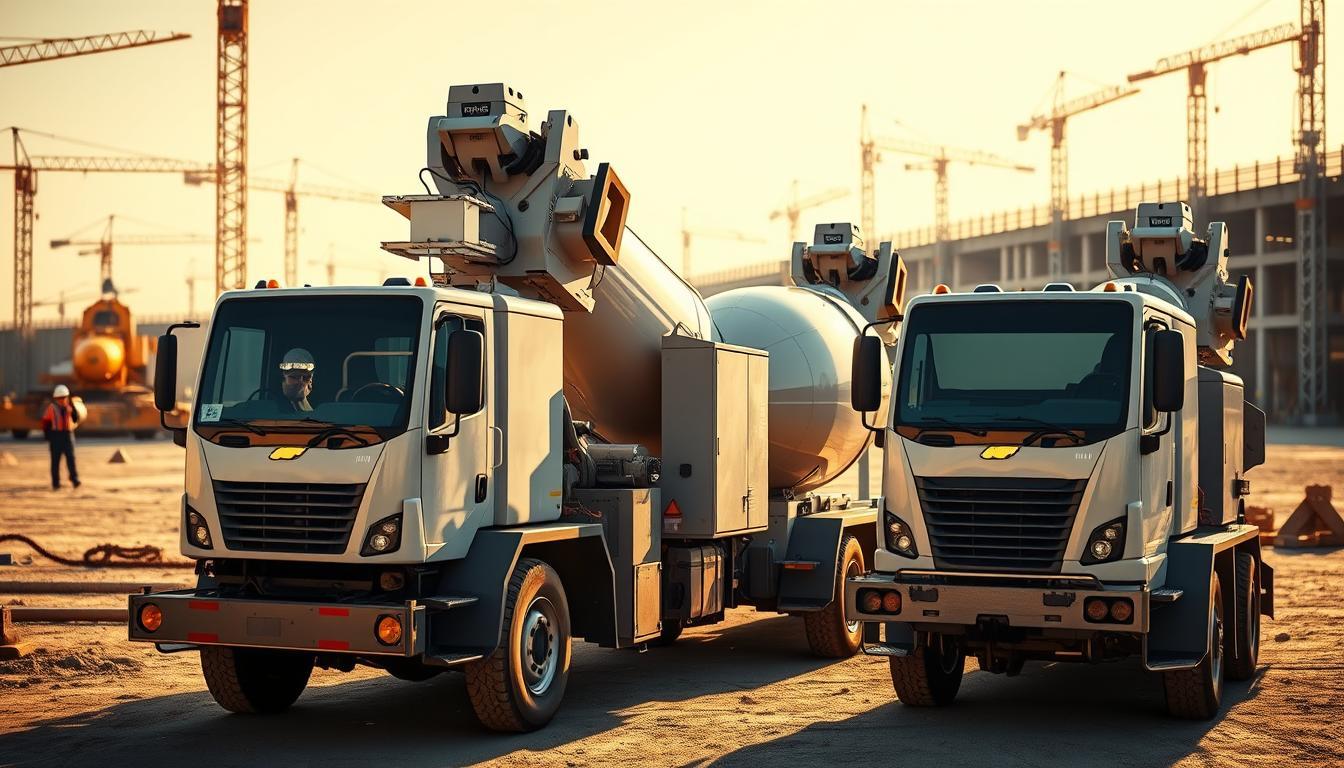
Many brands are leaders in their industry. They offer concrete pumps for various needs. Putzmeister, Schwing, and Mack are known for quality and innovation.
Putzmeister
Putzmeister is a respected name in concrete pumping. Their pumps are strong and reliable. They’re a top choice for demanding projects.
Schwing
Schwing is known for its wide range of concrete pumps. Their products are durable and perform well. They’re excellent for big commercial projects.
Mack
Mack is trusted for its high-quality concrete pumps. They’re reliable and efficient. This is perfect for building in the commercial sector.
These brands have set high standards in the industry. They’ve helped advance concrete equipment. Their products meet the needs of commercial projects.
Choosing a brand like Putzmeister, Schwing, or Mack is wise. They offer top-notch commercial concrete pumps. This improves project efficiency and cuts costs. They’re perfect for big projects or high-rise buildings.
Best Practices for Operating Concrete Pumps
To get the most out of concrete pumping services, it’s key to follow best practices. This makes construction projects run smoother and keeps everyone safe.
To use concrete pumps effectively, one must have a good understanding of the equipment. It also means sticking to safety rules and keeping the equipment in top shape.
Training and Certification
Getting trained and certified is vital for pump operators. Certified operators know how to use modern pumps safely and efficiently.
- Training should cover all aspects of pump use, maintenance, and safety.
- Certification ensures operators meet a high standard, no matter the project.
Regular Maintenance
Keeping pumps in good shape is key to avoiding breakdowns. A well-maintained pump runs smoothly and keeps projects on track.
| Maintenance Task | Frequency | Importance |
|---|---|---|
| Oil and filter checks | Daily | High |
| Pump hydraulic system checks | Weekly | High |
| Thorough cleaning and inspection | Monthly | Critical |
Safety Protocols
Following safety rules is critical to avoid accidents. Safety should always be the first thing on your mind when using heavy machinery.
Safety measures include regular checks, proper training, and following safety guidelines. This approach keeps the workplace safe and accident-free.
For project-specific concrete solutions in big projects, like shopping centres, these best practices are essential. They help finish the project on time and ensure quality.
Case Studies of Successful Commercial Projects
The construction world has changed a lot with the use of concrete pumps in big projects. These pumps have helped many big projects succeed all over the world.
High-Rise Building Construction
Concrete pumps make placing concrete easy, even in hard places. For example, the Burj Khalifa, the tallest building, needed advanced pumps to build.
“The ability to pump concrete to extreme heights was a critical factor in the successful completion of the Burj Khalifa,” said a project manager on the site. This shows how important concrete pumps are in construction.
Infrastructure Development
Projects like building bridges and highways also use concrete pumps. These machines help place a lot of concrete fast, which is key for quick projects.
The Golden Gate Bridge got a big update, and concrete pumps were key to keeping it strong.
Industrial Facility Construction
Building places like factories and warehouses needs a lot of concrete. Concrete pumps make this work faster, helping projects finish on time.
In South Africa, a big factory used pumps to speed up its build. They finished early, thanks to the pumps.
Looking at these examples, we see how concrete pumps help big projects succeed. They are key for building tall buildings, roads, and factories. By studying these cases, builders can learn a lot about using concrete pumps well.
Future Trends in Concrete Pumping Technology
The construction world is on the verge of a big change. Concrete pumping is included in this transformation. New advancements in equipment and machinery will shape the industry’s future.
Advancements in Automation
Automation is changing the concrete pumping scene. Smart technology will make pumps more efficient, precise, and safe. This will speed up projects and reduce labour costs.
Eco-Friendly Innovations
The industry is moving towards greener solutions. It aims to lessen the environmental impact of pumps. Expect to see more energy-saving machines and the use of alternative fuels.
Adapting to Climate Change
Climate change is forcing the industry to adapt. Concrete pumping tech will evolve to handle extreme weather. We’ll see stronger machines and new ways to pump concrete in tough conditions.
The future of concrete pumping looks promising. Companies like Putzmeister and Schwing will lead the way. They will drive innovation in pumps and machinery.
FAQ
What are the benefits of using concrete pumps for commercial projects?
How do I choose the right concrete pump for my commercial project?
What types of concrete pumps are available for commercial use?
What are some popular brands of concrete pumps used in commercial projects?
How can I ensure the safe operation of concrete pumps on my construction site?
Can concrete pumps be rented for commercial projects?
What is the role of concrete pumps in enhanced project timelines?
How do concrete pumps contribute to the quality of concrete in commercial projects?
Note: Prices and specifications shown are for reference only and may change without notice. For the latest information, please contact Transtech directly on 021 948 4746.