

Did you know that the first automated side loader, introduced in 1969, could collect 300-gallon containers in just 30 seconds? This innovation revolutionized waste management and set the stage for modern garbage truck designs.
Today, garbage trucks are more than just vehicles for waste collection. They are essential tools for maintaining clean and efficient urban environments. From traditional rear loaders to high-tech automated systems, these trucks have evolved to meet the growing demands of cities worldwide.
Modern designs focus on improving efficiency and reducing environmental impact. Innovations like split body trucks allow for the collection of multiple waste types in one trip, optimizing routes and saving time. Pneumatic systems can even collect waste from hard-to-reach areas, ensuring no spot is left behind.
This article will explore the fascinating world of garbage truck designs, from their humble beginnings to the cutting-edge technologies shaping the future of waste management. Stay tuned to discover how these vehicles are transforming urban sanitation and making our cities cleaner and greener.
Global Perspectives on Garbage Truck Designs
Europe and Asia lead the way in innovative waste collection solutions. These regions have developed unique designs to address their specific challenges, from dense urban areas to remote rural locations. Their contributions have shaped the global landscape of waste management.
Pioneering Trends in Europe and Asia
In Europe, environmental regulations have driven the adoption of advanced technologies. Many trucks now feature electric or hybrid power sources, reducing emissions and improving sustainability. Compact designs are also popular, allowing for efficient navigation through narrow streets.
Asia, on the other hand, focuses on high-capacity systems to manage large volumes of waste. Automated compactors are widely used, ensuring faster and more efficient collection. These innovations are particularly effective in rapidly growing cities.
Adapting Designs for Local Needs
Local waste management needs play a crucial role in shaping truck designs. In rural areas, vehicles are often equipped with robust compactors to handle diverse waste types. Urban areas prioritize maneuverability and noise reduction to minimize disruption.
Balancing advanced technology with traditional methods is key. While automation improves efficiency, manual systems remain essential in areas with limited infrastructure. This hybrid approach ensures reliable service across diverse environments.
- Europe emphasizes sustainability with electric and hybrid trucks.
- Asia focuses on high-capacity systems for urban waste management.
- Local needs drive innovation in compactor and truck designs.
Key Features of Modern Garbage Trucks
Modern waste collection vehicles are equipped with cutting-edge technologies that redefine efficiency. These advancements ensure faster, safer, and more sustainable operations, making them indispensable in urban and rural settings alike.
Enhanced Compaction and Waste Collection
One of the standout features of today’s vehicles is their advanced compaction systems. These systems can compress waste by up to 5:1, significantly increasing storage capacity. This reduces the number of trips needed to disposal sites, saving time and fuel.
Automated side loaders, for example, use robotic arms to collect waste efficiently. This technology minimizes manual labor and improves safety, especially in densely populated areas. With GPS tracking integrated into over 70% of modern vehicles, routes are optimized, further enhancing efficiency.
Innovative Vehicle Safety and Efficiency
Safety is a top priority in modern designs. Features like automatic braking and collision detection are now standard in 40% of new models. These systems reduce accidents and ensure smoother operations.
Energy-efficient engines are another highlight, cutting fuel consumption by 20% and lowering emissions by up to 50%. These improvements align with global sustainability goals, making waste management more eco-friendly.
- Advanced compaction systems increase storage capacity and reduce trips.
- Automated side loaders improve safety and efficiency in urban areas.
- GPS tracking optimizes routes, saving time and fuel.
- Safety features like automatic braking enhance operational reliability.
- Energy-efficient engines reduce emissions and support sustainability.
Design Evolution in South Africa
The evolution of waste collection vehicles in South Africa reflects the country’s unique environmental and urban challenges. From bustling cities like Johannesburg to remote rural areas, the industry has adapted to meet diverse needs. Local manufacturers play a crucial role in shaping designs that ensure efficient waste management across the region.
Local Industry Adaptation and Challenges
South Africa’s varied landscape demands innovative solutions. In urban areas, vehicles must navigate narrow streets and high traffic, while rural regions require robust designs to handle rough terrains. Local manufacturers have risen to the challenge, creating trucks that balance durability and efficiency.
One major challenge is the extreme loading conditions caused by diverse waste types. From household refuse to industrial debris, vehicles are equipped with advanced compaction systems to handle heavy loads. These modifications ensure reliable collection even in demanding environments.
Another key factor is the influence of local waste management practices. South Africa’s focus on recycling and sustainability has led to the integration of eco-friendly features in vehicle designs. For example, some models now include hybrid engines to reduce emissions and fuel consumption.
- Urban areas prioritize maneuverability and noise reduction for minimal disruption.
- Rural regions benefit from robust designs capable of handling rough terrains.
- Advanced compaction systems manage diverse waste types efficiently.
- Eco-friendly features like hybrid engines support sustainability goals.
Adapting international designs to meet local needs has been a cornerstone of South Africa’s success. By combining global innovations with regional expertise, the industry continues to drive progress in waste management. This approach ensures that vehicles are not only efficient but also tailored to the unique demands of the South African market.
Cutting-Edge Technology in Garbage Truck Manufacturing
Innovations in manufacturing are transforming how waste collection vehicles operate, making them smarter and more efficient than ever before. From advanced compaction systems to smart fleet management, these technologies are reshaping the industry.
Smart Fleet Management Systems
One of the most significant advancements is the integration of smart fleet management systems. These systems use GPS tracking and real-time data to optimize routes, reduce fuel consumption, and improve overall efficiency. For example, some fleets have reduced the number of vehicles needed by 50%, saving time and resources.
These systems also enhance safety by monitoring driver behavior and vehicle performance. Features like automatic braking and collision detection are now standard in many models, ensuring smoother and safer operations.
Innovative Compactor Features
Modern vehicles are equipped with advanced compaction systems that can compress waste by up to 5:1. This significantly increases storage capacity, reducing the number of trips to disposal sites. For instance, the Roto Pac design offers a compaction rate of 1,222 pounds per cubic yard, outperforming traditional models.
These compactors are also designed to handle diverse waste types, from household refuse to industrial debris. This versatility ensures reliable performance in various environments, from urban centers to rural areas.
Enhanced Vehicle Performance
Energy-efficient engines are another highlight of modern manufacturing. These engines cut fuel consumption by 20% and lower emissions by up to 50%. Electric models, in particular, produce zero tailpipe emissions, making them an eco-friendly solution for urban areas.
Additionally, advanced prognostics systems monitor vehicle health, alerting operators when maintenance is needed. This prevents unnecessary downtime and reduces long-term costs.
- Smart fleet management systems optimize routes and improve safety.
- Advanced compaction systems increase storage capacity and efficiency.
- Energy-efficient engines reduce emissions and support sustainability.
- Prognostics systems ensure reliable vehicle performance and lower maintenance costs.
Garbage Truck vs. Compactor Truck: Understanding the Differences
Understanding the differences between garbage trucks and compactor trucks can help optimize waste management strategies. While both are essential for refuse collection, their designs and functionalities cater to specific needs. Let’s explore their key distinctions and advantages.
Structural and Operational Differences
Garbage trucks are primarily designed for municipal solid waste, such as household trash. They often feature rear-loading or side-loading systems for manual or automated collection. Compactor trucks, on the other hand, focus on compressing refuse to maximize storage capacity. Their advanced compaction systems can reduce waste volume by up to 5:1, making them ideal for high-volume areas.
Advantages in Various Scenarios
Garbage trucks excel in residential areas with fixed routes and regular pickups. Their maneuverability and compact designs make them suitable for narrow streets. Compactor trucks are more effective in commercial or industrial settings, where large volumes of refuse require efficient compression and transport.
Refuse Collection Methods
The design of each vehicle influences its collection methods. Garbage trucks often use hydraulic systems to lift and empty bins, while compactor trucks rely on powerful compaction mechanisms to handle diverse waste types. This versatility ensures reliable performance in both urban and rural environments.
| Feature | Garbage Truck | Compactor Truck |
|---|---|---|
| Primary Use | Municipal solid waste | High-volume refuse |
| Compaction Capability | Limited | Up to 5:1 |
| Ideal Setting | Residential areas | Commercial/industrial areas |
| Collection Method | Hydraulic lifting | Powerful compaction |
Real-World Applications
In South Africa, garbage trucks are commonly used in urban areas for daily refuse collection. Compactor trucks, however, are preferred in high-density locations like shopping centers and apartment complexes. Their ability to handle large volumes efficiently reduces the need for frequent trips to disposal sites.
By understanding these differences, waste management teams can choose the right vehicle for their specific needs, improving efficiency and sustainability in refuse collection.
Transtech: Leading Service Provider in Garbage Truck Solutions
Transtech has been a trusted name in waste management solutions for over three decades. With a focus on innovation and quality, the company has become a preferred provider in South Africa. Their cutting-edge designs and reliable services ensure efficient waste collection for both municipalities and private clients.

Our Innovative Approach
Transtech’s approach combines advanced technology with tailored solutions. They understand the unique needs of their clients, offering vehicles that maximize efficiency and sustainability. From automated systems to eco-friendly engines, their designs are built to last and perform.
For expert support and customized solutions, call 021 948 4746 or email info@transtech.co.za. Their team is ready to assist with all your waste management requirements.
Tailored Solutions for Every Need
Transtech’s services are designed to meet diverse challenges. Whether it’s urban waste collection or rural operations, their vehicles are equipped to handle it all. Their high-capacity systems and advanced compaction technologies ensure reliable performance in any environment.
Here are some key features of Transtech’s solutions:
- Advanced compaction systems for increased storage capacity.
- Eco-friendly engines that reduce emissions and fuel consumption.
- Customizable designs to meet specific operational needs.
Success Stories
Transtech has supported numerous municipalities and private clients with their innovative solutions. For example, their automated side loaders have significantly improved efficiency in urban areas. In rural regions, their robust designs ensure reliable waste collection even in challenging terrains.
| Feature | Benefit |
|---|---|
| Advanced Compaction | Reduces waste volume and disposal trips |
| Eco-Friendly Engines | Lowers emissions and supports sustainability |
| Customizable Designs | Tailored to meet specific operational needs |
With Transtech’s expertise, waste management becomes more efficient and sustainable. Their commitment to innovation and quality makes them the ideal partner for all your waste collection needs.
Sustainable Waste Management and Fleet Efficiency
Sustainable practices are reshaping the waste management industry, offering greener solutions for urban and rural areas. By integrating advanced technologies and efficient systems, municipalities can significantly reduce their environmental impact while improving operational efficiency.
Reducing Environmental Impact with Modern Designs
Modern fleet management systems play a crucial role in minimizing environmental footprints. These systems use real-time data and GPS tracking to optimize routes, reducing fuel consumption and emissions. For example, some fleets have cut their vehicle numbers by 50%, saving resources and lowering costs.
Electric vehicles are another game-changer in sustainable waste management. With zero tailpipe emissions, they contribute to cleaner air and reduced greenhouse gases. Cities like New York have already adopted electric models, achieving a 50% reduction in noise pollution compared to traditional vehicles.
Municipalities have various options to upgrade their fleets. Hybrid engines, advanced compaction systems, and predictive maintenance technologies are just a few solutions available. These innovations not only enhance efficiency but also support long-term sustainability goals.
- Electric vehicles reduce emissions and noise pollution significantly.
- Fleet management systems optimize routes, saving fuel and time.
- Advanced technologies like predictive maintenance extend vehicle lifespan.
By adopting these strategies, cities can achieve better waste management while protecting the environment. Sustainable designs and efficient systems are the future of urban sanitation, ensuring cleaner and greener communities for generations to come.
Diverse Garbage Truck Models and Their Applications
The waste management industry offers a wide range of vehicle models to meet diverse operational needs. From compact designs for narrow streets to heavy-duty systems for industrial waste, there’s a solution for every challenge. This section explores the variety of models available and their specific applications.
Range from Traditional Vehicles to High-Tech Compactors
Traditional waste collection vehicles, like rear loaders, remain popular for their simplicity and reliability. These models are ideal for residential areas with fixed routes. In contrast, modern compactor trucks feature advanced systems that compress waste by up to 5:1, significantly reducing disposal trips.
For example, front loader models can handle dumpsters weighing up to 8,000 pounds, making them perfect for commercial settings. Side loaders, on the other hand, can visit up to 1,500 homes daily, showcasing their efficiency in urban areas.
Versatile Uses in Urban and Rural Settings
In urban environments, maneuverability and noise reduction are key. Compact designs and electric engines are increasingly used to minimize disruption. Rural areas, however, require robust vehicles capable of handling rough terrains and diverse waste types.
Multi-compartment models are particularly useful in cities, allowing for the segregation of recyclables and general waste. These designs enhance efficiency and support sustainability goals.
| Model | Capacity | Best Use |
|---|---|---|
| Rear Loader | 6-35 cubic yards | Residential areas |
| Front Loader | Up to 40 cubic yards | Commercial settings |
| Side Loader | 1,500 homes/day | Urban waste collection |
| Compactor Truck | Up to 5:1 compression | High-volume refuse |
Whether it’s a traditional rear loader or a high-tech compactor, each model offers unique benefits. By understanding these differences, waste management teams can choose the right vehicle for their specific needs, ensuring efficient and sustainable operations.
Practical Insights from the Garbage Truck Industry
International case studies reveal valuable lessons for improving refuse collection and fleet efficiency. Over the years, global implementations have showcased innovative solutions that address diverse challenges. These insights are shaping the future of waste management, offering actionable strategies for municipalities and private operators alike.
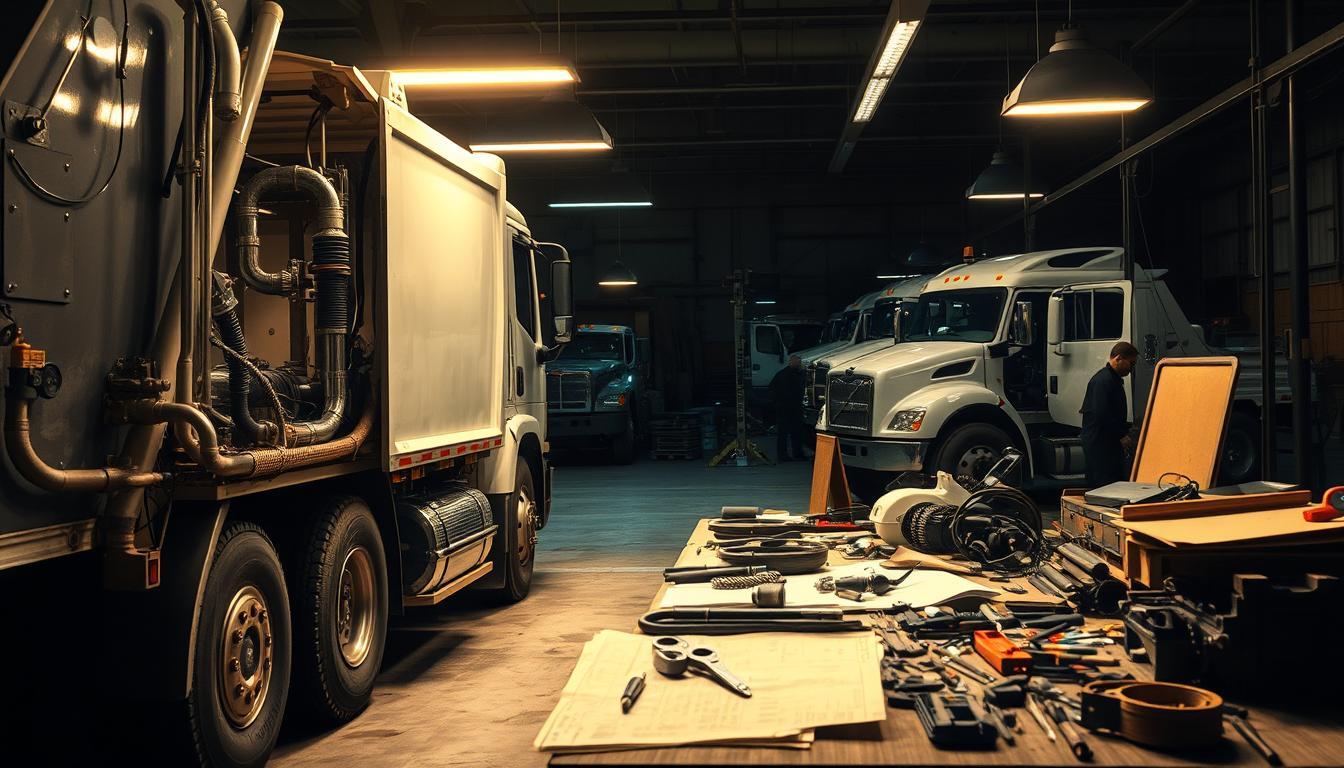
Lessons from Global Implementations
One key lesson is the importance of adapting designs to local needs. For example, in densely populated cities like New York, electric vehicles have reduced noise pollution by 50%. This approach highlights how global trends can be tailored to specific environments.
Another insight comes from the Fresh Kills Landfill, operational from 1947 to 2001. Its transformation into a park underscores the need for sustainable waste management solutions. This case study demonstrates the long-term benefits of integrating eco-friendly practices into fleet operations.
Industry Trends and Real-World Implications
Recent years have seen a surge in smart fleet management systems. These technologies optimize routes, reduce fuel consumption, and improve safety. For instance, Republic Services saved $70 million annually by implementing AI-guided systems across its fleet.
Electric and hybrid vehicles are also gaining traction. They not only lower emissions but also align with global sustainability goals. Cities worldwide are adopting these models to enhance their waste management services.
Adapting Global Best Practices Locally
South Africa’s waste management industry has successfully adapted international innovations. By combining global expertise with local knowledge, the country has developed robust solutions for both urban and rural areas. This hybrid approach ensures efficient service delivery across diverse environments.
- Adapt designs to meet local needs for better efficiency.
- Integrate smart technologies to optimize fleet management.
- Adopt electric and hybrid vehicles for sustainability.
- Combine global innovations with local expertise for tailored solutions.
By learning from global implementations, the waste management industry can continue to evolve. These insights provide a roadmap for improving service, reducing costs, and supporting sustainability goals worldwide.
Final Reflections on Garbage Truck Innovation
The journey of waste collection vehicles has been marked by remarkable advancements and innovative solutions. From traditional designs to high-tech compactors, the industry has evolved to meet the growing demands of urban and rural areas alike. These vehicles are now more efficient, eco-friendly, and tailored to specific needs.
The ongoing need for advanced solutions highlights the importance of sustainable practices. Smart fleet management, electric engines, and predictive maintenance are transforming the way we handle waste. These innovations not only improve efficiency but also reduce environmental impact.
Adapting to both traditional and modern designs ensures reliable service across diverse environments. Whether it’s compact models for narrow streets or robust systems for industrial waste, the right option can make all the difference. The future of waste management lies in balancing innovation with practicality.
As the industry continues to progress, embracing these advancements will be key to creating cleaner, greener communities. The options available today pave the way for a more sustainable tomorrow.
Note: Prices and specifications shown are for reference only and may change without notice. For the latest information, please contact Transtech directly on 021 948 4746.