

This Buyer’s Guide helps public workers and private haulers choose purpose-built refuse vehicles that raise diversion rates, lower costs, and improve safety.
Modern platforms such as the AutoCar DC-64RTM, ACX®, and ACMD® are factory-integrated for smooth body fitment. They offer 325° visibility, all‑steel cabs, class‑leading turning and strong yet light frames to boost payload and uptime.
Suppliers like New Way provide front, rear, and side loaders, a North American parts network, Sourcewell procurement services, and FleetForce rental options. Pack‑on‑the‑go hydraulics and split‑body designs let teams collect dual streams in one pass.
Why this matters: better body integration and compaction capture more material with fewer miles, reduce contamination, and protect quality. That saves money and keeps customers satisfied.
Why dustbin trucks matter to modern recycling in the United States
Today’s collection fleets must capture cleaner material while cutting costs and trips across dense urban routes. Right-sized vehicles and the correct body layout deliver measurable gains in diversion and service.
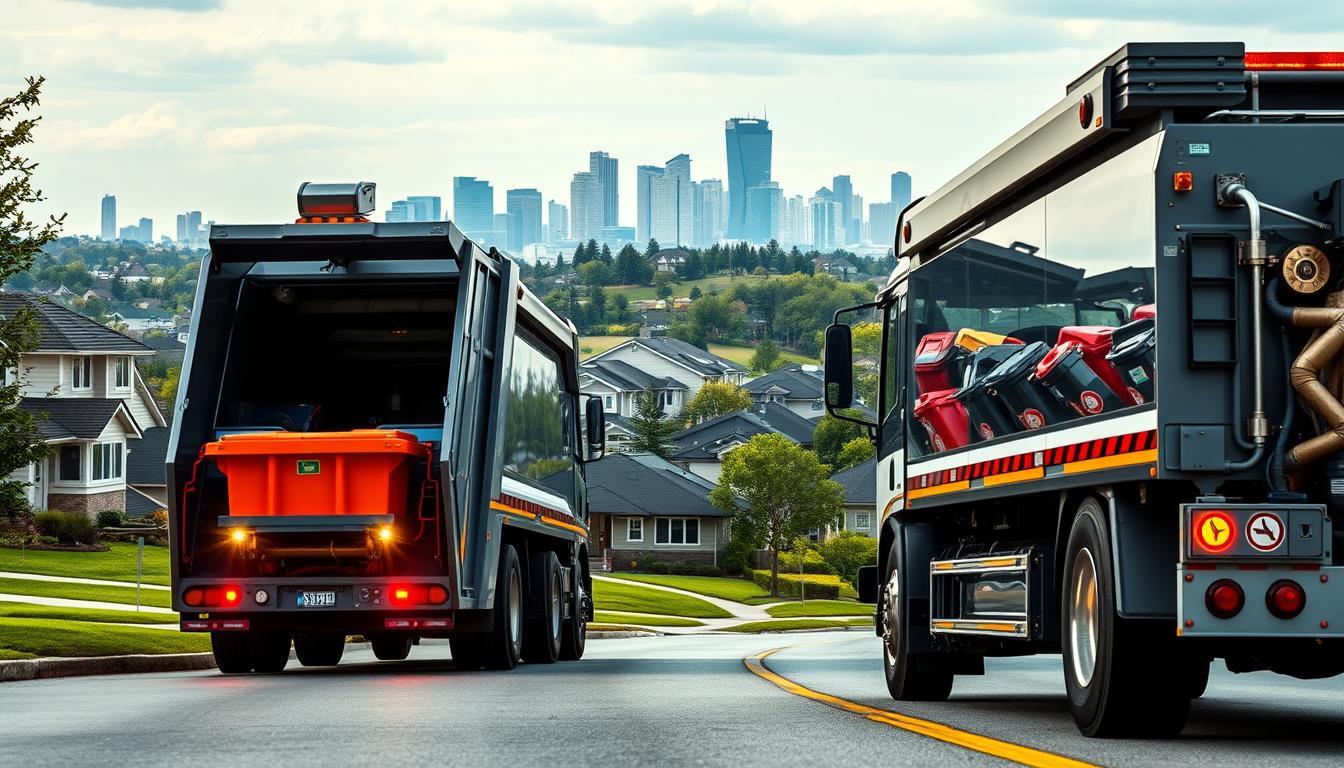
The present-day challenge and where refuse recycling fits
Rising contamination, shifting end‑markets and tighter budgets force programmes to collect cleaner streams with fewer passes. Matching vehicle configuration to container type is often the single biggest difference between smooth collection and frequent misses or overflow.
Design enhances diversion, safety, and productivity.
Front loaders handle commercial dumpsters with powered forks and hydraulic compaction. Rear loaders utilise packer blades to facilitate the collection of carted materials. Automated side loaders let a single operator work by joystick, cutting manual lifts and injury risk for the team.
- Split-body designs keep fibres and blended materials separate at the point of collection.
- Pack‑on‑the‑go hydraulics compact between stops to shave minutes and improve productivity.
- Improved cabs and tight turning radii help the driver navigate narrow streets and finish routes on time.
Dustbin truck recycling: models, mechanisms, and features that make a difference
Route type and container mix determine whether a front, rear, or automated side loader fits best.
Front loaders vs rear loaders vs automated side loaders
Front loaders lift commercial dumpsters with powered forks into a hopper and use a hydraulic wall to compact. They excel on scheduled commercial runs where large dumpsters are standard.
Rear loaders feed via a rear trough and use packer blades like Leach’s sweep‑and‑slide or Dempster’s swing link. They stay versatile for mixed urban set‑outs.
Automated side loaders (ASLs) use a robotic arm to lift carts. Automated Sorting Lifts (ASLs) speed up residential collection and reduce the risk of repetitive lifting injuries.
Split-body, chassis and cab advantages
Split-body designs let crews collect fibre and combined streams in one pass. ASL gate controls route material to left or right compartments to keep quality high.
| Feature | Benefit | Best use |
|---|---|---|
| Pack‑on‑the‑go hydraulics | Compact while driving to save route time | High‑density commercial corridors |
| Autocar ACX® cabover | Up to 325° visibility, tight turning radius | Narrow alleys and urban routes |
| DC‑64R™ conventional | Factory roll‑off hoist and deep body integration | Heavy duty and roll‑off applications |
| ASL with gate control | Dual‑stream collection in one pass | Residential cart programmes. |
Operator ergonomics also matter. ASLs remove most lifting, and bin tippers on rear loaders lower strain. That reduces injuries and downtime.
Work with experts early to match lift types, body capacities, and service intervals to your fleet’s needs.
Buyer’s Guide essentials: selecting trucks, parts, and support that keep your fleet productive
A clear, structured approach makes procurement faster and keeps operations steady. Start with route and crew analysis, then lock specifications and support agreements before you order.
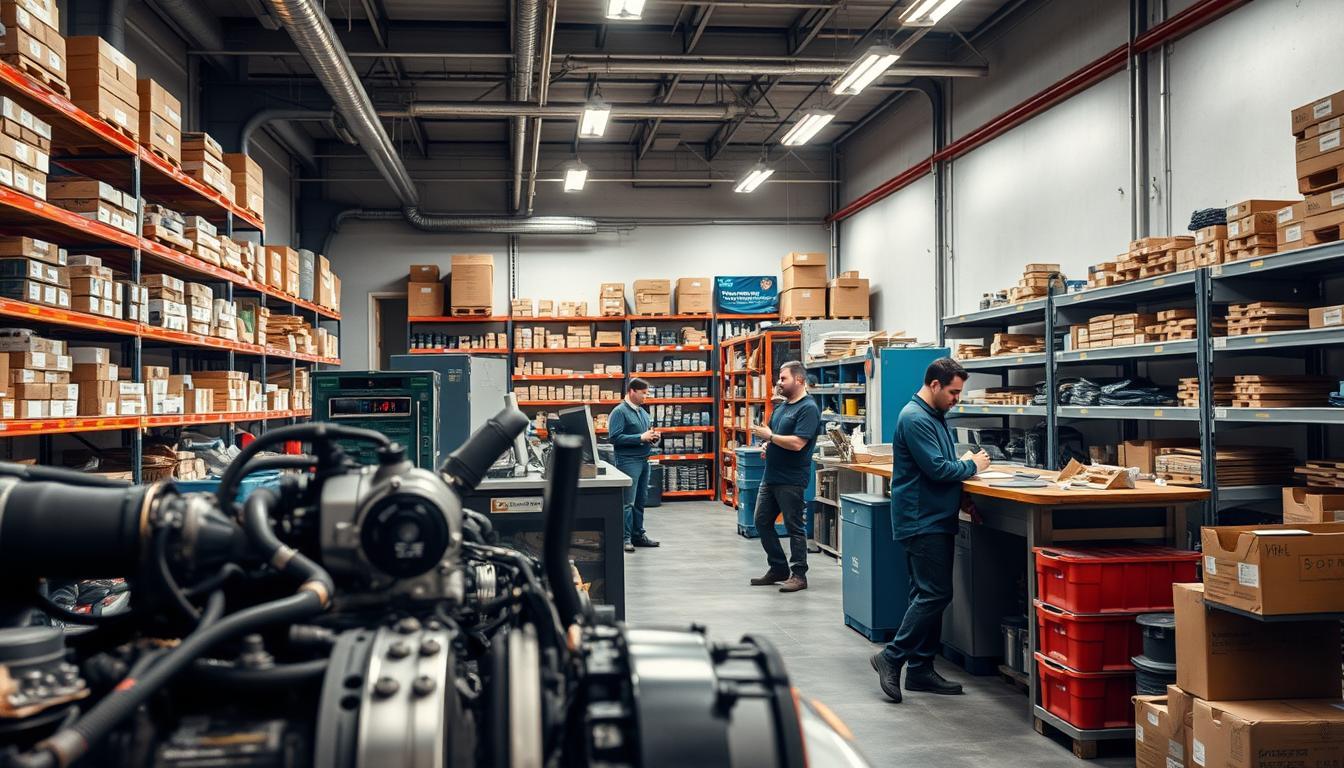
Assessing the region, routes, and crew size is necessary to determine the appropriate refuse truck.
Map urban cores, suburban sprawl, route density; and disposal distances. Those facts decide whether you need single‑operator ASLs or multi‑person rear loader crews.
Parts and service support: distributor networks, uptime, and genuine part availability.
Insist on genuine parts, clear SLAs and fast fill rates. New Way and Autocar support North American distributor networks that prioritise uptime and quick part delivery.
Procurement made easier with Sourcewell-certified partners
Sourcewell contracts cut procurement time and simplify compliance. Use certified partners for trucks, genuine parts and FleetForce rentals to reduce administrative delays.
Bridging gaps with rentals and scaling fleets during peak seasons
Rentals cover seasonal surges, storm response or onboarding slippage. They keep service levels high without long capital lead times.
| Checklist | What to verify | Expected benefit |
|---|---|---|
| Assessment | Region, route density, crew size | Right vehicle mix, fewer missed stops |
| Parts strategy | Genuine parts, SLAs, fill rates | Reduced downtime, predictable costs |
| Service coverage | Distributor map, tech certs, mobile support | Faster repairs, higher uptime |
| Procurement | Sourcewell certification, rental options | Faster delivery, compliance and flexibility |
Your next step: build a safer, faster, higher‑quality recycling fleet today
Move from planning to action: equip crews with purpose‑built vehicles, clear support paths and Sourcewell procurement to speed delivery. Engage manufacturer sales teams to verify specs for your routes and contamination goals.
Balance capital with flexibility: combine core refuse truck purchases and FleetForce rentals to cover leaf season, storms and holiday surges without over‑capitalising.
Prioritise safety and uptime. Choose cabs with 325° visibility, integrated bodies and service‑friendly features so drivers and maintenance teams keep assets earning all year.
Set measurable targets for fewer missed stops, faster route completion and lower driver injuries. Organise demos, request lifecycle costings and lock in sales to get refuse recycling trucks into service within a quarter.
FAQ
How do refuse recycling trucks improve diversion rates?
What is the difference between front loaders, rear loaders and automated side loaders?
When should I choose a split-body vehicle for dual‑stream collection?
Which chassis and cab features most affect safety and uptime?
Are there trusted manufacturers and models I should consider?
How do pack‑on‑the‑go hydraulics and compaction systems affect payload efficiency?
What ergonomic features reduce operator injury on collection vehicles?
How do I pick capacities and configurations for commercial versus residential routes?
Are there specific solutions for green waste, bulky items and roll‑off needs?
How should operators assess region, routes and crew size when specifying a vehicle?
What should I look for in parts and service support networks?
How can procurement via Sourcewell or similar contracts help buyers?
When is renting trucks a better option than buying?
What role do parts quality and genuine components play in fleet management?
How can fleets improve productivity and route efficiency with the right equipment?
Note: Prices and specifications shown are for reference only and may change without notice. For the latest information, please contact Transtech directly on 021 948 4746.