
How to Choose a Road Sweeper for Municipal, Industrial and Commercial Cleaning
Choosing the right road sweeper is an important decision for municipalities, contractors, industrial facilities, estates, shopping centres and other organisations responsible for keeping roads and paved areas clean.
Different sweeping environments have very different requirements. A machine that performs well on wide municipal roads may be unsuitable for narrow urban streets, parking areas or pedestrian spaces. Likewise, a compact sweeper designed for confined areas may not provide the hopper capacity or operating range required for larger road networks.
The best road sweeper should therefore be selected according to the area being cleaned, the type and volume of debris, expected daily operating hours, access restrictions and the level of sweeping capacity required.
This guide looks at the key factors to consider when choosing a road sweeper for municipal, commercial and industrial applications in South Africa.
Start with the Area That Needs to Be Cleaned
The first consideration should be the environment in which the road sweeper will operate.
Municipal roads, industrial yards, residential estates, airports, shopping centres and parking facilities all create different cleaning requirements.
A municipality responsible for large road networks may need a truck-mounted sweeper capable of travelling between cleaning areas and operating for long periods.
By contrast, a shopping centre or residential estate may place greater importance on manoeuvrability and the ability to work around parked vehicles, kerbs and confined areas.
Defining the operating environment first makes it much easier to determine which type of road sweeper is appropriate.
Understand the Main Types of Road Sweepers
Transtech supplies a range of road sweepers for sale in South Africa, including truck-mounted, compact, electric and specialist airport sweepers.
Each configuration has its own strengths and is designed for particular operating environments.
Truck-Mounted Road Sweepers
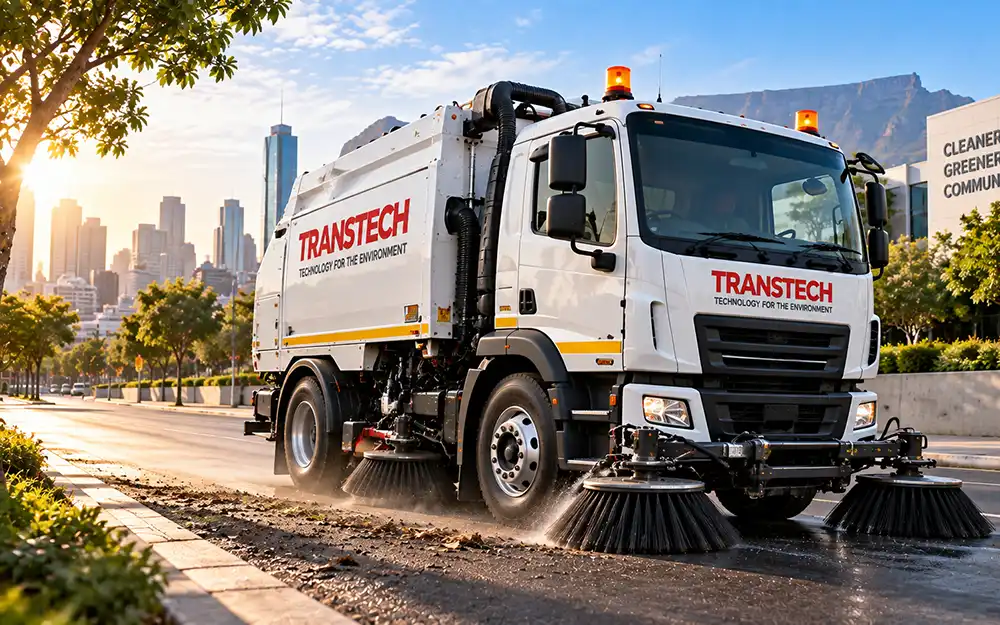
Truck-mounted road sweepers are suited to larger road networks, municipal streets, highways and other applications where high sweeping capacity and longer operating range are required.
Because the sweeping equipment is mounted on a truck chassis, these machines can travel between cleaning areas without requiring separate transport.
They are particularly useful where operators need to cover substantial distances during a working shift.
Compact Road Sweepers
Compact road sweepers are designed for environments where manoeuvrability is especially important.
They can be well suited to narrower streets, pedestrian areas, parking facilities, urban centres and other confined spaces where a full-size truck-mounted sweeper may be impractical.
Compact sweepers can provide a useful balance between cleaning performance and accessibility.
Electric Road Sweepers
Electric sweepers can be a suitable choice where operators want to reduce local tailpipe emissions and operating noise.
This can be particularly valuable in residential areas, urban environments and locations where sweeping may take place early in the morning or later in the evening.
Transtech supplies the Bucher V65e electric street sweeper for applications requiring truck-mounted sweeping performance with electric operation.
Airport and Runway Sweepers
Airports require specialist equipment because foreign object debris can create serious operational and safety concerns.
The Bucher V95T Aero airport sweeper is designed for runway and airport cleaning applications where high-speed debris collection and specialist sweeping performance are required.
Consider the Size of the Cleaning Area
The total area to be cleaned has a direct influence on the most appropriate road sweeper.
A large municipal road network may require equipment with a greater hopper capacity, higher travelling speed and longer operating range.
Smaller facilities may place more emphasis on manoeuvrability and ease of access.
When comparing sweepers, consider not only the size of the site but also how much of it needs to be cleaned during each shift.
A machine that is too small may require frequent unloading or refilling, while an unnecessarily large sweeper may be difficult to operate in confined spaces.
What Type of Debris Needs to Be Removed?
Road sweepers may be required to collect a wide variety of debris, including dust, sand, leaves, litter, gravel and other surface material.
The type of debris being collected can influence the sweeping system, suction performance, brush configuration and hopper capacity required.
A road sweeper used mainly for fine dust control may have different requirements from one regularly dealing with leaves, larger litter or construction debris.
Operators should therefore consider the typical debris encountered during normal working conditions rather than choosing a machine based only on general specifications.
Look at Sweeping Width and Productivity
Sweeping width affects how much surface area can be cleaned during each pass.
For large road networks, a wider effective sweeping path can improve productivity by reducing the number of passes required.
However, very wide equipment may not always be suitable for narrow roads or confined environments.
The most appropriate sweeping width depends on the roads, kerbs and surfaces being cleaned.
Productivity should also be assessed in terms of how much useful sweeping the machine can complete during a normal working shift.
Hopper Capacity Is Important
The hopper stores collected debris until the sweeper is emptied.
A larger hopper can allow a machine to remain in operation for longer before travelling to an unloading point.
This can be valuable on municipal routes and large industrial sites where the distance to the disposal area may be considerable.
However, hopper capacity should be considered together with vehicle size, payload requirements and manoeuvrability.
The aim is to select enough capacity for the workload without making the machine unnecessarily large for the operating environment.
Consider Water Capacity and Dust Suppression
Dust control is an important aspect of road sweeping.
Water systems can help suppress dust around the brushes and sweeping equipment, improving cleaning performance in dry conditions.
The amount of water carried by the machine can affect how long it can remain on station before refilling is required.
On larger routes, frequent water refills can reduce productive sweeping time.
Operators should therefore consider water capacity, water usage and the effectiveness of the dust suppression system when evaluating a road sweeper.
Manoeuvrability and Access
Not every road sweeper needs maximum capacity.
In many environments, the ability to reach and clean difficult areas is equally important.
Narrow streets, pedestrian zones, parking areas, loading bays and densely built-up sites may require a compact machine with a tight turning circle.
Before selecting a sweeper, consider the narrowest access points, turning areas and obstacles the machine will encounter during normal operation.
This is where a compact road sweeper may offer significant advantages over a full-size truck-mounted machine.
Operating Hours and On-Station Time
A road sweeper earns its value while it is actively cleaning.
Time spent travelling back to base to unload debris, refill water, refuel or recharge reduces productive sweeping time.
When comparing machines, buyers should consider how long the sweeper can remain on station during a normal shift.
This can be influenced by hopper capacity, water capacity, fuel or battery capacity and the reliability of the equipment.
A machine with a slightly higher purchase cost may provide better value if it can remain productive for longer periods and complete more cleaning work each day.
Fuel, Energy and Operating Costs
Operating cost is an important consideration over the working life of a road sweeper.
Fuel consumption, electricity usage, maintenance requirements, tyres, brushes and other consumable items can all contribute to total ownership cost.
Electric road sweepers may offer advantages in applications where reduced local emissions and quieter operation are priorities.
Conventional truck-mounted sweepers may be more practical for operators requiring longer travel distances, established refuelling infrastructure or particular operating patterns.
The correct choice should be based on the complete working environment rather than energy source alone.
Noise and Emissions
Noise can become a significant consideration when sweeping takes place near homes, schools, hospitals, hotels or other sensitive environments.
Municipalities and private operators may also have environmental objectives relating to emissions reduction.
In these situations, an electric road sweeper may be worth considering.
The decision should take into account the required daily range, charging infrastructure, sweeping workload and operating environment.
Operator Visibility and Controls
The operator plays a major role in the effectiveness of any road sweeping operation.
Good visibility around the machine can help the operator position brushes correctly, follow kerbs and work safely around other road users.
Controls should also be practical and easy to understand so that operators can adjust sweeping functions without unnecessary distraction.
When assessing equipment, it is useful to consider the working environment from the operator’s perspective as well as focusing on the machine’s technical specifications.
Maintenance and Serviceability
Road sweepers contain brushes, suction equipment, hydraulic systems, water systems, filters and other components that require regular maintenance.
Equipment that is difficult to service can increase downtime and maintenance costs.
Buyers should consider access to routine service points, replacement parts and technical support before committing to a machine.
Scheduled maintenance is especially important for sweepers operating daily on municipal or commercial contracts.
Reliable service support can help keep equipment productive and reduce interruptions to cleaning schedules.
Availability of Replacement Parts
Brushes and other wear components need to be replaced periodically.
Hydraulic, electrical and mechanical components may also require attention during the working life of the sweeper.
Parts availability should therefore form part of the purchasing decision.
A road sweeper may have impressive specifications, but limited access to parts and technical assistance can create problems when the equipment eventually requires maintenance.
Working with an established supplier can make long-term fleet support easier.
Road Sweepers for Municipal Applications
Municipalities often require sweepers capable of operating across different types of roads and public areas.
Main roads may need truck-mounted sweepers with higher capacities, while town centres and smaller streets may be better suited to compact equipment.
Some municipal fleets may therefore benefit from using more than one type of sweeper rather than expecting a single machine to handle every environment.
Transtech’s road and street sweeper range includes different machine configurations for varying municipal applications.
Road Sweepers for Industrial Sites
Industrial facilities can generate dust, dirt, packaging debris and other material across yards, roads and loading areas.
Cleaning requirements may be intensive, especially where heavy vehicles move through the site throughout the day.
When selecting a sweeper for an industrial environment, consider the type of debris, surface condition, access between buildings, available unloading areas and daily cleaning schedule.
A compact machine may be appropriate for tighter facilities, while larger sites may benefit from a truck-mounted sweeper with greater operating capacity.
Road Sweepers for Shopping Centres and Parking Areas
Shopping centres and large parking facilities present a different set of challenges.
The machine may need to work around kerbs, islands, parked vehicles, pedestrian areas and loading zones.
Cleaning may also need to take place outside normal trading hours, making noise an important consideration.
Compact or electric sweepers can be particularly useful in these environments where manoeuvrability and lower operating noise are valuable.
Road Sweepers for Airports
Airport sweeping is a specialist application.
Runways and taxiways need to be kept clear of loose material and foreign object debris that could affect aircraft operations.
High productivity is particularly important because cleaning activities must often be completed within limited operational windows.
Specialist machines such as the Bucher V95T Aero airport sweeper are designed specifically for these environments.
Should You Choose a Truck-Mounted or Compact Road Sweeper?
The decision between a truck-mounted and compact sweeper depends mainly on the size and nature of the cleaning area.
A truck-mounted sweeper may be the better option where:
- Large road networks need to be cleaned.
- The machine needs to travel significant distances.
- Higher hopper and water capacity are required.
- Long daily operating periods are expected.
- Municipal streets and larger roads form the main workload.
A compact road sweeper may be more suitable where:
- Access is restricted.
- Narrow streets need to be cleaned.
- Parking facilities or pedestrian areas form part of the route.
- Manoeuvrability is a major priority.
- A smaller machine is better suited to the site.
Questions to Ask Before Buying a Road Sweeper
Before requesting a quotation, it helps to define the operating requirements as clearly as possible.
- What type of area needs to be cleaned?
- How large is the cleaning area?
- What type and volume of debris is normally present?
- How many hours per day will the sweeper operate?
- How much hopper capacity is required?
- How important is manoeuvrability?
- Will the machine operate in noise-sensitive areas?
- Is an electric sweeper worth considering?
- What water capacity and dust suppression system are required?
- What maintenance and service support is available?
These questions make it easier to compare equipment according to the work it actually needs to perform.
Choose a Road Sweeper for the Application, Not Just the Specification
Road sweeper specifications are useful, but they should always be considered in the context of the real operating environment.
The largest hopper, widest sweeping path or most powerful machine is not automatically the right choice.
Productivity depends on how well the sweeper suits the roads, surfaces, debris, access restrictions and daily cleaning requirements.
A correctly selected road sweeper should provide an effective balance between cleaning performance, capacity, manoeuvrability, operating cost and long-term support.
Road Sweepers from Transtech
Transtech has more than 40 years of experience supplying municipal, waste-handling and specialist equipment in Southern Africa.
The road sweeper range includes truck-mounted, compact, electric and specialist airport sweepers for different operating environments.
Customers can be assisted with selecting equipment based on the areas being cleaned, expected workload, debris type, capacity requirements and operating conditions.
For an overview of available machines, visit the Road Sweepers for Sale in South Africa page.
Get Advice on the Right Road Sweeper
Choosing the right road sweeper starts with understanding the cleaning operation.
Consider the size of the area, debris type, required sweeping capacity, access, water requirements, noise, emissions and maintenance support before selecting a machine.
Contact Transtech to discuss your municipal, industrial, commercial or specialist sweeping requirements and the road sweeper options available for your application.
Note: Prices and specifications shown are for reference only and may change without notice. For the latest information, please contact Transtech directly on 021 948 4746.