

In South Africa, the construction industry follows strict safety standards. This ensures a safe place to work. A surprising fact is that following the South African National Standards (SANS) is not just a suggestion. Using concrete pumps is actually required by law.
Following these regulations is essential. It affects the safety and how well construction projects are done.
This article will explain the main safety standards and regulations for concrete pumps in South Africa. It will also show why following SANS is so important.
Overview of Concrete Pumps in South Africa
In South Africa, concrete pumps are key for modern building. They help place concrete in complex structures. This has made construction faster and cheaper.
The importance of Concrete Pumps in the Construction Industry
The construction world in South Africa depends a lot on concrete pumps. They make placing concrete precise, which is vital for big projects. This includes high-rise buildings, bridges, and dams. Concrete pumps have become essential for modern building.
Types of Concrete Pumps Used
South Africa uses different concrete pumps for various needs. The main types are:
- Line pumps are great for small projects and exact concrete placement.
- Boom pumps are perfect for big projects needing a lot of reach and flexibility.
- Trailer-mounted pumps are good for projects with hard-to-reach areas.
Key Manufacturers and Suppliers
South Africa has many manufacturers and suppliers of concrete pumps. They offer a wide range of products and services. Some top names include:
- Putzmeister is renowned for producing exceptional boom pumps.
- Schwing provides a range of concrete pumps and mixers.
- Sany, a global leader, holds a significant position in the construction equipment market of South Africa.
These companies are vital for the construction industry. They make sure the industry has the right equipment and support.
Legal Framework for Concrete Pump Operations
South Africa has a strong legal system for concrete pumps. It focuses on safety and protecting the environment. This is key for safe and green construction projects.
Relevant South African Legislation
Several laws govern concrete pumps in South Africa. The Occupational Health and Safety Act (OHSA) is essential. It outlines the duties of employers and workers for a safe workplace. The National Environmental Management Act (NEMA) also plays a big role. It controls the environmental impact of construction, including concrete pumps.
| Legislation | Description | Relevance to Concrete Pumps |
|---|---|---|
| Occupational Health and Safety Act (OHSA) | Sets out general duties for a safe working environment | Ensures safe operation and maintenance of concrete pumps |
| National Environmental Management Act (NEMA) | Regulates the environmental impact of construction activities. | Mitigate the environmental effects of concrete pump operations. |
Compliance with International Standards
South Africa follows international standards for concrete pumps. This includes rules from the International Organization for Standardization (ISO). Following these standards boosts safety and helps in exporting construction services and products.
By meeting international standards, South African companies show they care about quality and safety. This gives them an advantage in the global market.
Safety Regulations for Concrete Pumps
Safety rules for concrete pumps are key to avoiding accidents and keeping the work area safe. Working with these pumps involves complex machines and heavy materials. If not managed right, these can be very dangerous.
General Safety Guidelines
There are important safety steps to follow. Pre-operational checks are a must. This includes checking the pump’s hydraulic system, making sure all electrical parts are secure, and checking the outrigger stabilisers.
Operators need to watch their surroundings for dangers like overhead power lines, unstable ground, and people nearby. Personal protective equipment (PPE) like hard hats, gloves, and safety glasses must be worn at all times.

Specific Safety Measures for Concrete Operators
Concrete pump operators need special training to use the equipment safely. Training programmes should teach safe operation, emergency steps, and maintenance checks. They must know how to use the controls, watch the pump’s performance, and fix any problems.
They should also know safety protocols for pumping concrete, like keeping a safe distance from the pipe and watching for blockages. Keeping the pump well-maintained is also key to avoid accidents.
Following these safety rules and guidelines helps make construction sites safer. This ensures a safer place for everyone involved.
Training Requirements for Operators
Proper training for concrete pump operators is key. It affects both safety and project success.
Certification Programs
Certification programmes teach operators the skills they need. They learn about safety, equipment care, and pumping best practices.
- Operator Safety Training
- Equipment Operation and Maintenance
- Concrete Pumping Techniques
Certification is often provided by recognised industry bodies. Operators must complete a course and pass an exam to show they’re ready.
The importance of continuous education.
Continuous education keeps operators up-to-date. It helps them stay efficient and safe.
- Enhance their operational efficiency
- Adapt to new equipment and technologies
- Maintain a high level of safety awareness
Continuous learning makes the work environment safer for everyone.
| Training Aspect | Description | Benefit |
|---|---|---|
| Operational Safety | Training on safe operation practices | Reduced risk of accidents |
| Equipment Maintenance | Knowledge on maintaining equipment | Extended equipment lifespan |
| Concrete Pumping Techniques | Mastering various pumping techniques | Improved efficiency and quality |
Environmental Considerations
The use of concrete pumps in South Africa significantly impacts the environment. As the construction industry grows, it’s key to understand how these machines affect the environment. We must also look at ways to lessen any negative impacts.
Impact of Concrete Pumps on the Environment
Concrete pumps can harm the environment in several ways. They can cause noise pollution, release harmful emissions, and spill concrete. Noise pollution can upset local wildlife and disturb people nearby. The emissions from diesel engines also pollute the air and contribute to climate change.
Regulations Addressing Pollution Control
South Africa has laws to fight pollution from construction, like concrete pumps. The National Environmental Management Act (NEMA) sets rules for managing the environment and controlling pollution. Companies must follow these rules by using noise-reducing methods and emission controls.
Using cleaner fuels and technologies can also lessen the environmental harm from concrete pumps. Regular maintenance of the equipment is important to cut down emissions and avoid environmental damage.
- Implementing noise barriers to reduce pollution
- Adopting cleaner fuels and technologies to minimize emissions
- Regular maintenance of equipment is necessary to prevent environmental damage.
By knowing the environmental effects of concrete pumps and following rules and best practices, operators in South Africa can reduce their environmental impact. This helps make the construction industry more sustainable.
Inspection and Maintenance Standards
The safe and efficient use of concrete pumps in South Africa relies on strict inspection and maintenance rules. Keeping these machines in top shape is vital for both efficiency and safety.
Routine Maintenance Procedures
Regular upkeep is essential to avoid breakdowns and extend the life of concrete pumps. Routine maintenance procedures should cover daily checks on hydraulic systems, wear on parts, and electrical component health.
- Daily inspections of hydraulic fluid levels and pressure.
- Weekly checks on the condition of hoses and pipes.
- Monthly examination of wear parts such as piston and cylinder.
Following these routine maintenance steps helps prevent equipment failure and keeps performance at its best.
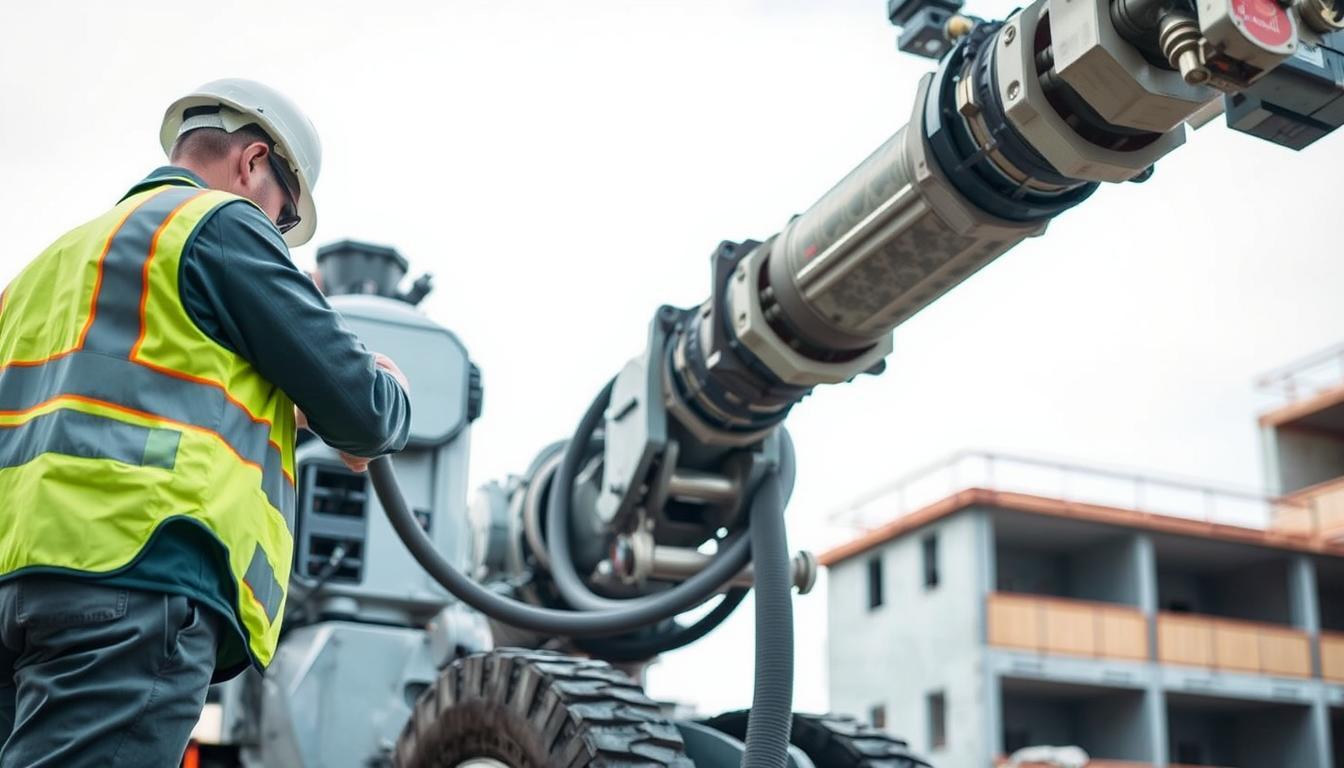
Safety Inspections and Documentation Processes
Safety checks are vital for a safe work environment. These should be detailed and documented to ensure everyone follows the rules and stays safe.
| Inspection Type | Frequency | Documentation Required |
|---|---|---|
| Pre-operational checks | Daily | Logbook entries |
| Safety inspections | Weekly | Detailed report |
| Maintenance records | As per maintenance schedule | Maintenance log |
Keeping detailed records of safety checks and maintenance helps track equipment condition. It also proves compliance with safety rules during audits and inspections.
Liability and Insurance Coverage
Liability and insurance are key for concrete pump success in South Africa. Operators must know their risks and have enough insurance to cover them.
Understanding Operator Liability
Operator liability means the legal duty of concrete pump operators for damages or injuries. This includes property damage, worker or bystander injuries, and environmental harm. It’s vital for operators to understand this to take precautions and get the right insurance.
Key areas of liability for concrete pump operators include:
- Accidental damage to surrounding properties
- Injuries to operators or third parties
- Environmental pollution
Operators must know these risks and act to prevent them. This includes training, equipment care, and following safety rules.
Recommended Insurance Policies
To handle concrete pump risks, operators should get broad insurance. The best policies are:
- Public Liability Insurance: Covers damages to others and their property.
- Equipment Insurance: Protects against damage or loss of the pump and gear.
- Workers’ Compensation Insurance: Covers injuries to employees.
- Environmental Pollution Liability Insurance: Covers costs of environmental damage.
By knowing their liabilities and getting the right insurance, concrete pump operators in South Africa can manage risks well. This ensures they follow the law.
Best Practices for Using Concrete Pumps
To use concrete pumps safely and efficiently, operators must follow best practices. This improves the quality of the project and reduces the risk of accidents and damage.
Pre-Operation Checklist
Before starting a concrete pump, a detailed pre-operation check is vital. This includes checking for wear or damage, ensuring hydraulic fluid levels are correct, and verifying all safety features work.
- Inspect the pump and pipeline for any damage or leaks.
- Check the hydraulic fluid levels and top up as necessary.
- Ensure all safety devices, such as emergency stops, are working properly.
- Review the previous day’s maintenance records and any issues reported.
Common Mistakes to Avoid
Operators should know common mistakes that can cause accidents or lower pump efficiency. These include overloading the pump, ignoring safety rules, and not maintaining the equipment well.
Overloading the Pump: Pumping too much concrete can cause mechanical failure and accidents. It’s important to match the pumping rate to the pump’s capacity and the project’s needs.
Ignoring Safety Protocols: Safety rules are there to protect everyone and the equipment. Ignoring them can result in serious injuries and damage.
By sticking to best practices, like a detailed pre-operation checklist and avoiding common mistakes, operators can ensure safe and efficient concrete pump use. This improves project outcomes and boosts safety and productivity on the construction site.
Future Trends in Concrete Pump Regulations
The future of concrete pump rules in South Africa will be influenced by new tech and changes in laws. Advances in concrete pump tech, like automation and remote monitoring, will make sites safer and more efficient.
Advancements in Pump Technology
New tech is being made to make concrete pumps better and safer. This includes more efficient pumps and control systems for real-time monitoring and adjustments.
Evolving Regulatory Landscape
Rules for concrete pumps are set to change to meet new challenges and tech. This might mean stricter safety and environmental rules to reduce the impact of pump operations.
As we move forward, it’s key for operators to keep up with new trends and rules. This ensures they stay compliant and competitive.
FAQ
What are the key regulations governing concrete pump operations in South Africa?
Why is compliance with SANS important for concrete pump operators?
What safety measures should concrete pump operators take to prevent accidents?
What kind of training is required for concrete pump operators?
How can concrete pump operators minimize their environmental footprint?
What are the best practices for inspecting and maintaining concrete pumps?
What insurance policies are recommended for concrete pump operators?
How can operators prepare for future changes in concrete pump regulations?
Note: Prices and specifications shown are for reference only and may change without notice. For the latest information, please contact Transtech directly on 021 948 4746.