
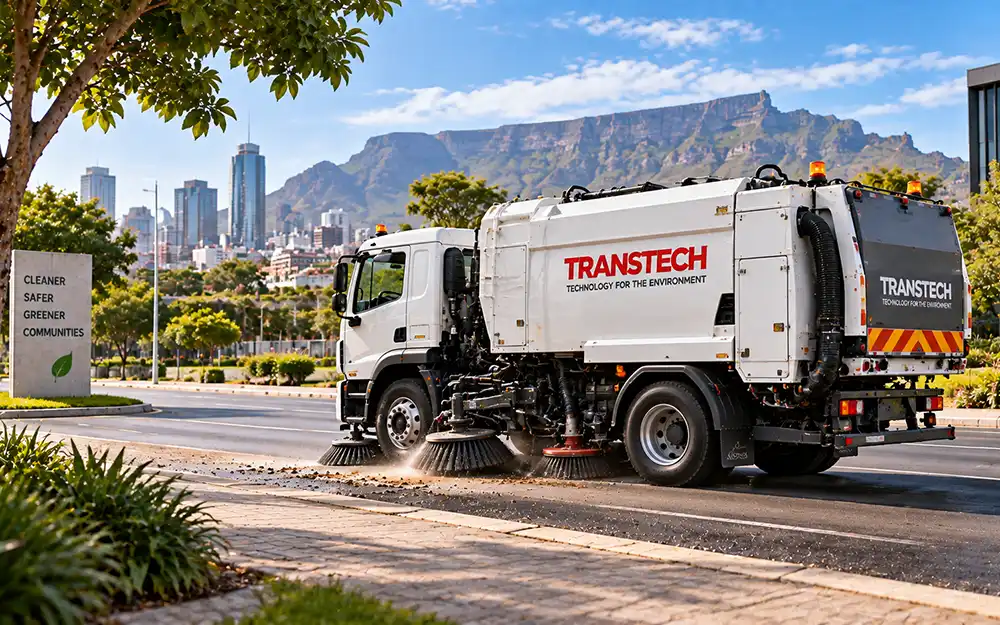
Truck-Mounted vs Compact Road Sweepers: Which Type Do You Need?
Choosing between a truck-mounted road sweeper and a compact road sweeper depends largely on where the machine will operate, how much area it needs to clean and how much sweeping capacity is required.
Both types are designed to remove dust, litter, leaves, sand and other surface debris, but they are built for different working environments.
A truck-mounted sweeper is generally better suited to larger road networks, municipal streets and applications where higher capacity and longer operating range are important.
A compact sweeper, on the other hand, is often the better choice for narrow streets, parking areas, pedestrian zones and other confined environments where manoeuvrability matters more than maximum capacity.
This guide compares the two types of machine and explains what South African buyers should consider before choosing a road sweeper.
What Is a Truck-Mounted Road Sweeper?
A truck-mounted road sweeper is a sweeping body and cleaning system fitted to a truck chassis.
These machines are designed to travel efficiently between cleaning areas while also carrying larger hoppers, water tanks and sweeping equipment.
Truck-mounted sweepers are commonly used by municipalities, road authorities, contractors and larger industrial operations.
They are particularly useful where the machine needs to cover substantial distances during a working shift.
What Is a Compact Road Sweeper?
A compact road sweeper is a smaller purpose-built sweeping machine designed for greater manoeuvrability.
Compact sweepers are typically used in environments where access is restricted or where a full-size truck would be difficult to operate.
These may include town centres, parking facilities, estates, shopping centres, pedestrian areas and narrow residential streets.
Although they are smaller, modern compact sweepers can still provide effective cleaning performance for the environments they are designed to serve.
The Main Difference Between Truck-Mounted and Compact Sweepers
The biggest difference between the two machines is their physical size and operating capacity.
Truck-mounted sweepers generally offer greater hopper capacity, larger water tanks and longer on-road operating capability.
Compact sweepers place more emphasis on access, manoeuvrability and the ability to work in confined spaces.
The correct choice depends on the job rather than simply on which machine is larger.
Consider the Size of the Cleaning Area
The total area that needs to be cleaned is one of the first factors to consider.
Large municipal road networks may involve many kilometres of streets, making a truck-mounted sweeper more practical.
The machine can travel between different cleaning zones, remain on the road for longer periods and carry more debris before unloading.
Smaller sites such as parking areas or residential estates may not require this level of capacity.
In these environments, a compact sweeper may complete the work more efficiently because it can access areas that a larger truck cannot.
Manoeuvrability in Confined Areas
Compact sweepers are designed specifically for manoeuvrability.
Their smaller dimensions and tighter turning circles allow them to work around kerbs, parked vehicles, traffic islands and narrow access points.
This is especially useful in urban areas where space is limited.
A truck-mounted sweeper may still provide better productivity on wider roads, but it can become cumbersome in heavily restricted environments.
Before selecting a machine, operators should identify the narrowest streets and access points on the route.
Hopper Capacity and Debris Volume
Hopper capacity determines how much debris can be collected before the machine needs to unload.
Truck-mounted sweepers usually have larger hoppers, making them suitable for longer routes or environments where larger quantities of debris are expected.
A compact sweeper generally has a smaller hopper because the machine is designed around reduced size and manoeuvrability.
This does not necessarily make it less efficient.
If the cleaning area is small and an unloading point is nearby, a compact sweeper may still provide excellent productivity.
Water Capacity and Dust Suppression
Most road sweepers use water to help suppress dust during sweeping.
Truck-mounted machines can usually carry larger water tanks, which allows them to remain in operation for longer before refilling.
This can be particularly useful on large municipal routes or dry industrial sites.
Compact sweepers may carry less water, but this can still be sufficient for shorter urban routes and smaller facilities.
The decision should be based on the operating environment and the distance to refill points.
Travelling Between Cleaning Areas
Truck-mounted sweepers have an advantage when cleaning locations are spread over a large geographic area.
Because the sweeper is built on a road-going truck chassis, it can travel efficiently between different work sites.
This makes it useful for municipalities or contractors servicing multiple roads and suburbs.
A compact sweeper is normally better suited to a defined local area.
If the machine needs to travel long distances between sites, transport logistics should form part of the purchasing decision.
Operating Speed
The speed at which the machine can travel between jobs can influence daily productivity.
Truck-mounted sweepers are designed to operate as road vehicles as well as cleaning machines.
This allows them to move between sweeping areas more quickly.
Compact sweepers prioritise manoeuvrability and controlled cleaning rather than long-distance road travel.
Where one machine needs to cover a large municipal area, travelling speed can become an important factor.
Municipal Street Cleaning
Municipal street cleaning is one of the most common applications for truck-mounted sweepers.
Large road networks require machines that can remain productive for extended periods and travel easily between suburbs.
A truck-mounted street sweeper can therefore be particularly suitable for main roads, arterial routes and wider residential streets.
Compact sweepers can complement these machines by handling smaller roads, pedestrian zones and urban centres.
Some municipalities may benefit from using both types rather than expecting one machine to perform every task.
Town Centres and CBD Areas
Town centres often include a mix of narrow roads, pedestrian spaces, parking bays, loading areas and heavy traffic.
This can make compact road sweepers especially useful.
Their smaller footprint allows them to work around obstacles and clean close to kerbs and other structures.
Noise and visibility may also be important in busy central business districts.
For larger surrounding roads, a truck-mounted sweeper may still be required.
Parking Areas and Shopping Centres
Parking facilities present a different set of challenges.
The sweeper may need to work around parked cars, traffic islands, trolley bays, loading zones and pedestrian walkways.
Compact sweepers are often well suited to these environments because they can turn more tightly and access smaller spaces.
They can also be useful for cleaning shopping centre service roads and delivery areas.
Industrial Sites and Factories
Industrial sites can vary significantly in size.
Large factories, ports, depots and distribution centres may have extensive internal road networks and high debris volumes.
In these situations, a truck-mounted sweeper may offer better capacity and productivity.
Smaller industrial sites may find a compact sweeper more practical, especially where the machine needs to work between buildings, loading bays and storage areas.
Residential Estates and Complexes
Residential estates often have narrow roads, landscaped areas, traffic-calming measures and parked vehicles.
A compact road sweeper can be particularly useful in this type of environment.
The smaller machine can work around tight corners and reach areas that larger equipment may struggle to access.
Where the estate includes wider main roads, a larger sweeper may still be considered depending on the overall workload.
Construction and Development Sites
Construction projects often generate dust, sand, gravel and other material that is tracked onto surrounding roads.
Road sweepers can help keep access roads and nearby public streets cleaner.
The type of sweeper required depends on the size of the project and the volume of debris.
Larger projects may benefit from the capacity of a truck-mounted sweeper, while smaller developments may be adequately served by compact equipment.
Cleaning Around Kerbs
Kerbside cleaning is an important part of road sweeping because debris often accumulates along the edge of the road.
Both truck-mounted and compact sweepers use side brushes to move material into the collection path.
Compact sweepers can offer excellent visibility and control when working around complex kerb layouts.
Truck-mounted machines can provide efficient kerb cleaning over much longer road distances.
Noise and Urban Operation
Noise can influence the type of sweeper selected for residential and commercial areas.
Cleaning work may need to take place early in the morning or outside normal trading hours.
Compact sweepers can be particularly useful in noise-sensitive environments, especially where electric models are available.
Transtech also supplies the Bucher V65e electric street sweeper, which provides another option where reduced local emissions and quieter operation are important.
Electric Sweepers
Electric road sweepers are becoming increasingly relevant for municipalities and organisations focused on reducing local emissions.
They can be especially attractive for urban centres, residential areas and facilities where lower operating noise is desirable.
Electric operation should still be assessed against daily route requirements, charging infrastructure and the amount of work the machine needs to complete.
The best solution is the one that can complete the required cleaning work reliably within the available operating window.
Operator Comfort and Visibility
Operator comfort can have a direct effect on productivity.
Street sweeper operators may spend many hours inside the cab during a shift.
Good visibility is especially important because the driver needs to monitor kerbs, brushes, traffic and pedestrians.
Compact sweepers often provide excellent visibility around the machine, while truck-mounted sweepers offer the familiar driving position of a commercial truck.
The intended working environment should influence which configuration is more appropriate.
Maintenance Requirements
Both truck-mounted and compact sweepers require regular maintenance.
Brushes, suction systems, hydraulic components, filters and water systems all need inspection and servicing.
The amount and type of maintenance may differ between machines, but buyers should consider access to replacement parts and technical expertise in both cases.
Downtime can disrupt cleaning schedules, so long-term support should be part of the purchasing decision.
Total Cost of Ownership
The purchase price is only one part of the cost of operating a road sweeper.
Fuel or electricity, maintenance, wear parts, operator costs and downtime all contribute to the total cost of ownership.
A larger truck-mounted sweeper may cost more initially but provide higher productivity on large road networks.
A compact sweeper may be less expensive to operate in smaller areas because it is better matched to the work.
Choosing the wrong machine can increase costs regardless of the initial purchase price.
When Is a Truck-Mounted Road Sweeper the Better Choice?
A truck-mounted sweeper may be the more suitable option when:
- Large municipal or regional road networks need to be cleaned.
- The machine must travel considerable distances between cleaning areas.
- Higher hopper capacity is required.
- Larger water capacity is important.
- The machine will operate for long periods each day.
- Higher overall sweeping productivity is required.
Transtech supplies a range of truck-mounted road and street sweepers for municipal and commercial applications.
When Is a Compact Road Sweeper the Better Choice?
A compact sweeper may be the better option when:
- The machine needs to work in narrow streets.
- Parking areas or pedestrian zones need to be cleaned.
- Access is restricted.
- A tight turning circle is important.
- The cleaning area is relatively concentrated.
- Manoeuvrability is more important than maximum hopper capacity.
For these applications, view Transtech’s compact road sweeper range.
Can You Use Both Types in the Same Fleet?
Yes. In many cases, the most effective sweeping operation uses different machines for different tasks.
A municipality might use truck-mounted sweepers on major roads while compact sweepers handle pedestrian zones and narrow streets.
An industrial operator might use a larger machine on access roads and a compact sweeper between buildings or loading areas.
This allows each machine to perform the work it is best suited to.
Questions to Ask Before Choosing a Road Sweeper
Before deciding between a truck-mounted and compact sweeper, consider the following:
- How large is the cleaning area?
- How far will the machine travel during a shift?
- How narrow are the streets or access points?
- What type of debris needs to be collected?
- How much hopper capacity is required?
- How much water capacity is needed?
- How often will the machine need to unload?
- Will it operate in noise-sensitive areas?
- Would an electric sweeper be appropriate?
- What parts and service support are available?
Truck-Mounted vs Compact Road Sweepers: Which Should You Choose?
There is no single road sweeper that is best for every application.
Truck-mounted machines excel where large areas, longer distances and higher capacities are involved.
Compact sweepers perform particularly well where access, manoeuvrability and precision are the main priorities.
The best choice is the machine that matches the real operating environment as closely as possible.
Road Sweepers from Transtech
Transtech supplies road and street sweepers for sale in South Africa for municipal, industrial, commercial and specialist applications.
The range includes truck-mounted road sweepers, compact machines, electric sweepers and specialist airport equipment.
Customers can be assisted with selecting equipment according to area size, debris type, capacity, manoeuvrability and operating requirements.
Get Advice on the Right Sweeper for Your Application
If you are deciding between a truck-mounted and compact road sweeper, start by defining the size of the area, access restrictions, expected debris volumes and daily operating requirements.
From there, it becomes much easier to determine which type of machine will provide the most practical and productive solution.
Contact Transtech to discuss your road sweeping requirements and the available equipment for municipal, industrial or commercial cleaning applications.
Note: Prices and specifications shown are for reference only and may change without notice. For the latest information, please contact Transtech directly on 021 948 4746.