
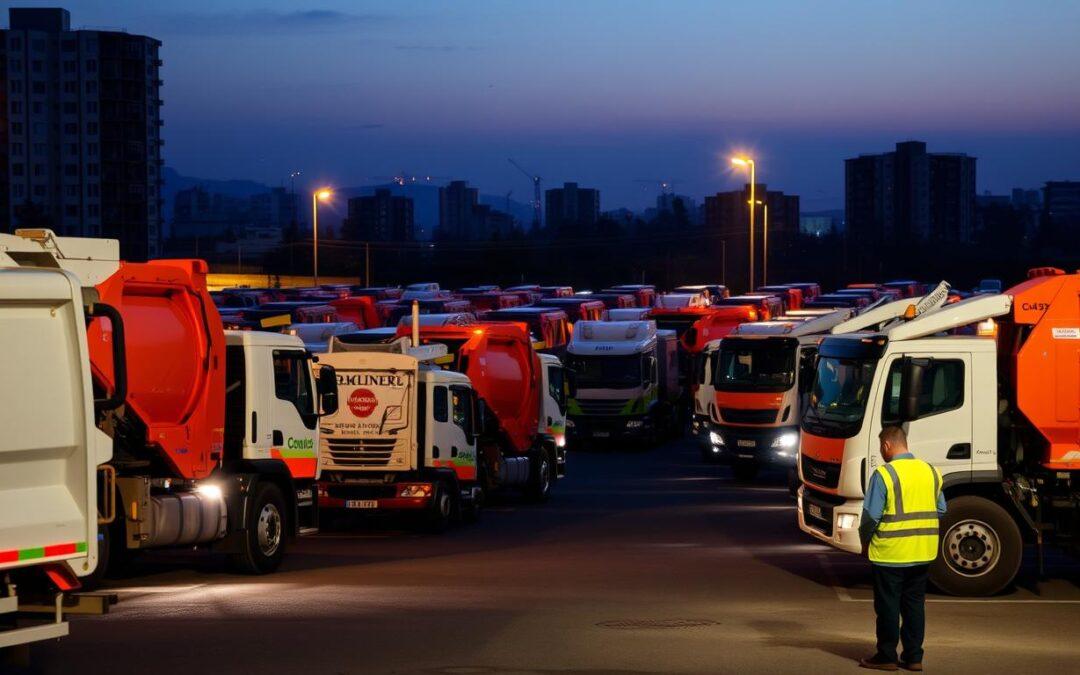
Did you know the waste and recycling industry has big challenges? Like driver shortages and safety risks. Garbage truck operators deal with tough daily tasks. They navigate tight streets and handle heavy loads.
The industry is key for public health and the environment. But, it’s facing big problems that affect its work. As an operator, you’re right in the middle of these issues. Knowing them is key to making the industry better.
Some of the key challenges you face include: navigating complex routes, managing waste collection, and ensuring safety on the job. By understanding these problems, we can start finding ways to make waste management safer and more efficient.
Overview of Garbage Truck Operations
Garbage trucks play a key role in collecting and disposing of waste. They are vital for keeping our communities clean and healthy. Knowing how they work helps us understand the challenges faced by those who operate them.
Importance of Garbage Trucks in Waste Management
Garbage trucks, including sanitation trucks and those with trash compactors, are essential. They help keep our environment safe and healthy. By collecting and transporting waste, they reduce harm to our communities and the planet.
- Efficient waste collection helps reduce the risk of disease transmission.
- Proper disposal methods protect environmental resources.
- Advanced garbage truck manufacturers are continually improving truck designs for better performance and lower emissions.
Daily Routines of Garbage Truck Operators
Garbage truck operators have strict daily routines. They navigate through busy streets, handle heavy loads, and talk to the public. Their work is critical for keeping our environment clean.
- Pre-operational checks on the vehicle to ensure it is in good working condition.
- Navigating designated routes while adhering to safety protocols.
- Interacting with residents and businesses to address any concerns or special requests.
By understanding the daily routines and the importance of garbage trucks, we can see the challenges they face. Their work is vital for our health and the environment.
Common Challenges in Garbage Truck Operations
Operating a garbage truck comes with many challenges. These include traffic jams and unpredictable weather. These issues can really slow down garbage truck services and waste disposal solutions.
Traffic Congestion and Delays
Traffic jams are a big problem for commercial garbage trucks. They cause delays and increase the chance of accidents. Being stuck in traffic wastes fuel and makes waste collection take longer.
To solve this, companies use technology to find the best routes. This helps them avoid traffic and keep their operations running smoothly.
Weather Conditions Affecting Routes
Weather is another big challenge. Rain, snow, or heat can make roads dangerous. For example, heavy rain can flood roads, while heat can cause truck problems.
As a garbage truck driver, you need to be ready for weather changes. This means making quick route changes. It requires flexibility and knowing how weather affects your work and garbage truck services.
Understanding these challenges helps you do your job better. It also helps improve waste disposal solutions.
Equipment Maintenance and Reliability
Keeping your garbage truck in top shape is more than just fixing problems. It’s about stopping them before they start. Your vehicle’s reliability is key to your daily work.
Mechanical Failures and Breakdowns
Mechanical issues can cause big delays and higher costs. Problems often include engine troubles, hydraulic system failures, and electrical issues.
Common Causes of Mechanical Failures:
- Lack of regular maintenance
- Overusing vehicle parts
- Poor driving habits
- Old age and wear of parts
Strategies for Regular Maintenance
Having a regular maintenance plan is essential. This includes:
- Regular oil changes and fluid checks
- Checking tires, brakes, and hydraulic systems often
- Replacing worn-out parts on time
- Keeping up with maintenance records
By sticking to these steps, you can lower the chance of mechanical failures. This ensures your garbage truck runs smoothly.
Safety Risks for Operators
Your job as a garbage truck operator comes with many dangers. Keeping yourself safe is key, and knowing the risks is the first step.
Hazards during Collection and Disposal
When you’re out collecting and disposing trash, you face many dangers. These include mechanical failures and unsafe road conditions. You must always be careful to avoid accidents while driving sanitation trucks and trash compactors.
Some dangers you might encounter are:
- Being hit by other cars or objects
- Slip, trip, and fall hazards
- Exposure to harmful waste materials
To lower these risks, garbage truck manufacturers keep making their vehicles safer and better.
| Hazard | Prevention Measure |
|---|---|
| Being struck by other vehicles | Use of safety vests and awareness training |
| Slip, trip, and fall hazards | Regular cleaning of truck steps and handles |
| Exposure to harmful waste | Proper use of personal protective equipment (PPE) |
Importance of Safety Training Programs
Safety training is vital for you to learn how to handle these dangers. These programs teach you how to safely operate sanitation trucks and trash compactors. They also cover general safety tips.
Good safety training includes:
- Hands-on training with equipment
- Scenario-based training for emergency situations
- Regular refresher courses to update your skills
By investing in thorough safety training, you can greatly reduce the risks of your job.
Environmental Concerns
You play a key role in keeping communities clean with commercial garbage trucks. Yet, these vehicles also harm the environment.
Pollution Caused by Garbage Trucks
Garbage trucks pollute the air and make noise. Their diesel engines release harmful pollutants like particulate matter and carbon monoxide.
These emissions harm air quality and contribute to climate change. Finding ways to lessen these impacts is critical.
Initiatives for Greener Operations
Several steps are being taken to make garbage trucks greener. Using electric or hybrid trucks is one solution.
Improving routes and keeping trucks well-maintained also helps. By using technology and more efficient garbage truck services, you can cut down on emissions.
Cities are starting recycling programs and waste reduction efforts. These can reduce the amount of waste and lower the number of trucks needed.
Driver Shortages in the Waste Management Industry
The waste management industry is facing a big problem: a driver shortage. This shortage makes waste collection less efficient. It also lowers the quality of service for communities.
Causes of the Ongoing Driver Shortage
Several factors are causing the driver shortage. These include:
- Demographic Changes: An aging population and fewer young drivers.
- Regulatory Requirements: Strict rules on driver qualifications and work hours.
- Working Conditions: The job is hard and drivers work long hours.
Recruitment and Retention Strategies
Waste management companies are trying to solve the driver shortage. They are using different strategies. These include:
- Competitive Compensation: Higher wages and better benefits to attract and keep drivers.
- Training Programs: Training for new drivers and improving skills for current ones.
- Improved Working Conditions: Making the job more appealing by improving conditions.
Let’s look at how traditional and modern strategies differ:
| Strategy | Traditional Approach | Modern Approach |
|---|---|---|
| Recruitment Channels | Local job boards, word of mouth | Social media, online job platforms |
| Training Methods | On-the-job training, classroom instruction | Simulated training, online courses |
| Retention Techniques | Standard benefits, occasional bonuses | Competitive benefits, regular bonuses, career development opportunities |

Understanding the driver shortage and using effective strategies can help. It’s not just about getting new drivers. It’s also about keeping the ones we have happy and well-compensated.
Impact of Technology on Garbage Collection
Technology is changing garbage collection for the better. It makes the process more efficient and cuts down costs. As someone who operates a garbage truck, you’re likely seeing these benefits firsthand. These include better route planning and automation.
Use of GPS and Route Optimization
GPS and route optimization are making garbage collection more efficient. They help you use less fuel and lower emissions. Here are some key benefits:
- Reduced travel time: Optimized routes help you avoid traffic, saving time.
- Lower fuel costs: By traveling shorter distances, you spend less on fuel.
- Increased productivity: With better routes, you can do more work in less time.
Automation in the Waste Management Sector
Automation is also making a big difference. It helps streamline waste management from collection to disposal. Here are some examples:
- Automated sorting systems: These systems sort waste quickly and accurately, boosting recycling rates.
- Robotic waste collection: Some companies are using robots to collect waste, which could reduce manual labor needs.
By using automation, you can make your operations more efficient and safer. This benefits your team and the environment.
Community Relations and Public Perception
Your job as a garbage truck operator is more than just picking up trash. It’s about building trust in your community. Good community relations help keep your image positive. They make sure your services meet what people need and want.
Building Trust with Local Residents
To gain trust, you need to be reliable, friendly, and quick to respond. Be on time, keep your area clean and safe, and fix any problems fast.
Here are some ways to build trust:
- Get involved in local events and teach people about waste management.
- Make sure your team is well-trained and professional.
- Deal with service requests and complaints quickly.
Managing Complaints and Service Expectations
Handling complaints well is vital for good community relations. Listen to what people say, solve problems fast, and talk clearly with the public.
Here’s a plan for handling complaints:
| Complaint Type | Response Strategy | Resolution Timeline |
|---|---|---|
| Missed Collection | Look into it and reschedule | Within 24 hours |
| Noise Complaint | Say sorry and change the schedule | Same day |
| Service Request | Give info or set up a service | Within 48 hours |
Using these strategies can improve how people see your garbage truck services. Good community relations are key to your success in waste management.
Financial Pressures on Garbage Truck Operations
Garbage truck operations face many financial challenges. These include rising fuel costs and the need for new equipment. As an operator, you know how hard it is to manage these costs while keeping services running smoothly.
Rising Fuel Costs and Their Impact
Fuel is a big expense for garbage trucks. Rising fuel costs can really hurt your budget. It’s important to find ways to cut these costs.
Optimizing routes can help use less fuel. You could also invest in fuel-efficient technologies. For example, using GPS and route optimization software can find the best routes. This reduces unnecessary miles and saves fuel.
Keeping your fleet in good shape also helps. Regular maintenance improves fuel efficiency and extends your vehicles’ life.
Budgeting for New Equipment and Technologies
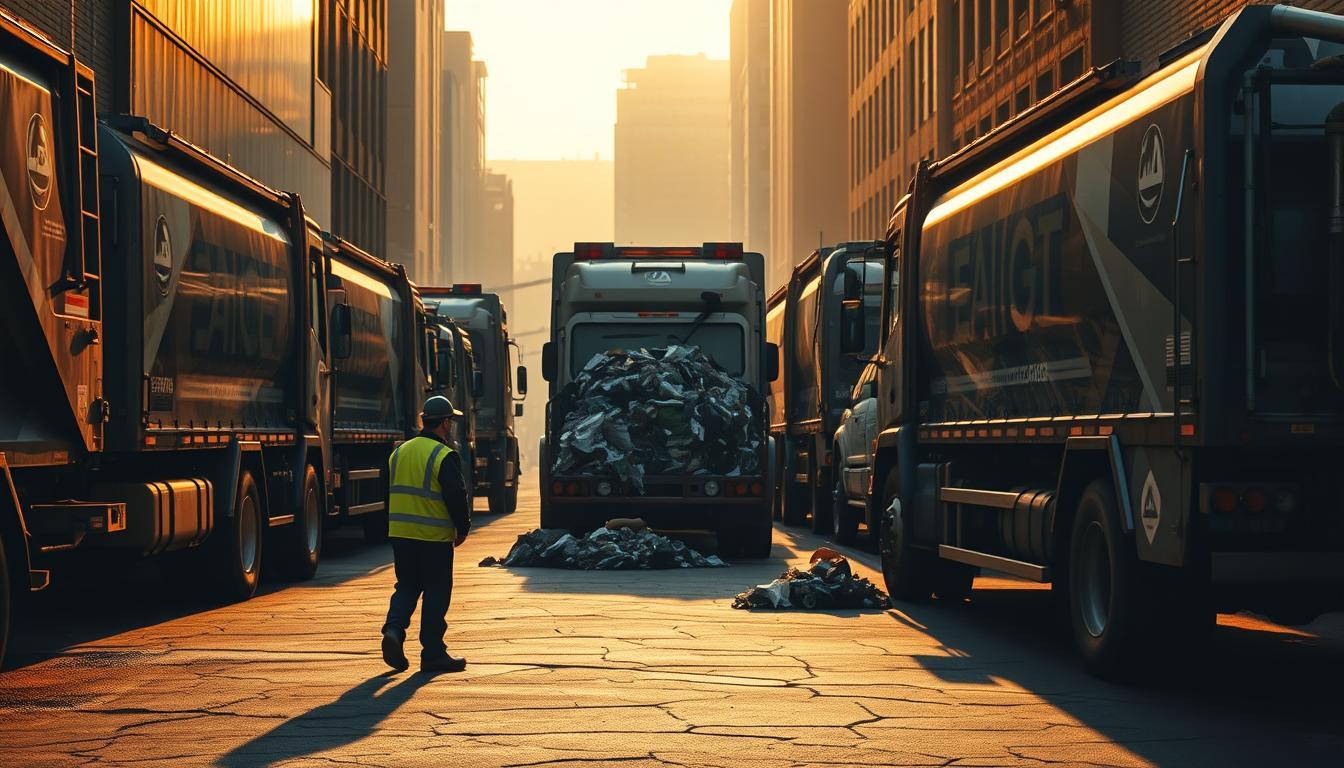
Budgeting for new equipment and technologies is also key. You need modern waste management vehicles that are good for the environment. And you should use technologies that make your operations better.
Think about the long-term benefits of new equipment. It can mean lower maintenance costs and better service. Look into financing options or grants to help pay for upgrades.
- Check your current fleet’s condition and see where you can improve.
- Look into new technologies and equipment that can help your operations.
- Make a detailed budget that includes money for new investments.
Innovations Shaping the Future of Garbage Trucks
As a garbage truck operator, you’re at the forefront of a waste management revolution. New technologies are changing how we design, collect, and manage waste. These changes are making our work more efficient and effective.
Electric Garbage Trucks and Their Benefits
Electric garbage trucks are a big deal. They cut down on emissions, save money, and are quieter. For example, electric sanitation trucks help clean the air in cities, making them healthier places.
- Lower fuel costs: Electric vehicles are cheaper to run, thanks to the cost of electricity.
- Reduced maintenance: With fewer parts, electric trucks need less upkeep, saving money.
- Environmental benefits: Switching to electric reduces your carbon footprint, helping the planet.
Smart Waste Management Solutions
Smart waste management solutions are also changing the game. They use technology to make waste collection better, more efficient, and customer-friendly.
Some smart features include:
- Route optimization: Data and GPS technology find the best routes for collection.
- Real-time monitoring: Keep track of waste and collection progress for better service.
- Customer engagement: Keep residents informed about collection times and waste tips.
Top garbage truck manufacturers are adding these innovations to their trucks. If you’re thinking about updating your fleet, check out these new models. They can help you stay ahead in the industry.
Urgent Need for Policy Changes
You work in an industry shaped by policy and regulations. Garbage truck operators face many challenges, like traffic and environmental issues. We need new policies to tackle these problems.
Regulatory Framework
Rules on waste management are key in our industry. We need policies that help us use the latest waste disposal solutions. This includes advanced garbage trucks to better serve our communities.
Advocating for Change
We must push for policies that help us. Working with policymakers is important. Together, we can create a better environment for using new waste management technologies.
Good policy changes can make waste management better, cheaper, and more efficient. As our industry grows, it’s vital that we all work together. This way, we can solve the problems faced by garbage truck operators.
FAQ
What are the biggest challenges faced by garbage truck operators?
How do garbage truck operators manage their daily routes?
What safety training programs are available for garbage truck operators?
How are garbage trucks maintained to prevent mechanical failures?
What initiatives are being implemented to reduce the environmental impact of garbage trucks?
How is the waste management industry addressing the driver shortage?
What role does technology play in improving garbage collection efficiency?
How do garbage truck operators build trust with local residents?
What financial pressures do garbage truck operators face?
What innovations are shaping the future of garbage trucks?
How can policy changes support the waste management industry?
What are the benefits of using refuse collection trucks?
How do sanitation trucks contribute to public health?
What is the role of trash compactors in waste management?
Note: Prices and specifications shown are for reference only and may change without notice. For the latest information, please contact Transtech directly on 021 948 4746.