
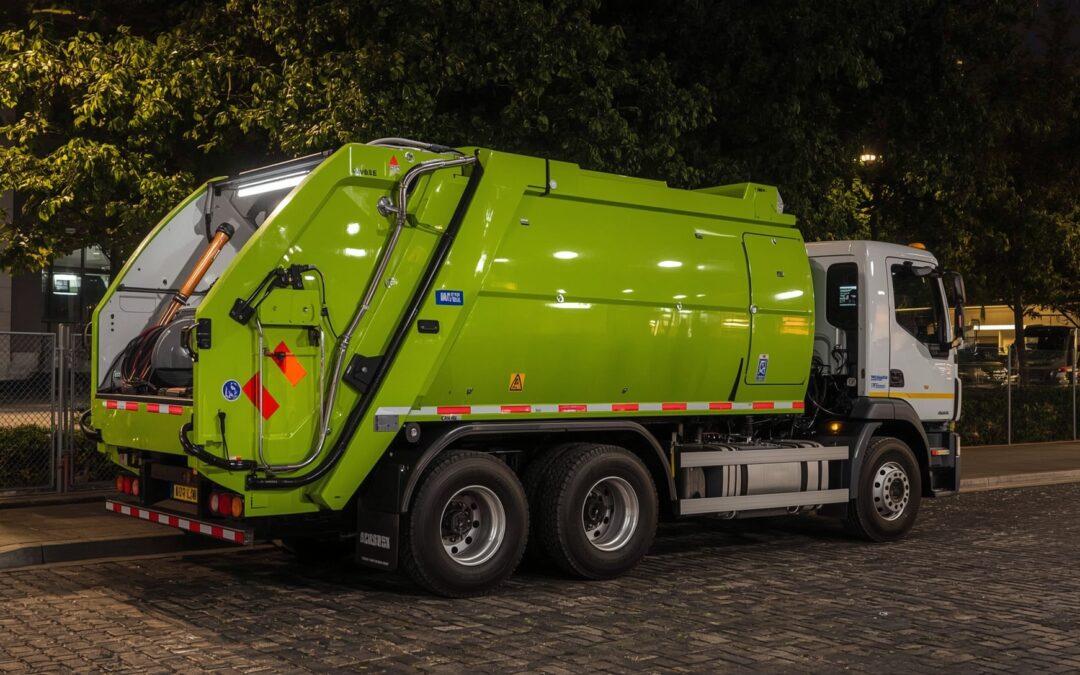
Reliable collection keeps streets clean and protects public health. A well-run fleet moves solid waste quickly from neighbourhood bins to treatment sites. It prevents overflowing containers, reduces pests and helps local services build trust.
Terminology varies around the world. Teams will read about refuse vehicles, garbage trucks and dustbin trucks, so procurement and training must use consistent terms. Clear language stops confusion during sourcing and upkeep.
Each vehicle has core parts: the hopper, compactor, hydraulic circuits, and storage body. Knowing these helps teams spot likely failures and plan preventive maintenance. Planned servicing raises uptime and often extends life beyond five to ten years.
Safety and measurement matter. Cameras, sensors, and good driving habits reduce incidents. Standardised pre-trip and post-shift checks guide supervisors, while on-time collection, missed-pickup rates and spill counts drive continuous improvement. Later sections cover vehicle types, critical components, maintenance routines and sourcing strategies to keep every route operationallyready.
Why well-maintained dustbin trucks keep waste collection safe, efficient, and healthy
Consistent servicing makes waste rounds safer, quicker and far less disruptive for residents. Regular checks reduce missed pickups and limit the conditions that attract flies and rodents, improving community health fast.
Sealed bodies and excellent compaction stop windblown debris and roadside spills during garbage collection. Quick-clean routines on hoppers reduce odours and lower pathogen risk immediately after each route.
Public health and hygiene benefits in municipal solid waste operations
Sealed containers and reliable compactors reduce litter and vector exposure. That keeps streets cleaner and lowers complaints about pests and smells.
The factors to consider are service reliability, route times, and cost control.
Routine inspections prevent hydraulic breakdowns that can stop a truck mid-route and create cascading missed bins the next day. Tuned engines and proper tire maintenance shorten route times, save fuel, and boost driver morale.
- Monitor KPIs such as on-time starts and complaint rates to measure maintenance impact.
- Check cameras and reverse alarms at shift starts to uphold safety.
- Maintain records to prolong the lifespan of assets for several years and facilitate smoother budget planning.
Know your vehicles: rear, front, and side loaders, plus special systems.
Choosing the right loader for each route starts with understanding how each mechanism moves and compacts waste. Match machine types to neighbourhood patterns, and you save time, labour, and fuel.

Rear loaders and compaction choices
Rear loaders feed waste into a rear hopper and use a hydraulic packer blade to compress loads. Common compaction mechanisms are sweep-and-slide (e.g., Leach 2R Packmaster) and swing-link (e.g., Dempster Routechief).
Choose sweep-and-slide for steady, high compaction on busy municipal rounds. Pick a swinglink where mixed debris and bulky items demand gentler packing.
Front loaders and commercial routes
Front loaders work with powered forks to service commercial dumpsters. Pack-on-the-go hydraulics shorten dwell time and keep collection moving in retail and industrial areas.
Side loader options and specialised bodies
Side loaders range from manual teams to automated arms that let one operator serve kerbside bins and reduce lifting injuries. Lifting limits and bin standards must be compatible with the arm to prevent damage.
- Split-body units run dual-stream recycling and residuals.
- Grapple bodies handle bulky items; roll-offs move heavy construction loads.
Tip: Pilot representative neighbourhoods before large-scale fleet changes confirm productivity gains and fit-for-purpose selection.
Core components that drive uptime: hydraulic system, compactor, hopper, and lifting gear
Uptime depends on a few key assemblies: the hydraulic circuits, the compactor packer, the hopper, and the lifting gear. Keeping these elements healthy prevents frequent roadside failures and extends service life by years.
Hydraulic integrity: hoses, seals, pumps, and fluid cleanliness
Clean fluid protects pumps and valves that power lifting and compaction cycles. Schedule fluid sampling to catch contamination early.
Inspect hose routing to avoid chafing, and replace cracked seals quickly. Torque test fittings after seasonal temperature swings to stop leaks.
Compaction system: pressures, wear surfaces, and safety interlocks
Compactors compress loads to maximise capacity. Rear loaders use packer blades to push waste from the hopper into the body. Front and side systems may use oscillating pusher plates or paddle packers.
Calibrate system pressures to manufacturer specs to avoid structural overload or poor compaction. Map wear surfaces—blade edges, hopper floors and slide rails—and set replacement thresholds before jams occur.
- Verify safety interlocks: the compactor must not cycle with the tailgate open, and e-stops should isolate power instantly.
- Grease pivots on arms and forks to keep lifting smooth and lower pump current draw.
- Check bin grippers and container guides for alignment to reduce damage and spillage.
| Component | Key Check | Recommended Frequency |
|---|---|---|
| Hydraulic fluid & filters | Sample for contamination; replace filters | Quarterly (sample), Monthly (filters) |
| Hoses & seals | Inspect routing, replace cracked seals | Monthly; after extreme weather |
| Compactor packer & blades | Measure wear; calibrate pressures | Monthly; adjust as needed |
| Lifting arms & grippers | Grease pivots; check alignment | Weekly (grease), Monthly (alignment) |
Log recurring faults such as slow cycles or noisy pumps to identify a mechanism at risk rather than masking symptoms. Keep a critical spares kit—hoses, filters, seal kits and blade edges—so a truck can return to service rapidly.
Practical maintenance routines for daily, weekly, and seasonal operation
A short pre-shift routine prevents most common faults that halt a route. Make the check quick but consistent so crews adopt it as a habit.
Daily checks
Start each shift with a walkaround to verify brake lights, reversing alarms and camera clarity. Check tyres for pressure and damage and look beneath the truck for leaks.
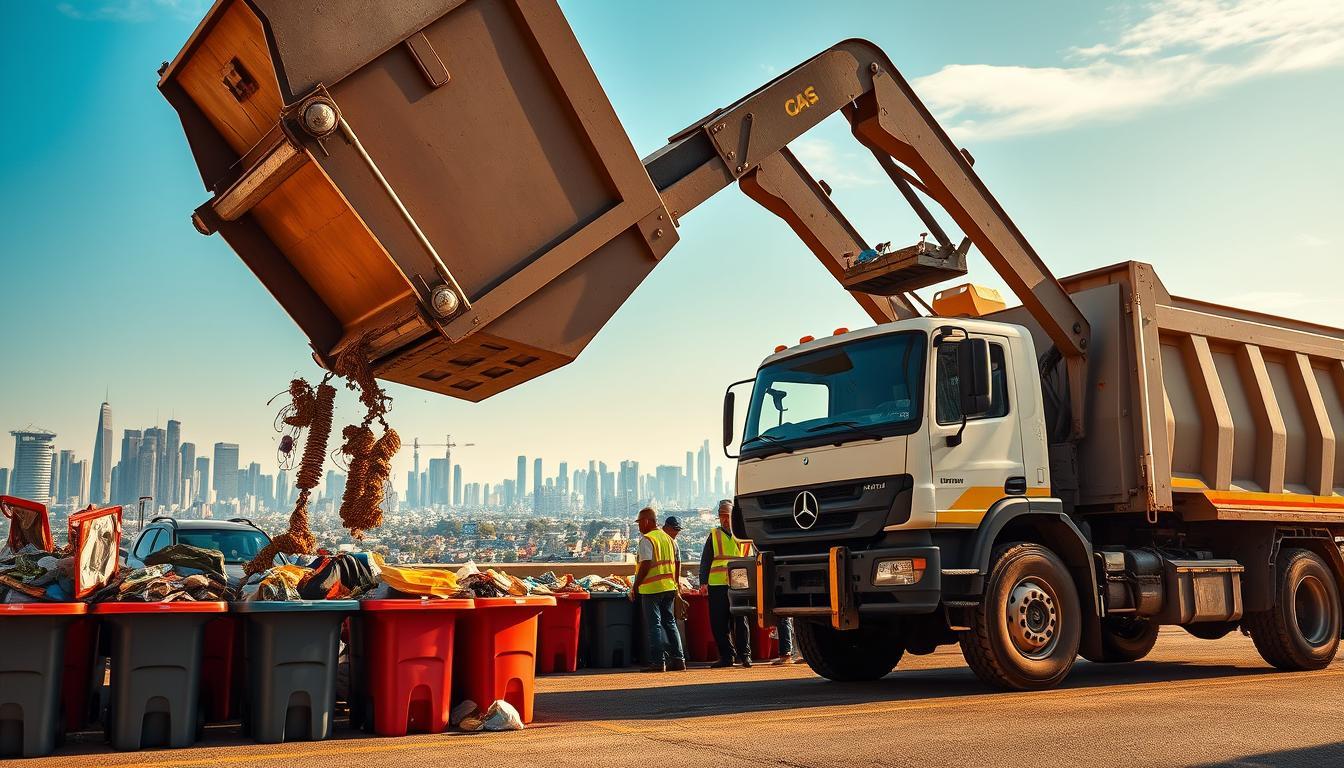
Cycle the bin lifter and any side arm to confirm smooth movement, clean grippers and accurate stops. Report any sluggish motion or unusual noises immediately to avoid a roadside dump of the route.
Weekly tasks
Lubricate hinges, pins and bearings across loaders and tailgates, wiping away grit that accelerates wear. Inspect packer blade edges and hopper floors for scoring and address early to prevent jams.
Clean or replace hydraulic and engine filters weekly or per hours run in dusty areas. Torque-check wheel nuts, hopper bolts and body mounts, as vibration on rough roads can loosen fasteners.
Seasonal preparation and record-keeping
Prepare for hot, dusty summers with coolant flushes, radiator fin cleaning and fan belt inspections to reduce heat stress on cooling systems. Seal dust paths around cabs and electrical boxes to limit sensor faults and extend component life.
Keep centralised records of faults, repairs and service intervals. Consistent logging and planned servicing materially extend vehicle life—often beyond five to ten years—and prove compliance during audits.
- Quick checklist: lights, alarms, cameras, tyres, fluids, leaks, lifter cycle.
- Weekly focus: lubricate, inspect blades, replace filters, torque fasteners.
- Seasonal care: cooling system prep, dust sealing, driver reporting training.
Safety, sustainability, and compliance in waste management fleets
Well-trained crews and low-emission vehicles make urban collection safer and greener for everyone.
Safety first: standardise operator training on reversing protocols, mirror settings and backup camera use to protect crews and the public. Fit clear reflective markings and keep beacon lights working for dawn and dusk runs.
Reduce incidents and injuries by auditing PPE, manual-handling technique and three-point contact rules. Calibrate brakes and check tyre tread depth often so vehicles behave predictably in wet conditions.
Efficiency and low-emission options
Cut idling with driver coaching and route optimisation to save fuel and extend engine life. Consider alternative fuels or efficient hydraulics; many trash truck and garbage truck platforms now offer lower-emission options proven in the United States and beyond.
- Deploy split-body units or coordinated rounds to boost recycling collection and capture recyclable materials without extra trips.
- Track contamination rates; reinforce lid-closed, set-out rules to improve garbage recycling outcomes.
- Use telematics and incident logs to spot risky behaviours and target refresher training.
Report progress: publish simple sustainability metrics — fuel per tonne of solid waste collected and diversion rates — to show stakeholders how the fleet reduces waste and improves recycling.
From parts sourcing to fleet upgrades: keeping your operation future-ready
Stocking the right items and choosing cost-effective upgrades prevents long delays and costly downtime.
Build a resilient supply chain with dealers that hold critical products such as hydraulic pumps, seal kits and camera systems. Use marketplaces to compare lead times on front loaders, rear bodies and side loader arms.
Prioritise upgrades that lower lifecycle costs: fuel-efficient engines, improved compactor systems and safer cabs. Add modules like grapple attachments or roll-off solutions so crews avoid extra dump runs.
Standardise containers and lifting points, pilot automation on a side truck route, and keep a rotating pool unit to cover long repairs. Document ROI for each refurb or part so boards can invest confidently in future-ready dustbin trucks and cleaner garbage collection.
FAQ
What are the primary benefits of keeping a well‑maintained refuse vehicle fleet in South Africa?
How does vehicle upkeep improve service reliability and route efficiency?
What are the differences between rear, front and side loader systems?
When should a split‑body or grapple body be specified?
Which hydraulic components need the most attention to maintain uptime?
How do I monitor compactor health effectively?
What daily checks should operators perform before starting a shift?
What weekly maintenance tasks keep bodies and lifting gear reliable?
How should fleets prepare for seasonal challenges in South Africa?
What record-keeping helps extend vehicle lifespan beyond five to ten years?
Which safety measures are essential for collection crews?
How can operators improve fuel efficiency and reduce emissions on urban routes?
Where should parts and bodywork be sourced to keep a fleet future‑ready?
How often should major overhauls be scheduled for collection vehicles?
What compliance issues should fleet managers monitor in waste collection operations?
Note: Prices and specifications shown are for reference only and may change without notice. For the latest information, please contact Transtech directly on 021 948 4746.