
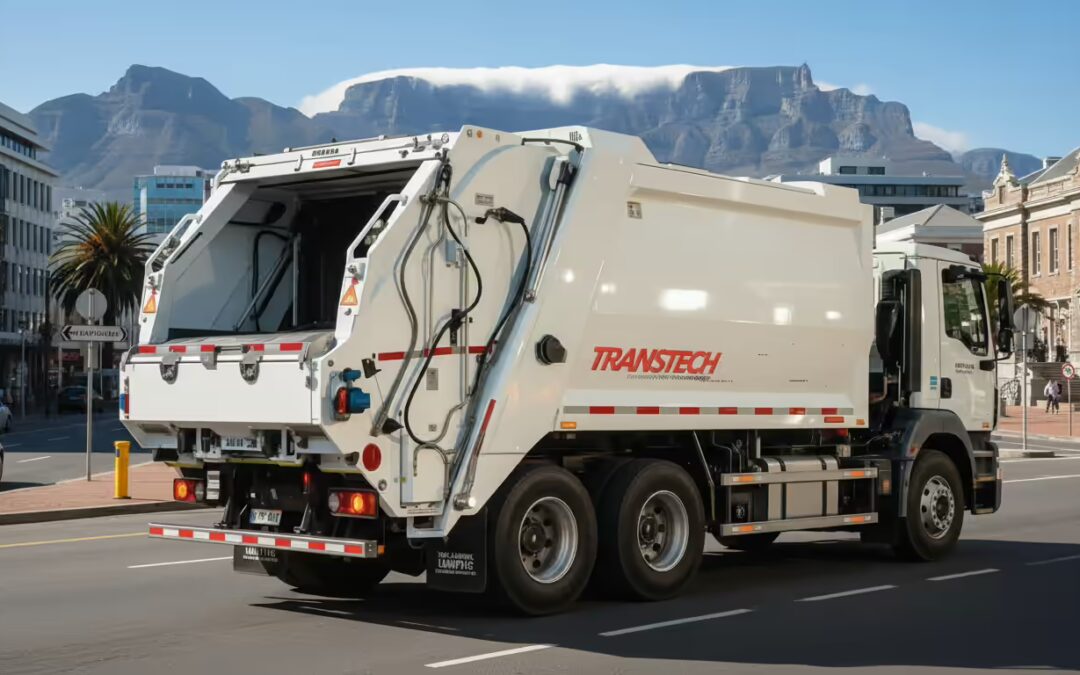
Cleaner collection matters today. Transport is the largest source of greenhouse gas, and heavy vehicles use a disproportionate share of fuel. Decarbonising the roughly 180,000 waste trucks in the United States can cut the environmental impact felt in local streets and across the nation.
Waste management fleets are different because they run daily through neighbourhoods. That means better air quality and healthier communities appear quickly when fleets change. Small improvements in routing and scheduling make a big difference to collection quality and local air.
We will explore real technology pathways — renewable natural gas, battery-electric and hybrid vehicles — along with operational upgrades and smart depot planning. No single solution fits all; the right mix depends on routes, duty cycles and depot realities.
This article uses US data and demonstrations to offer practical steps. Expect clear comparisons of tailpipe versus lifecycle footprints and a roadmap to cut greenhouse gas now while planning for future-ready fleets that save fuel and control costs over time.
Why Dustbin Truck emissions matter today
Waste collection often happens within metres of where people live, learn and play. That proximity means these vehicles have an outsized impact on local air and neighbourhood health.
Many of these rounds are stop‑start and slow. Running on fossil fuels creates smog‑forming gases and fine particles that worsen asthma and other respiratory problems.
Improving collection operations is a high‑impact lever for cities. Fewer overlapping routes and cleaner vehicles cut noise, reduce gas emissions and make streets cleaner.
Although heavy vehicles are a small share of the fleet, they take a large share of fuel. So modest savings per vehicle scale into big benefits for budgets and for reducing greenhouse gas emissions.
Acting today aligns public health with climate goals and supports sustainable waste management. Progress is measurable: track fuel use, route data and vehicle performance to show real gains in air quality and cost.
Understanding the sources and impacts on air quality
Frequent stops and slow driving make refuse rounds a concentrated source of local pollutants.
From NOx and particulate matter to greenhouse gases
Diesel engines release nitrogen oxides (NOx) and fine particulate matter (PM). These compounds worsen smog and harm lung health.
Cold starts, rapid acceleration and heavy compaction spikes raise fuel consumption and increase fuel consumption emissions beyond steady driving.

Duty cycles, idling and stop‑start driving
Stop‑start routes and long idles during pick‑ups are inefficient. They push consumption emissions higher because the engine runs often at non‑optimum loads.
Telematics data helps spot hotspots so operators can change schedules or train crews to cut rapid acceleration and unnecessary idling.
Noise pollution and neighbourhood health
Noise pollution from early morning rounds disturbs sleep and lowers quality of life. Quieter powertrains, like hybrids and electric models, reduce that burden.
Reducing fuel use usually lowers both local pollutants and greenhouse gases, so operational fixes give dual gains.
- Payload & compaction: heavier loads and frequent compaction increase fuel use.
- Terrain & routes: hills and complex sequences raise consumption and cut efficiency.
- Data: benchmark performance by route and season to measure improvements.
| Source | Typical effect | Operational fixes | Expected benefit |
|---|---|---|---|
| NOx and PM from diesel | Smog, respiratory harm | Cleaner powertrains, idling limits | Better local air quality |
| Stop‑start duty cycles | Higher fuel consumption emissions | Route optimisation, telematics | Lower fuel use and costs |
| Cold starts & rapid acceleration | Spikes in pollutants | Operator training, warm‑up strategies | Smoother performance, less pollution |
| Noise on residential routes | Disturbed sleep, community complaints | Quieter vehicles, schedule shifts | Improved neighbourhood wellbeing |
Technology pathways to lower emissions in waste collection
Operators can choose several practical technology routes to cut local pollutants and greenhouse gas emissions. Each option trades off cost, depot needs and supply. Match the choice to route length, refuelling or charging access, and service patterns.
Renewable natural gas and carbon‑negative potential
Renewable natural gas (RNG) uses organic waste and wastewater to produce fuel. About 10,000 US vehicles run on RNG today. Because the gas captures methane that would otherwise escape, RNG can be accounted as net carbon‑negative.
Battery‑electric refuse vehicles and HDERT lessons
Battery‑electric models give zero tailpipe output and lower noise pollution. The California HDERT project put three trucks on the road for 5,470 electric miles, avoiding roughly 2,485 diesel gallon equivalents and nearly 28 tonnes of CO2.
Buyers should check range (typical collection rounds often fit under 150 miles), depot charging plans and early maintenance trends before wide rollout.
Hybrid, CNG and renewable diesel options
Hybrid trucks and CNG models cut local pollutants and improve fuel efficiency versus older diesel engines, though they are not zero‑emission. Renewable diesel is a drop‑in fuel that can reduce lifecycle greenhouse gas emissions by around 60% without new engines, limited by cost and supply.
- Fuel availability: RNG and renewable diesel vary regionally.
- Depot needs: Charging or gas infrastructure affects feasibility.
- Noise & performance: BEVs are quiet; hybrids improve duty‑cycle efficiency.
| Pathway | Typical benefit | Depot/energy need | Notes on suitability |
|---|---|---|---|
| Renewable natural gas | Net carbon‑negative lifecycle | Fuel supply, modest depot refuelling | Good bridge for existing engines and depots |
| Battery‑electric | Zero tailpipe, low noise | High charging capacity, grid planning | Best for short‑range rounds; higher upfront cost |
| Hybrid / CNG | Lower local pollutants, improved efficiency | Fuel stations or smaller charging needs | Near‑term improvement without full overhaul |
| Renewable diesel | ~60% lifecycle GHG cut | None — drop‑in for existing engines | Quick emissions reduction where supply allows |
Operational efficiency that helps reduce fuel and emissions
Small adjustments to routing and crew schedules can cut hours on the road and lower fuel use across a fleet. Improving efficiency begins with data and simple policy choices. Consistent measurement makes changes repeatable and visible.

Smart routing, telematics and New York’s zone model
Smart routing and telematics assign efficient rounds, balance workloads and remove wasted miles. They reduce idling and stop‑start penalties by optimising sequences and shift timing.
New York City’s Commercial Waste Zones show how policy can help. By limiting the number of hauliers per zone, CWZ reduces overlapping trips, eases congestion and helps reduce fuel use citywide.
Optimising collection with compaction and regenerative systems
Advanced compaction systems increase payload per trip. Fewer journeys mean lower fuel consumption and less wear on vehicles.
Regenerative braking recovers energy during frequent stops. That boosts fuel efficiency for hybrids and extends range for battery models.
- Use route‑level data to track missed lifts, dwell times and bin weights to reduce unnecessary passes.
- Driver coaching on gentle throttle and braking is a low‑cost way to cut fuel and improve safety.
- Preventive maintenance and tyre care keep vehicles running efficiently; small faults quickly raise consumption on heavy rounds.
| Measure | What it fixes | Practical step | Expected gain |
|---|---|---|---|
| Smart routing | Wasted miles, idling | GPS + optimisation software | Lower fuel use, fewer hours |
| Zone allocation (CWZ) | Overlapping services | Limit hauliers per zone | Less congestion, reduced trips |
| Compaction systems | Too many short trips | Higher payload per journey | Fewer journeys, lower fuel consumption |
| Regenerative braking | Energy lost in stop‑start | Hybrid/BEV drivetrain tech | Improved fuel efficiency, longer range |
Culture matters: review routes, lift frequencies and contamination hotspots regularly. Continuous improvement compounds gains and helps waste collection meet climate and service goals.
Costs, performance and infrastructure: making sustainable waste management viable
Decisions about costs shape technology uptake. Compare purchase price, fuel and maintenance over the vehicle life to see total cost of ownership. Some models cost more up front but lower operating bills later.
Total cost of ownership, grants and incentives in the US context
Estimate lifetime fuel consumption, technician training and warranty impacts before buying. An Energy Vision 2021 report found only about 50 fully electric vehicles in service, with purchase prices ~70% higher than diesel then.
Grants, tax credits and low‑carbon fuel programmes narrow that gap. Operators often rely on incentives and fuel credits to make newer models financially viable.
Charging, RNG supply and depot planning for dependable operations
Depots need charging capacity, load management and resilient electrical supply. Size chargers to match duty cycles and stagger charging to avoid peak demand charges.
RNG procurement requires contracts with anaerobic digester operators, quality specs, and options for pipeline delivery or on‑site compression. Plan logistics for reliable natural gas fuel deliveries.
Practical steps include engine warranty checks, technician training for alternative fuels, and budgeting for data systems that cut fuel consumption emissions. Phase purchases to match replacement cycles and spread costs while building in-house skills.
| Decision area | What to compare | Typical outcome |
|---|---|---|
| Purchase vs lifetime costs | Upfront price, fuel consumption, maintenance | Higher capex may pay off via lower fuel and service costs |
| Depot upgrades | Charger count, electrical capacity, load control | Enables reliable BEV performance and reduces downtime |
| Fuel choice | Natural gas (RNG), renewable diesel, electricity | Tradeoffs in infrastructure complexity and emissions savings |
| Operations & training | Engines, warranties, technician skills, data systems | Protects asset value and reduces consumption emissions |
Dustbin Truck Emissions: a practical roadmap to cut today and plan for tomorrow
Collect route-level metrics first so you can match vehicle size and power to actual service needs. A short baseline of distances, lift counts, dwell times and payloads shows where you can reduce fuel consumption without harming collection quality.
Use data to right‑size fleets, design routes and sequence technology adoption
Start with measurement: benchmark fuel per lift, miles per round and average payload to spot high‑use runs.
Redesign routes to merge overlaps, sequence stops logically and cut wasted miles. That helps reduce fuel consumption and lowers local truck emissions quickly.
- Pilot BEVs on short rounds informed by HDERT results; they can complete typical duty cycles and avoid significant diesel use.
- Assess RNG for long‑range services and schedule hybrids or CNG where charging is impractical.
- Train drivers on smooth driving and idling limits to make improving efficiency habitual.
| Step | Action | Benefit |
|---|---|---|
| Baseline | Measure miles, dwell, lifts, payload | Identify routes to right‑size and reduce fuel |
| Route redesign | Merge overlaps; optimise sequences | Lower wasted miles and fuel consumption |
| Phased tech | Pilot BEV, evaluate RNG, deploy hybrids | Maintain service while cutting lifecycle emissions |
| KPIs & partnerships | Track fuel per lift; work with utilities | Keep roadmap practical and fundable |
Towards cleaner cities: aligning technology, routes and policy for better air quality
Cities see rapid gains in air quality when routes, technology and policy move together.
Pairing the right vehicles with optimised collection and clear incentives creates quieter streets and better local air. New York’s 20‑zone model shows how limiting overlapping journeys cuts costs and gas emissions while speeding service improvements.
Global commitments on methane strengthen the case for scaling natural gas in the form of RNG where lifecycle gains are largest and fastest. At the same time, hybrid trucks and operational fixes reduce fuel consumption and noise today while full zero‑emission fleets scale.
Align incentives with depot upgrades, grid planning and reliable fuel supply so fuel efficiency and service reliability improve together. Start with data, pick best‑fit routes, and phase investments so cleaner vehicles, smarter management and improved quality advance in step.
FAQ
Why do vehicle emissions from waste collection matter today?
What are the main pollutants produced during waste collection?
How does stop‑start driving and idling affect fuel consumption?
What role does noise pollution play in residential collection routes?
How can renewable natural gas help reduce greenhouse gas impacts?
Are battery‑electric refuse vehicles a practical option now?
When do hybrid or compressed natural gas (CNG) models make sense?
Can renewable diesel be used in existing fleets?
How does smart routing cut fuel use and emissions?
What operational technologies reduce fuel consumption on collection vehicles?
How should fleet managers evaluate total cost of ownership?
What infrastructure is needed for electrifying a depot?
How can data help right‑size a fleet and sequence technology adoption?
What funding or incentives support cleaner collection vehicles?
How do policy and route design combine to improve air quality?
Note: Prices and specifications shown are for reference only and may change without notice. For the latest information, please contact Transtech directly on 021 948 4746.