
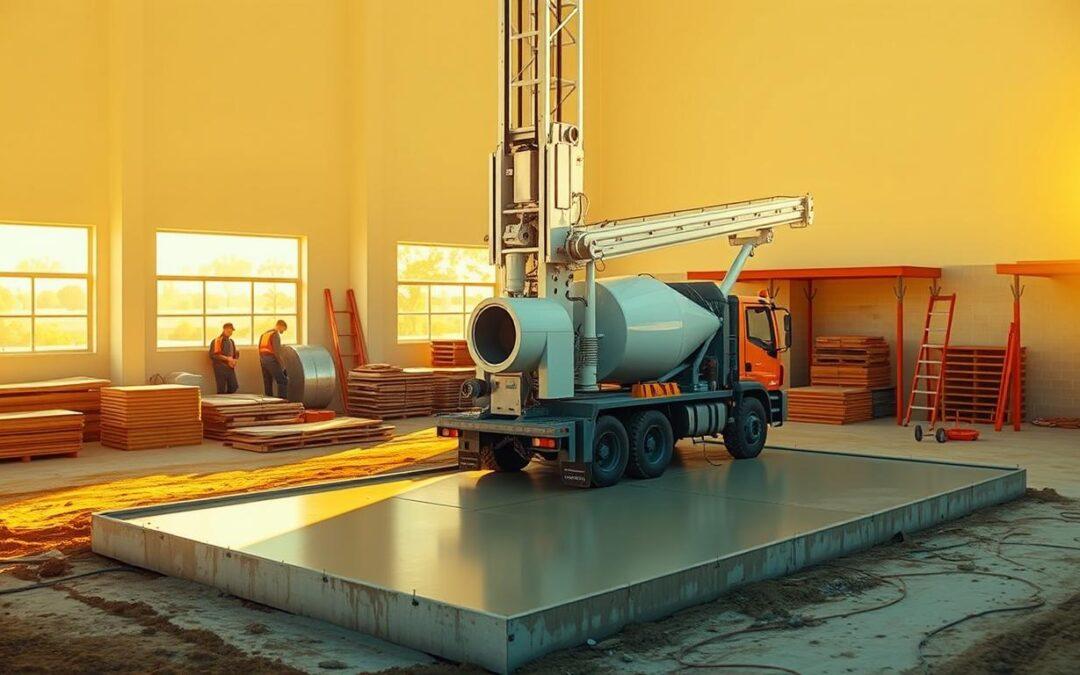
Did you know many home construction and renovation projects in South Africa depend on residential concrete pumps? The success of these projects often relies on the reliability and performance of such machinery.
Having the right equipment is key when building or renovating a home. A concrete pump is essential for placing concrete efficiently. This is a critical part of construction.
Understanding the importance of reliable concrete pumps can greatly impact your project’s outcome. Whether you’re a homeowner or a contractor, choosing the right concrete pump can improve your work’s quality and efficiency.
What Are Concrete Pumps?
In home building, concrete pumps are key. They move liquid concrete through a pipeline or hose. This is vital in construction, where traditional methods can’t reach.
Knowing about concrete pumps and their types is important. They help with foundations, driveways, and more. This makes the building process easier.
Overview of Concrete Pumping
Concrete pumping uses special equipment to move concrete well and accurately. It’s great for tight spaces or hard-to-reach sites. Residential concrete pumping services are key for correct placement and saving money.
The process starts with mixing the concrete. Then, it’s pumped through a hose to where it’s needed. This method is fast and precise.
Types of Concrete Pumps
There are many concrete pumps, each for different needs. The main types are boom pumps and line pumps.
- Boom pumps have a robotic arm for exact concrete placement. They’re best for big projects or complex sites.
- Line pumps use a hose to move concrete. They’re good for smaller projects or where boom pumps can’t go.
| Type of Pump | Description | Ideal Use |
|---|---|---|
| Boom Pump | Equipped with a robotic arm for precise placement | Larger projects, complex geometries |
| Line Pump | Uses a pipeline to transport concrete | Smaller to medium projects, restricted access |
Choosing the right concrete pump depends on your project’s needs. Consider the area size, job complexity, and site access. This helps pick the best concrete pump services for your home project.
Benefits of Using Concrete Pumps in Residential Projects
Concrete pumps are key in home building, bringing many benefits. They help pour concrete accurately, even in tricky spots.
Speed and Efficiency
Concrete pumps make building homes faster and more efficient. They let you pour concrete non-stop, saving time and money on labour. For example, getting a residential concrete pump hire service can speed up your project.
They also cut down on manual work, lowering the chance of mistakes. This is a big plus for concrete pumps for small projects, where being quick and precise matters a lot.
Improved Safety
Safety is a top priority in building homes. Concrete pumps help by making it easier to avoid lifting heavy concrete. This lowers the risk of accidents and injuries.
They also let teams pour concrete in tight spots without danger. This is key in home building, where safety rules must be followed closely.
To wrap it up, concrete pumps offer many advantages for home projects. They improve speed, efficiency, and safety. Using one can greatly improve your project’s success, whether it’s a small fix-up or a big build.
Types of Concrete Pumps for Residential Use
Choosing the right concrete pump is key for efficient and cost-effective residential projects. The type of pump needed depends on the project’s size, design complexity, and site accessibility.
Boom Pumps
Boom pumps are great for reaching high areas, perfect for big residential projects or complex designs. They are flexible and work well in many settings, from tall buildings to big landscaping jobs. Residential concrete pump rental services often have boom pumps for their versatility and reach.
Line Pumps
Line pumps are better for smaller projects or areas hard to access. They are also cheaper for projects needing less reach than boom pumps. Residential concrete pump contractors suggest line pumps for smaller jobs because they are efficient and affordable.
In short, picking between boom pumps and line pumps depends on the project’s needs. Knowing the differences helps choose the best equipment for success.
How to Choose the Right Concrete Pump for Your Home
Choosing the right concrete pump for your home project is important. You need to understand your project’s needs and compare different pumps’ specs.
Assessing Your Project Needs
Start by looking at your project’s size, complexity, and site access. For small home projects, a small-scale concrete pumping service is a good choice. Think about these points:
- The volume of concrete needed for your project
- The distance the concrete needs to be pumped
- The layout of your site and any obstacles
- The type of concrete being used
Evaluating Pump Specifications
After knowing your project’s needs, look at the pump specs. Important things to consider are:
- Pump capacity: Make sure it can handle the concrete volume needed.
- Pump reach: Check if it can reach all areas of your site.
- Mobility: If your site is hard to get to, a mobile pump might be better.
For small projects, renting a pump from a trusted service can save money. They can help pick the best pump for you.

By carefully looking at your project and pump specs, you can find the right concrete pump. This ensures your project goes smoothly and efficiently.
The Importance of Professional Concrete Pump Operators
Running a concrete pump is a tough job. It needs technical skills and knowing how to use the equipment safely. Professional operators are key for home projects. They make sure the concrete is placed right and the job is done on time.
Why Experience Matters
Experienced operators know the ins and outs of concrete and project needs. They avoid problems like uneven concrete and equipment damage. They also keep the site safe.
Key benefits of hiring experienced operators include:
- Improved safety on the construction site
- Enhanced quality of the concrete finish
- Efficient project completion, saving time and resources
Potential Risks of DIY Pumping
Trying to pump concrete without training can cause big problems. It can lead to accidents and poor results. Inexperienced people might not handle the equipment well.
| Risks | Consequences |
|---|---|
| Equipment Damage | Costly repairs, project delays |
| Safety Hazards | Injuries, legal issues |
| Poor Concrete Quality | Structural and aesthetic problems |
Hiring a professional concrete pump operator is a smart choice for home projects. It ensures the job is done right the first time.
Cost Factors for Residential Concrete Pump Services
The cost of residential concrete pump hire can change a lot. It depends on several important factors. Knowing these helps homeowners plan their budgets better for their projects.
When you think about getting a concrete pump, it’s key to know the costs. The main things that affect the price are the pump type, how long you need it, and how complex the project is. Experts say, “The cost of concrete pumping can be a big part of your construction budget. So, picking the right pump is very important.”
“The right equipment can make all the difference in the efficiency and cost-effectiveness of your project.”
Breakdown of Expenses
The costs for hiring a residential concrete pump can be split into a few areas:
- The price of the pump itself, which changes based on its type and size.
- Costs for the operator, as you usually need a professional.
- Fuel costs are based on the pump type and how long it’s used.
- Extra services, like delivery and setup.
Each of these parts adds to the total cost. It’s important to understand how they affect your budget.
Budgeting Tips
To manage your budget for residential concrete pump hire, homeowners should:
- Get quotes from different providers to compare prices and services.
- Look at the value you get, including the pump quality and the operator’s skill.
- Plan your project well to use the pump for as short a time as possible.
By using these tips, homeowners can handle their construction budget better. This helps ensure their project goes smoothly.
Maintaining Your Concrete Pump
To keep your concrete pump running smoothly, regular maintenance is key. A well-kept pump lasts longer and works better. This means it can handle your concrete pump services for home projects with ease.
Routine Maintenance Tips
Regular upkeep includes a few important steps. First, clean the pump well after each use to avoid concrete buildup. Make sure to flush out the system with water.
Also, inspect parts like seals, hoses, and valves for wear. Replacing damaged parts quickly helps avoid bigger problems. Don’t forget to do mechanical checks often to catch issues early.
- Clean the pump after each use
- Check for wear and tear on parts
- Perform regular mechanical checks
Signs of Wear and Tear
Spotting wear and tear early can save you money on repairs. Look out for leaks and odd noises, and if the pump isn’t working as well. If you see these signs, fix them fast.
Leaks often mean seals or hoses need replacing. Unusual noises point to mechanical issues. Decreased performance could mean clogged pipes or worn parts.
By keeping up with maintenance, your concrete pump will keep working well. It will help with your construction projects efficiently.
Local Regulations and Permits for Concrete Pumping
Understanding local rules and getting the right permits is key for your concrete pumping project. It’s important to follow these rules to avoid fines and ensure your project is valid.
Understanding Local Codes
Local rules can affect what equipment you can use, safety standards, and permits needed. You should talk to local authorities to get all the details. Not following these rules can cause delays and extra costs.
Homeowners need to work with their contractors to meet all local rules. This includes knowing about zoning, environmental, and health and safety laws.
Getting the Necessary Permits
Getting the right permits is a big part of concrete pumping. The permits you need depend on your project’s location, size, and what it includes. Start the permit process early to avoid delays.
The permit process involves sending in detailed plans, paying fees, and passing inspections. Having all your documents ready can make things easier.
- Research local regulations and permit requirements.
- Submit detailed project plans and applications.
- Pay the required fees and await inspection.
By following local rules and getting the right permits, homeowners can make sure their concrete pumping project goes well and is legal.
Comparing Concrete Pump Rental vs. Purchase
Choosing to rent or buy a concrete pump depends on several things. These include the project’s size, how often you’ll use it, and your budget. For homeowners, knowing the pros and cons of each choice is key to making a good decision.
When to Rent a Concrete Pump
Renting a concrete pump is best for homeowners with a single project or small construction needs. It saves money upfront and avoids storage and maintenance costs. Plus, you can pick the right pump for your project.
Benefits of renting a concrete pump include:
- Lower initial costs
- No maintenance or storage responsibilities
- Access to the latest equipment models
Advantages of Buying
Buying a concrete pump is wise for those who do many projects or use it a lot. It saves money in the long run and is always ready for use. It’s also a good investment for future projects.
Key advantages of purchasing a concrete pump include:
- Long-term cost savings
- Convenience and availability
- Potential for rental income if the pump is not in use
Deciding to rent or buy a concrete pump should be based on careful thought. Consider your project needs and future plans. Talking to a residential concrete pump contractor can offer helpful advice.
Safety Measures during Concrete Pumping
Using a concrete pump for small projects requires careful safety steps to prevent accidents. It’s important to keep workers and the public safe during these operations.
Personal Protective Equipment
Personal protective equipment (PPE) is key to protecting workers from concrete pumping dangers. PPE includes hard hats, gloves, safety glasses, and steel-toed boots. These items help prevent injuries.
It’s vital that everyone on site wears the right PPE. Regular checks should be done to ensure that everyone is following the rules.
On-Site Safety Protocols
Setting up safety protocols on site is essential for safe concrete pump use. This means securing the area, having proper signs, and being ready for emergencies.
The area around the pump should be off-limits to keep people safe. Furthermore, clear signs should show that heavy machinery is being used.
Having a solid emergency plan is also key. This plan should cover what to do in case of an accident, like first aid and how to evacuate.
Case Studies: Successful Residential Projects
Concrete pumps are key in modern building, speeding it up and making it safer. They are vital in small-scale concrete pumping services for homes. Here, we see how they make a difference.
Project Highlights
A luxury complex in a busy city was built with a concrete pump. It helped the team reach hard spots, speeding up the work. This also cut down waste and made the building better.
In another project, a home’s foundation was strengthened. The small-scale concrete pumping service made it possible to fill tight spaces. This made the renovation quick and didn’t disturb the area much.
Customer Testimonials
People who hired concrete pumping services are happy. One homeowner said, “The team was great, and the work was top-notch. We were amazed at how fast it was done.” This shows why it’s good to choose experts for concrete work.
A contractor also praised the service, saying, “A small-scale concrete pumping service changed our project. It saved us time and was very precise. We’ll use it again for sure.”
These stories and feedback show how concrete pumps help in home building. They make the work better, safer, and faster.
Conclusion: Investing in Concrete Pumps for Your Home
Getting a residential concrete pump can really boost your home project. It makes things more efficient and safer, and the finishes are better. Whether you choose to rent or buy, picking the right service is key.
Benefits for Homeowners
A concrete pump – residential solution can make your construction smoother. With it, you can place concrete exactly where you want, saving on labour and cutting down on waste.
Selecting the Right Provider
Search for providers with a track record in home projects. They should have various equipment and a focus on customer service. A dependable provider ensures your project meets your high standards and needs.
FAQ
What is a concrete pump, and how does it work?
What are the different types of concrete pumps available for residential projects?
What are the benefits of using a concrete pump in residential projects?
How do I choose the right concrete pump for my home project?
What are the cost factors for residential concrete pump services?
Should I rent or buy a concrete pump for my project?
What safety measures should be taken during concrete pumping operations?
How do I maintain my concrete pump to ensure its longevity and performance?
What are the local regulations and permits required for concrete pumping?
Can I operate a concrete pump myself, or do I need to hire a professional?
What are the benefits of hiring a professional concrete pump operator for my residential project?
How can I find a reliable residential concrete pump service provider?
Note: Prices and specifications shown are for reference only and may change without notice. For the latest information, please contact Transtech directly on 021 948 4746.