
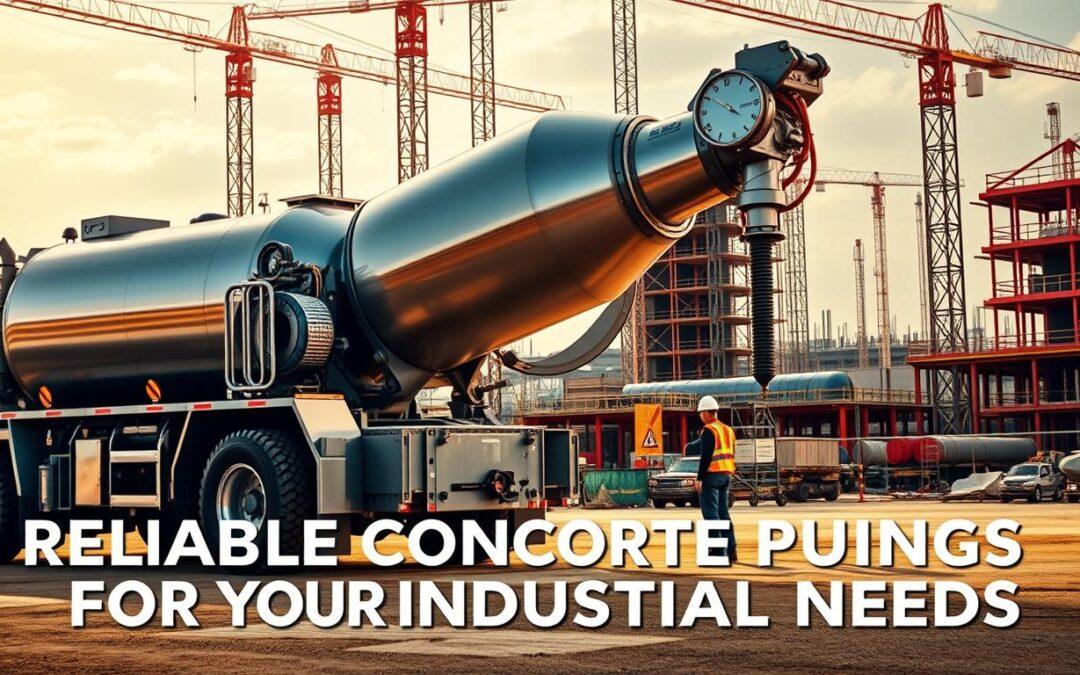
In the fast-paced world of industrial construction, the right equipment is key. Did you know 75% of construction delays come from equipment failure or inefficiency?
Reliable concrete pumps are vital for delivering high-quality concrete exactly where needed. This ensures projects stay on track.
Choosing the right concrete pump for your industrial project can be tough. But knowing the benefits and what to consider can greatly help your project’s success.
This article will dive into the importance of reliable machinery in industrial construction. It aims to help you make smart choices for your next project.
Understanding Concrete Pumps in Industrial Projects
Concrete pumps are key in today’s industrial projects. They help move liquid concrete over long distances and high places. This is vital in big constructions where old ways of placing concrete don’t work well.
What Are Concrete Pumps?
Concrete pumps are specialised construction equipment. They move liquid concrete through a pipeline for exact placement in different construction settings. They’re very useful in projects needing concrete at high places or over long distances, like in tall buildings or big infrastructure projects.
Types of Concrete Pumps Available
There are mainly two types of concrete pumps used in big projects: boom pumps and line pumps. Boom pumps have a hydraulic arm for precise placement without extra piping. They’re great for complex projects. Line pumps need manual piping but are flexible for many uses, even in tight spaces.
- Boom Pumps: Ideal for complex projects requiring precise concrete placement.
- Line Pumps: Versatile and suitable for a range of applications, including confined spaces.
Applications in Industrial Settings
In industrial settings, concrete pumps are essential for building high-rise buildings, infrastructure, and big manufacturing sites. They help move and place concrete efficiently, saving time and money. They also help avoid waste and ensure top-quality finishes.
Using concrete pumps as heavy machinery in these projects shows their big role in modern building. They help finish complex industrial projects successfully.
Benefits of Using Concrete Pumps
Concrete pumps are key in industrial construction. They make projects more efficient, cost-effective, and safe. Using concrete pumps changes how we place concrete, improving project results.
Enhanced Efficiency in Project Completion
Concrete pumps make placing concrete faster and easier. This efficiency helps meet deadlines and boosts productivity.
- Reduces manual labor involved in concrete placement
- Enhances precision in concrete delivery, minimizing waste
- Allows for the placement of concrete in complex or hard-to-reach areas
Experts say, “Concrete pumps’ precision and speed cut down on human error. This ensures a better finish.”
“The use of concrete pumps has transformed the construction landscape by providing a reliable and efficient means of concrete placement.”
Cost-Effectiveness Compared to Other Methods
Concrete pumps are cost-effective for industrial projects. They save on labour and reduce waste, cutting down project costs.
- Decreases labor costs by automating the concrete placement process
- Reduces material waste through precise concrete delivery
- Lowers equipment costs in the long run due to durability and reliability
Improved Safety Standards
Concrete pumps boost safety by lowering accident risks from manual concrete work. They let workers place concrete safely from a distance, making sites safer.
- Minimizes the risk of accidents related to manual handling of concrete
- Enhances site safety by allowing workers to operate from a distance
- Reduces the physical strain on workers, lowering the risk of injury
In summary, concrete pumps offer many benefits in industrial construction. They improve efficiency, cut costs, and enhance safety. Using concrete pumps leads to better project outcomes and safety.
Key Features to Look for in Concrete Pumps
Choosing the right concrete pump for commercial projects is key. You need to know what makes a pump good for the job. Look at several important factors to make sure the pump fits your project’s needs.
Durability and Build Quality
The durability and build quality of a concrete pump are very important. A well-made pump can handle tough jobs and last longer. It also saves money on repairs over time. Look for pumps with high-quality materials and strong construction.
Pumping Capacity and Range
The pumping capacity and range of a concrete pump are critical. They show how well the pump can handle concrete over different distances. For concrete pump rental, pick a pump that meets your project’s needs, whether it’s a tall building or a big infrastructure project.
Check the pump’s maximum pressure and flow rate. Also, see if it can handle complex pipeline setups.
Mobility and Ease of Use
The mobility and ease of use of a concrete pump matter a lot. Pumps that are easy to move and set up save time and money. Plus, controls that are simple to use make the job easier.
For hard-to-reach places, look for pumps that are easy to move. Trailer- or truck-mounted pumps are good options.
Choosing the Right Concrete Pump for Your Project
First, understand what your project needs. Industrial construction projects are complex. They need the right equipment for efficiency and cost-effectiveness.
Assessing Project Requirements
Before picking a concrete pump, know your project’s needs. Think about how much concrete you’ll need, the pump’s reach, and the site’s conditions. For example, a tall building might need a pump with high pressure and a long reach.
Key factors to consider include:
- Project size and complexity
- Concrete volume and type
- Pumping distance and height
- Site conditions and accessibility
Comparing Different Brands and Models
After knowing your project’s needs, compare concrete pumps. Look for ones that meet your specs, perform well, and are reliable. Customer feedback can help you choose.
| Brand | Model | Pumping Capacity | Max Pressure |
|---|---|---|---|
| Sany | SANY SY5120THB | 120 m³/h | 120 bar |
| Putzmeister | Putzmeister M 740 TD | 140 m³/h | 150 bar |
| Schwing | Schwing Stetter S31X | 100 m³/h | 100 bar |
Experts say, “The right concrete pump can cut project times and boost efficiency.” (
This is key for meeting deadlines and staying on budget.
)
Rental vs. Purchase Considerations
Choosing between renting or buying a concrete pump depends on several things. Consider the project’s length, your budget, and how often you’ll use it. Renting is good for short projects, while buying is better for long or frequent use.
Consider the following:
- Project duration and frequency of use
- Budget constraints and cost implications
- Maintenance and servicing requirements
By carefully looking at your project’s needs, comparing pumps, and weighing rental vs. purchase, you can make a smart choice. This will meet your industrial pump solutions needs.
Maintenance Tips for Concrete Pumps
Keeping concrete pumps in top shape is key, whether they’re in factories or power plants. Regular care helps them work well, avoiding expensive breakdowns.
Regular Inspection and Cleaning
Checking and cleaning your concrete pump often is a must. Look for wear, make sure parts move smoothly, and clean out concrete residue to avoid clogs.
- Inspect hydraulic systems for leaks or damage.
- Clean the pump’s hopper and pipeline after each use.
- Lubricate moving parts according to the manufacturer’s schedule.
Common Issues and Solutions
Even with regular care, problems can pop up. You might face clogs, hydraulic failures, or wear on parts. Knowing how to fix these quickly can save time and money.
- Clogged Pipelines: Use a cleaning ball or a high-pressure water jet to clear blockages.
- Hydraulic Failures: Check for leaks, and replace damaged seals or hoses.
- Wear on Components: Regularly inspect and replace worn parts to prevent further damage.
Importance of Professional Servicing
While you can do some maintenance yourself, professional help is vital for complex tasks. Experts can spot and fix issues you might miss, keeping your pump running smoothly.
Combining your own maintenance with professional services can make your concrete pump last longer. This ensures it keeps up with your industrial needs.
Innovations in Concrete Pump Technology
New advancements in concrete pump technology are changing the game. They make heavy machinery more efficient and help with sustainable projects. The focus is on better efficiency, less environmental harm, and safer operations.

Advances in Automation and Control
Automation and control systems are getting a big boost. Today’s concrete pumps have advanced controls for better concrete placement and lower costs. These systems help operators manage the pumping process better, making projects more efficient.
Eco-Friendly Concrete Pump Options
The industry is moving towards more eco-friendly concrete pump options. Pumps are now made to reduce environmental harm while improving performance. These green options are gaining traction in projects where eco-friendliness is key.
Future Trends in Pump Efficiency
The future of concrete pump technology looks bright. Expect more focus on pump efficiency and reducing environmental impact. Advances in materials and design will be key. We’ll see even more innovative solutions for sustainable and efficient projects.
Top Brands for Concrete Pumps
Some brands really stand out when it comes to concrete pumps. They are known for their quality and innovation. The global market has a few key players who are leaders in excellence and customer satisfaction.
Sany Heavy Industry
Sany Heavy Industry is a top name in construction equipment. They are famous for their high-quality concrete pumps. Sany focuses a lot on research and development, always improving their products.
Their concrete pumps are perfect for big industrial projects. They offer reliability and efficiency.
Putzmeister
Putzmeister is a leading brand in the concrete pump industry. They have a long history of innovation. Putzmeister has developed durable and high-performance concrete pumps.
Their products are used in many industrial settings. This includes high-rise building construction and infrastructure development.
Schwing America
Schwing America is well-known for its reliable equipment. Their concrete pumps can handle tough jobs. They offer high pumping capacities and ranges.
Schwing’s commitment to quality and customer service is unmatched. They have a loyal customer base in the industry.
These top brands have set a high standard in the concrete pump industry. They offer a range of models for different project needs. By knowing what each brand specialises in, businesses can make better choices for their projects.
How to Operate a Concrete Pump Safely
When working with concrete pumps, safety is key. These machines are complex and can be dangerous. So, it’s important to follow strict safety rules.
Training and Certification Requirements
Before you can operate a concrete pump, you need training and a certification. This training teaches you how the pump works, safety steps, and what to do in emergencies. Certification programmes make sure you know how to use the pump safely.
A good training programme includes:
- Learning how to check and maintain the equipment
- Understanding safety rules and emergency plans
- Getting hands-on practice with the concrete pump
Essential Safety Gear and Practices
Wearing the right protective gear is a must for concrete pump operators. You’ll need:
- Hard hats
- Steel-toed boots
- Gloves
- Safety glasses
It’s also important to check the equipment regularly. Always be aware of your surroundings and follow safety rules to avoid accidents.
“Safety is not just a responsibility, it’s a culture that needs to be ingrained in every aspect of our work.”
Emergency Procedures
Even with careful planning, emergencies can happen. It’s important to have clear emergency plans. These plans should cover:
| Emergency Type | Procedure |
|---|---|
| Equipment malfunction | Shut down the equipment, notify maintenance, and follow repair protocols. |
| Accident or injury | Provide first aid, call emergency services if necessary, and report the incident. |
Regular drills and training help make sure operators are ready for emergencies.
By focusing on training, safety gear, and emergency plans, we can make construction safer. This is true for both industrial and commercial projects.
Case Studies: Successful Industrial Projects Using Concrete Pumps
Concrete pumping services have played a key role in many industrial projects around the world. They help projects finish on time and within budget. This is thanks to the pumps’ efficiency, precision, and reliability.
High-Rise Building Construction
High-rise buildings have greatly benefited from concrete pumps. For example, the Burj Khalifa, the world’s tallest building, used concrete pumps. This technology allowed for continuous pouring, ensuring the building’s stability and strength.
Infrastructure Development
Projects like bridges, roads, and dams have also seen big improvements with concrete pumps. The Three Gorges Dam in China is a great example. Concrete pumps helped manage the huge amount of concrete needed, speeding up construction and improving quality.
Large-Scale Manufacturing Facilities
Concrete pumps have also been vital for large manufacturing facilities, like power plants. These plants need precise concrete placement for their structures. Concrete pumps ensure this precision and quality, making them essential for these projects.
| Project Type | Location | Concrete Pumping Service Used |
|---|---|---|
| High-Rise Building | Dubai, UAE | Yes |
| Infrastructure Development | China | Yes |
| Power Plant | South Africa | Yes |
Concrete pumps have proven their worth in these industrial projects. They help achieve project goals efficiently and effectively. As the construction industry grows, concrete pumps will remain key to completing complex projects.
Finding Reliable Concrete Pump Suppliers
Finding a trustworthy concrete pump supplier is key for project success in South Africa. A good supplier offers top-notch equipment and support. This boosts project efficiency and keeps costs down.
Reliability and Reputation
When looking for a concrete pump rental, check the supplier’s reputation. Look for well-known brands like Sany Heavy Industry, Putzmeister, and Schwing America. They have a solid reputation in the industry.
Support and Service
It’s also important to evaluate the supplier’s customer support. A reliable supplier should provide maintenance and repair services. This helps keep projects running smoothly without interruptions.
Negotiating Terms
When talking to a supplier, try to get the best prices and terms. Think about the rental period, equipment details, and delivery times. This way, you can get the best deal for your industrial pump needs.
FAQ
What are the different types of concrete pumps available for industrial projects?
How do I choose the right concrete pump for my industrial project?
What are the benefits of using concrete pumps in industrial construction?
How often should I maintain my concrete pump?
Can I rent a concrete pump for my industrial project?
What safety measures should be taken when operating a concrete pump?
How do I find a reliable supplier of concrete pumps for my industrial project?
What are some of the latest innovations in concrete pump technology?
Note: Prices and specifications shown are for reference only and may change without notice. For the latest information, please contact Transtech directly on 021 948 4746.