

In South Africa’s construction industry, safety is key. Concrete pumps are often used, but they can be dangerous if not used right.
Many workplace accidents happen with heavy machinery. These accidents often come from not having enough training or not following safety rules. It’s important to follow occupational health and safety guidelines to avoid these risks.
By knowing and following these guidelines, construction companies can lower accident risks. This makes the workplace safer for everyone.
Overview of Concrete Pumps and Their Importance
Concrete pumps are key in modern construction in South Africa. They boost productivity and precision. In South Africa, they are vital for efficient and precise construction.
Definition of Concrete Pumps
A concrete pump moves liquid concrete from a mixer to the construction site. Concrete pumps handle thick concrete well. They are essential for big projects.
Applications of Concrete Pumps
Concrete pumps are used in many projects. This includes homes and big projects like bridges. They work well in tight spaces.
- High-rise buildings
- Residential constructions
- Bridges and tunnels
- Large infrastructure projects
Benefits of Using Concrete Pumps
Concrete pumps bring many benefits. They make work faster, cut down on labour costs, and reach hard spots. They also cut waste and improve concrete quality.
| Benefit | Description |
|---|---|
| Increased Efficiency | Concrete pumps place concrete fast, speeding up projects. |
| Reduced Labor Costs | Automating concrete placement lowers labour costs. |
| Accessibility | Concrete pumps reach areas hard to get to with other methods. |
Safety Regulations Governing Concrete Pumps
In South Africa, concrete pumps must follow strict safety rules. These rules help keep workers safe while on the job. They are key to reducing risks from using concrete pumps.
Overview of Safety Standards
South Africa has safety standards for concrete pumps. These standards aim to protect workers from dangers. They cover how to use, maintain, and operate concrete pumps correctly.
- Regular maintenance checks to prevent mechanical failures
- Proper training for operators to handle concrete pumps safely
- Use of personal protective equipment (PPE) to minimize injury risks
Following these standards is vital for a safe workplace.
Key Regulatory Bodies in South Africa
Several groups in South Africa watch over concrete pump safety. These include:
- The Occupational Health and Safety Act (OHSA) – sets and enforces health and safety rules
- The South African National Standards (SANS) – makes standards for equipment and how to use it
These groups are key in keeping workers safe.
Compliance Requirements
All companies with concrete pumps in South Africa must follow safety rules. This means:
- Regular checks and upkeep of equipment
- Training and certification for operators
- Following safety rules during work
By sticking to these rules, companies can lower accident risks. This ensures a safe work environment for their employees.
Types of Concrete Pumps and Their Safety Features
The construction world depends a lot on concrete pumps. There are many types, each with its own safety features. Knowing these differences is key to keeping construction sites safe.
Boom Pumps
Boom pumps are a big deal in big construction projects. They have a long arm, or boom, that can reach high and far. This lets workers place concrete over a big area easily. Safety features of boom pumps include controls to keep them stable and hydraulic systems for smooth movement.
When using boom pumps, it’s important to keep the area around them clear. Workers need to be trained to move the boom safely and well.
Line Pumps
Line pumps, or trailer-mounted pumps, are great for many tasks. They’re perfect for pumping concrete long distances or in tight spots. Key safety features include sensors to watch the pressure and prevent it from getting too high.
People using line pumps need to check the pipeline’s condition. They also have to make sure it’s secure and well-maintained while pumping.
Specialty Pumps
Speciality pumps are made for special jobs, like small residential projects or long-distance pumping. They often have safety features that fit their unique needs, like being compact to avoid accidents in tight spots.
It’s important to know the safety features and how to use speciality pumps right. This ensures they work safely and well.
Operator Training and Certification Standards
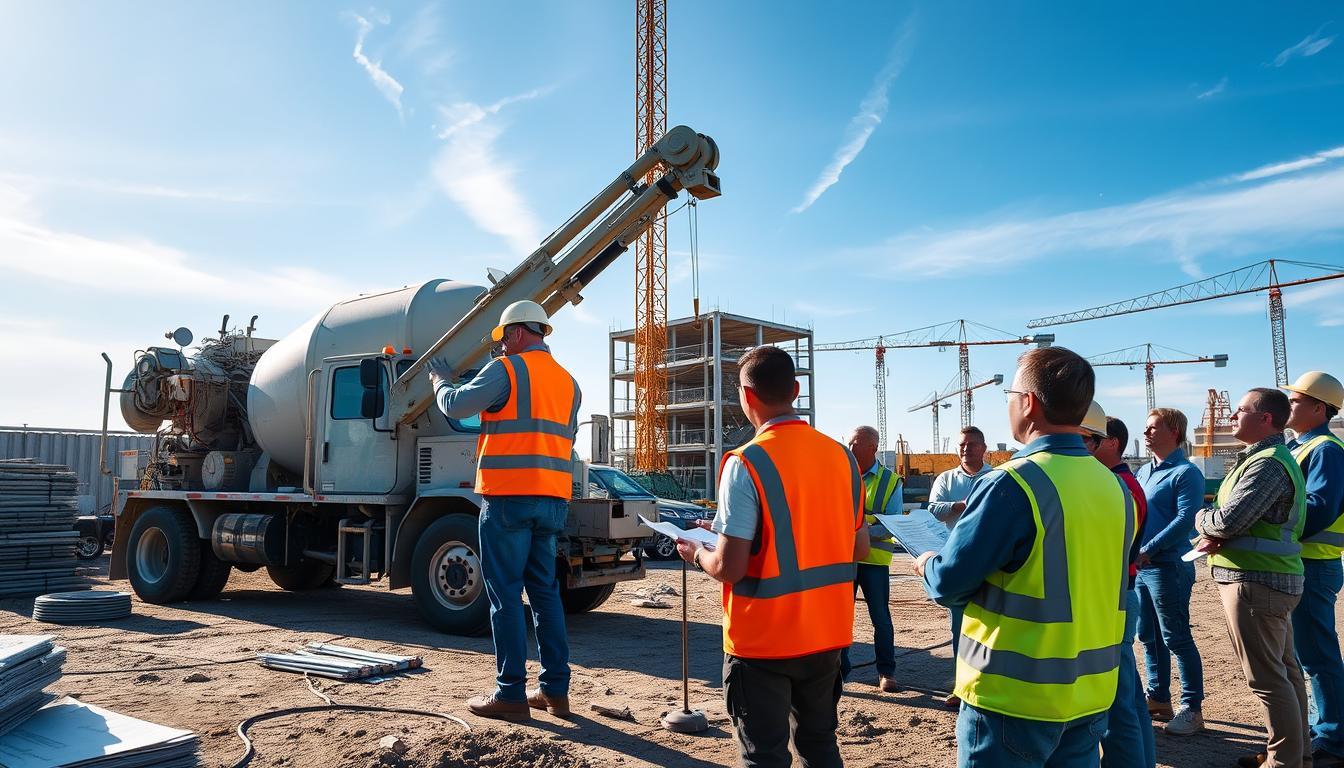
Training and certification are key in the concrete pumping industry. They help keep operations safe and efficient. It’s important that operators know how to do their job right.
Importance of Proper Training
Training concrete pump operators is critical for safety. Well-trained operators can spot dangers and act fast. They learn about equipment, safety, and how to handle emergencies.
Good training makes everyone safer and work better. Trained operators use equipment right, which lowers accident risks.
Certification Programs Available
In South Africa, there are many certification programmes for concrete pump operators. These programmes make sure operators know how to use equipment safely. Some include:
- Certified Concrete Pump Operator (CCPO) programs
- Industry-specific training and certification
- Manufacturer-led training programs
These programmes mix theory and practice, ending with a test. Certification is needed to work on sites and shows a professional is at work.
Skills and Competencies Required
Concrete pump operators need many skills to do their job well. Key skills include:
- Knowing how to operate and maintain equipment
- Understanding safety rules and regulations
- Spotting and fixing hazards
- Being good at communicating and working with others
They also need to be physically fit and work well in different places. Continuous training and professional development help them keep up with new tech and safety rules.
Maintenance and Inspection Guidelines
To keep concrete pumps running well and safely, a strict maintenance plan is key. Regular upkeep not only extends the life of the equipment. It also cuts down on the chance of accidents on construction sites.
Routine Maintenance Procedures
Routine maintenance includes a series of steps to keep concrete pumps in top shape. These steps include:
- Daily checks on hydraulic systems, electrical controls, and mechanical parts.
- Regular oiling of moving parts to avoid wear and tear.
- Regular inspections of hoses, pipes, and other parts that wear out.
Daily inspections are vital to spot problems early. Operators need to know how to spot signs of trouble.
Inspection Checklists for Concrete Pumps
Using a detailed inspection checklist ensures no important part is missed during maintenance. A checklist might include:
- Checking hydraulic fluid levels and condition.
- Examining the electrical system, including wiring and controls.
- Looking at the condition of mechanical parts, like pumps, gears, and bearings.
Regular use of inspection checklists helps keep the equipment in good shape. It also proves you’re following safety rules.
Documenting Maintenance Activities
Keeping records of all maintenance is key. It helps track the equipment’s history, plan for future upkeep, and show you’re meeting safety standards. Records should detail inspections, repairs, and replacements.
Accurate documentation helps spot recurring problems, plan for part replacements, and keep the equipment safe and working.
By sticking to these maintenance and inspection tips, operators can make concrete pump operations safer and more efficient. This helps create a safer work environment.
Personal Protective Equipment (PPE) Requirements
Personal Protective Equipment (PPE) is key for occupational health and safety guidelines in concrete pump operations. It’s important for operators to wear the right PPE to avoid injuries on construction sites.
Types of PPE for Concrete Pump Operators
Concrete pump operators need different PPE to face various hazards. Here are the main types:
- Hard hats to protect against falling objects and debris.
- Safety glasses or goggles to shield the eyes from chemical splashes or flying particles.
- Hearing protection, such as earplugs or earmuffs, to reduce noise exposure.
- High-visibility clothing to enhance visibility in low-light conditions.
- Steel-toed boots to protect feet from heavy objects and equipment.
- Gloves to provide grip and protection against cuts and abrasions.
Importance of PPE in Ensuring Safety
PPE is the last defence against workplace hazards. It greatly reduces injury and illness risks. For concrete pump operators, it’s vital to protect against noise from machinery, falling debris, and chemical exposure. Wearing the right PPE helps operators work safely and efficiently.
Usage Guidelines for PPE
To make PPE effective, it’s important to follow usage guidelines. This includes:
- Inspecting PPE before use to check for damage or wear.
- Using PPE correctly, following the manufacturer’s instructions.
- Maintaining PPE according to the manufacturer’s guidelines to ensure longevity.
- Storing PPE properly when not in use to prevent damage.
By following these guidelines and using PPE correctly, concrete pump operators can greatly improve their safety and the site’s overall safety.
Environmental Regulations Impacting Concrete Pumps
Environmental rules are key for concrete pumps in South Africa. They help lessen the harm to the environment from pumping concrete.
Handling of Concrete Waste
Dealing with concrete waste is very important. Proper disposal methods are needed to avoid harming the environment. Concrete waste must be recycled or disposed of at approved sites, as per local laws.
“The proper handling of concrete waste is not just a regulatory requirement but a critical step towards minimizing the environmental footprint of construction projects.”
Creating a waste management plan is essential. It should detail how to handle, store, and dispose of concrete waste. Concrete recycling is also becoming more popular. It involves crushing waste concrete for use in new projects.
| Waste Management Practice | Description | Environmental Benefit |
|---|---|---|
| Segregation | Separating concrete waste from other types of waste | Reduces contamination and facilitates recycling |
| Recycling | Crushing and reusing concrete waste as aggregate | Conserves natural resources and reduces landfill waste |
| Proper Disposal | Disposing of concrete waste at designated landfill sites | Prevents environmental contamination |
Noise and Emission Standards
Concrete pumps must meet noise and emission standards. Noise reduction measures include silencers and enclosures. Emission standards aim to cut down pollutants.
- Regular maintenance of Concrete Pumps to ensure they operate within emission standards
- Use of cleaner fuels and technologies to reduce emissions
- Implementation of noise barriers and scheduling of operations during less noise-sensitive times
Sustainable Practices in Concrete Pumping
Sustainability is vital in the concrete pumping industry. Practices like reducing water usage, optimising concrete mix designs, and using supplementary cementitious materials help lessen environmental harm.
By embracing these sustainable practices, construction projects can meet environmental rules. They also help make the future more sustainable.
Risk Assessment and Management Strategies
Keeping concrete pumps safe needs a good risk plan. This plan must spot dangers and find ways to lower them.
Identifying Possible Hazards
Finding out what could go wrong is key. Hazards with concrete pumps include breakdowns, mistakes by the operator, and weather issues.
- Mechanical failures can happen if equipment isn’t well-maintained or gets too worn out.
- Operator error can come from not enough training or being too tired.
- Weather like strong winds or very hot or cold temperatures can also be a problem.
Risk Reduction Methods
After spotting dangers, we can start to lessen them. Here are some ways:
- Keeping equipment in good shape to avoid breakdowns.
- Teaching operators well to cut down on mistakes.
- Having safety plans for weather issues, like securing equipment in strong winds.
Good risk reduction makes work safer and more efficient.
Emergency Response Planning
Even with good planning, emergencies can happen. So, having a plan for emergencies is very important. This plan should cover how to handle accidents, get everyone to safety, and give first aid.
Doing regular drills and training helps make sure everyone knows what to do in an emergency.
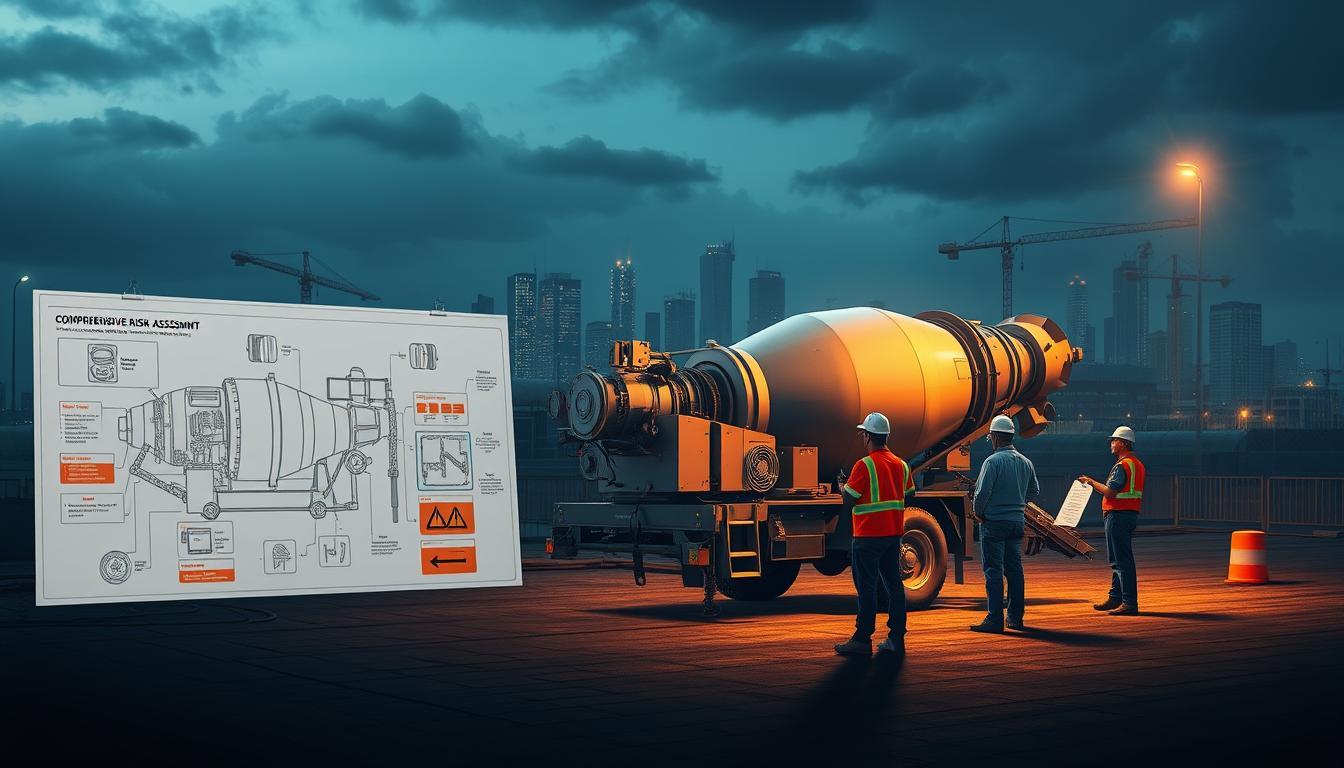
By using these strategies, construction sites in South Africa can make concrete pump work much safer. This keeps everyone on the site safe.
Best Practices for Safe Concrete Pump Operations
Keeping concrete pumps safe is a big deal in construction. Using these machines right keeps the crew safe and makes projects run smoother.
Pre-Operation Safety Checks
Before you start a concrete pump, do a full safety check. Look for damage, check the oil, and make sure safety gear works. Regular maintenance stops equipment from breaking down.
Also, check the work area for dangers like uneven ground or things overhead. Fixing these problems early on cuts down on accidents.
Effective Communication Among Crew
Good talk among the crew is key for safe pump use. Everyone should know their job, use clear signals or radios, and know the plan. Good talk stops accidents caused by mix-ups.
Having regular talks helps too. These meetings let you share safety tips, go over the day, and plan for tomorrow.
Implementing Safe Work Procedures
Having safe work rules is also very important. Make and follow strict safety rules, train everyone well, and watch for dangers. This keeps everyone safe.
- Develop and enforce strict safety protocols.
- Provide ongoing training to operators and crew members.
- Continuously monitor the work environment for possible hazards.
By following these steps, construction teams can make their concrete pump work safer. This protects their workers and their equipment.
Legal Ramifications of Non-Compliance
Following occupational health and safety guidelines is a must for concrete pump operators in South Africa. It’s not just the right thing to do; it’s the law. Ignoring these rules can hurt a business’s wallet and reputation big time.
Consequences of Violating Safety Standards
Breaking safety rules for concrete pumps can lead to big legal troubles. This includes fines and lawsuits. If someone is found to be careless, they might even face criminal charges.
Fines and Penalties: In South Africa, the Department of Employment and Labour can hit companies with big fines for not following safety rules.
Case Studies of Non-Compliance
There have been many examples in South Africa of what happens when safety rules are ignored. These examples show how much money can be lost and how a company’s image can suffer.
- A construction company got hit with a big fine after a concrete pump accident hurt someone badly because they didn’t follow safety rules.
- A concrete pump operator was found guilty of serious negligence in a court case and got a criminal conviction.
Staying Informed to Avoid Legal Issues
To dodge legal problems, concrete pump businesses need to keep up with safety rules. This means training workers and keeping equipment in good shape.
Regular Updates: Companies should check and update their safety plans often to make sure they’re following the latest rules.
By keeping up with safety guidelines, businesses can avoid legal trouble caused by not following the rules.
Emerging Trends in Concrete Pump Safety Regulations
The future of concrete pump safety in South Africa is changing. New technologies and industry needs are leading the way. As construction grows, keeping safety high is more important than ever.
Technological Innovations in Concrete Pumping
New tech is making concrete pumping safer. Automated systems and real-time monitoring are becoming common. They make operations more efficient and safer.
Some key advancements include:
- Advanced sensors to spot dangers
- Automated pumps that need less human help
- Remote control options to keep operators safe
Updates to Existing Regulations
South Africa’s safety rules are always being updated. These changes keep safety up with new tech and industry changes.
Key areas of focus for these updates are:
- Better training for operators
- Tighter maintenance and checks
- Higher standards for safety gear
Future Challenges and Opportunities
The industry faces both challenges and chances ahead. One big challenge is helping small and medium-sized enterprises follow new safety rules.
But these challenges also bring chances for growth and innovation. By adopting new tech and safety rules, companies can stay ahead and be more competitive.
Resources for Concrete Pump Safety Compliance
To follow safety guidelines, it’s key to have good resources. Here are some tools to help concrete pump workers and companies. They keep up with safety standards and best practices.
Industry Publications and Guidelines
Publications from the South African National Roads Agency (SANRAL) and the Concrete Institute are very helpful. They give safety protocols and rules to follow. This helps workers know what’s needed for safety in South Africa.
Professional Associations and Support
The South African Institute of Concrete (SAIC) offers support and training. They help make the industry safer and better. Their work is important for safety and quality.
Online Safety Training Platforms
Online training sites make it easy to learn and get certified. They cover many topics, including safety rules. This ensures workers can work safely and well.
FAQ
What are the key safety regulations governing the use of concrete pumps in South Africa?
What types of Personal Protective Equipment (PPE) are required for concrete pump operators?
How often should concrete pumps be inspected and maintained?
What are the consequences of non-compliance with safety regulations for concrete pumps?
Where can I find resources to help with concrete pump safety compliance?
What are the emerging trends in concrete pump safety regulations?
Why are operator training and certification important for concrete pump safety?
How can I stay informed about updates to concrete pump safety regulations?
Note: Prices and specifications shown are for reference only and may change without notice. For the latest information, please contact Transtech directly on 021 948 4746.