
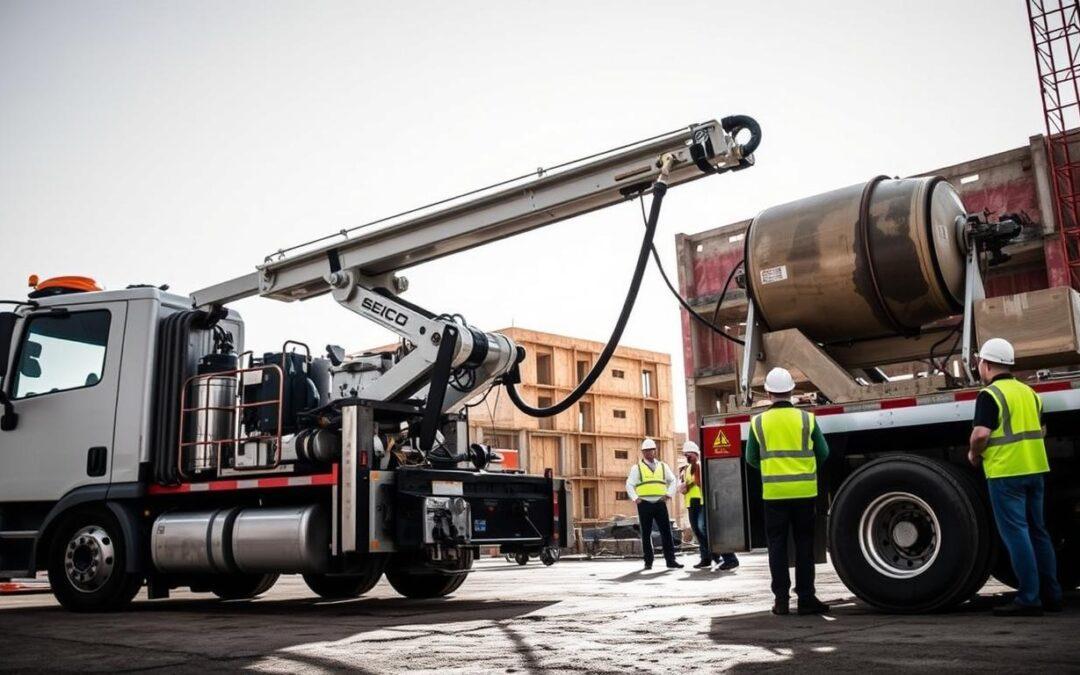
The construction industry in South Africa is growing fast. Concrete pumps are key to this growth. But, they can be dangerous if not used right.
Many accidents on construction sites are caused by concrete pumps used wrong. To lower these risks, regulations and safety standards have been set.
In South Africa, following these safety standards is vital. It protects workers, the public, and the environment. By following these regulations, construction companies can make their sites safer.
Overview of Concrete Pumps
Concrete pumps are key in modern construction. They help move liquid concrete to where it’s needed. This makes projects faster and more precise.
What are Concrete Pumps?
Concrete pumps are machines that move liquid concrete through a hose. They’re built for the tough demands of construction. They work on everything from small homes to big projects.
Key Features of Concrete Pumps:
- Reliable and efficient concrete placement
- Ability to reach high or hard-to-access areas
- Reduced labor costs due to automated concrete transfer
Types of Concrete Pumps
There are many types of concrete pumps for different jobs. The main ones are:
- Trailer-mounted concrete pumps: Great for small spaces, these pumps are easy to move.
- Truck-mounted concrete pumps: With a boom, these are best for big projects, reaching far and wide.
- Stationary concrete pumps: For long projects, these are set up permanently and work with a pipeline.
Common Applications of Concrete Pumps
Concrete pumps are used in many construction projects. They’re great for:
- High-rise buildings, where they pump concrete up high.
- Infrastructure projects, like bridges and tunnels, where they need to be precise and reach far.
- Complex designs, where placing concrete exactly is important.
Knowing about the different concrete pumps and their uses is key. It helps choose the right one for a project. And makes sure operators are well-trained and certified.
Importance of Regulations in Concrete Pumping
Regulations in concrete pumping are more than just rules. They create a safe place for everyone. The work of concrete pumping is complex and needs strict safety rules to protect workers, the public, and the environment.
Ensuring Safety on Job Sites
Rules are key to keeping concrete pumping safe. By following these rules, construction sites can lower accident risks. Proper training and certification of personnel are essential. They make sure operators know how to use concrete pumps safely.
Rules also require safety checks and emergency plans. This helps avoid equipment failures and prepares for emergencies quickly.
Protecting Workers and the Public
Keeping workers and the public safe is a top priority in concrete pumping. Rules are made to prevent dangers like equipment failures and electrical risks.
Training and certification requirements for operators are vital. Proper training cuts down on accidents caused by mistakes. Rules also demand safety plans for each site, making it safer for everyone.
In the end, following rules in concrete pumping is not just a must. It’s a moral duty for construction companies. By focusing on safety and following rules, companies make sure everyone is safe and help the community.
Key Regulatory Bodies in South Africa
South Africa has set up several regulatory bodies to ensure safety and compliance with concrete pumps. These groups are key to keeping workplaces safe and following the rules in the construction field.
The Department of Labour
The Department of Labour is a major player in regulating concrete pumps in South Africa. It makes sure employers follow labor laws and safety rules. This helps create a safe work environment for those using concrete pumps.
Key responsibilities of the Department of Labour include:
- Enforcing labor laws and regulations
- Conducting inspections to ensure compliance
- Providing guidance on occupational health and safety
National Occupational Health and Safety Act
The National Occupational Health and Safety Act is a key law for workplace safety in South Africa. It sets up a framework for a safe work environment, including rules for using concrete pumps safely.
The act emphasizes the importance of:
- Identifying and mitigating workplace hazards
- Providing training and equipment to employees
- Maintaining records of workplace incidents
South African Bureau of Standards
The South African Bureau of Standards (SABS) is in charge of setting standards for industries like construction. SABS makes sure concrete pumps meet safety and performance standards.
The role of SABS includes:
- Developing and publishing industry standards
- Certifying products that meet these standards
- Providing testing and inspection services
Safety Standards for Concrete Pump Operation
Safety is key when working with concrete pumps. These machines are complex and handle heavy materials. Without proper care, they can be very dangerous.
General Safety Guidelines
There are important steps to follow for safe pump operation. Operators need to be trained and certified to use the equipment right. They should also wear personal protective equipment (PPE) like hard hats and gloves.
- Make sure the area is free from obstacles and dangers.
- Hold regular safety talks and training.
- Keep good communication among the team.
Operator Training Requirements
Training operators is a big part of keeping things safe. Training should include how to use the pump, what to do in emergencies, and how to do maintenance. Certification programs help make sure operators know their stuff.
- Get in-depth training on the pump model.
- Get hands-on experience under watchful eyes.
- Keep up with regular assessments and certification.
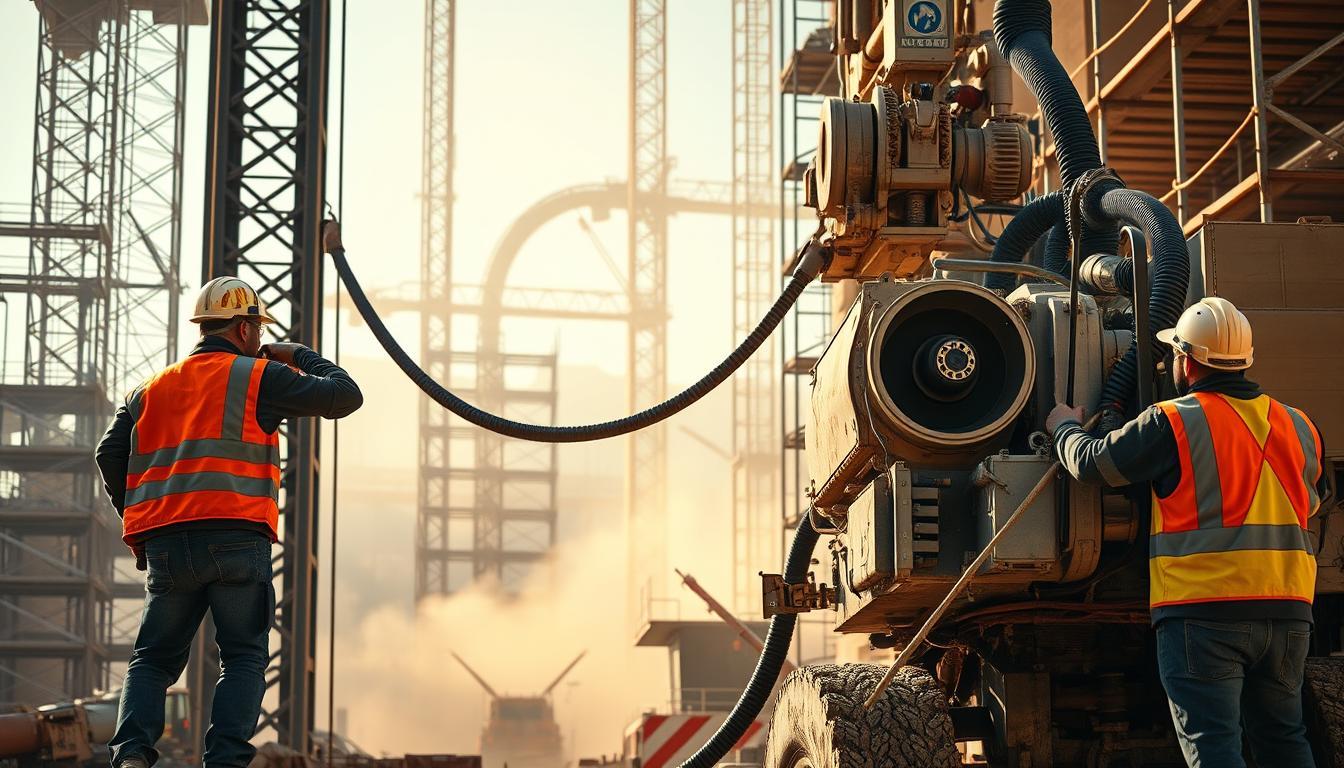
Maintenance and Inspections
Keeping pumps in good shape is essential. This means daily checks, regular maintenance, and inspections by experts.
- Check the hydraulic, electrical, and mechanical parts every day.
- Do routine tasks like lubrication and cleaning.
- Have experts do thorough inspections often.
Following these safety rules helps prevent accidents. It makes sure workers can do their jobs safely.
Permits and Licensing for Concrete Pump Operators
To work safely, concrete pump operators in South Africa must get the right permits and licenses. This is key for keeping construction sites safe.
Necessary Permits for Operation
Concrete pump operators in South Africa need special permits. These show they know safety rules well. They make sure operators follow the country’s laws and standards.
Types of Permits:
- Operational Permits: These are for using concrete pumps. They check if the operator is trained and certified.
- Safety Compliance Permits: These show the pump meets safety rules set by authorities.
Licensing Process Explained
The licensing process for concrete pump operators has a few steps. First, they need to go through training. This training covers both the theory and practice of using concrete pumps.
| Step | Description | Requirement |
|---|---|---|
| 1 | Training Program | Operators must complete a recognized training program. |
| 2 | Assessment | Operators are assessed on their competence in operating concrete pumps safely. |
| 3 | Certification | Upon passing the assessment, operators are issued a certification that is recognized by regulatory bodies. |
By following the rules for permits and licenses, concrete pump operators in South Africa can work safely. This also helps them avoid legal trouble.
Role of Manufacturers in Safety Compliance
Manufacturers lead the way in safety compliance. They design and make concrete pumps that meet strict safety rules. Their work is key to making sure the equipment works well and is safe.
Adherence to Industry Standards
Following industry standards is very important for safety. Manufacturers must make sure their concrete pumps follow safety rules. They do this through careful testing and checks to make sure the equipment is up to standard.
Key aspects of adherence to industry standards include:
- Compliance with national and international safety regulations
- Incorporation of safety features into the design of concrete pumps
- Regular updates to manufacturing processes to reflect the latest safety standards
Importance of Quality Assurance
Quality assurance is also very important. Manufacturers need to have strong quality checks to make sure every concrete pump is safe. This means doing thorough inspections, tests, and getting certifications.
| Quality Assurance Measure | Description | Benefit |
|---|---|---|
| Rigorous Testing | Comprehensive testing of concrete pumps under various conditions | Ensures equipment reliability and safety |
| Regular Inspections | Frequent checks on manufacturing processes and equipment | Identifies and rectifies potentially safety issues early |
| Certification Processes | Certification of concrete pumps to meet industry standards | Provides assurance of compliance with safety regulations |
By focusing on following industry standards and quality assurance, manufacturers are very important for safety in the concrete pumping world. Their work helps lower the chance of accidents and makes the workplace safer.
Site-Specific Safety Plans
Creating detailed site-specific safety plans is key to reducing risks with concrete pumps. These plans are made for each site, considering its unique dangers and challenges.
Developing a Safety Plan
Creating a safety plan starts with spotting possible dangers on the site. This includes risks from the concrete pump, the terrain, and the area around it. It’s also important to outline training and certification requirements for those using the pumps.
A good safety plan should have rules for emergencies, like equipment breakdowns or accidents. It should also explain how to safely use the equipment, including checks before starting and maintenance routines.
Assessing Site Risks
Checking site risks is an ongoing task that needs updates as the project goes on. It’s about spotting new dangers and finding ways to avoid them.
Good site risk assessment looks closely at the site’s conditions, like the terrain, weather, and other workers. Knowing these details helps companies plan better to keep everyone safe.
Worker Training and Certification
The safe and efficient use of concrete pumps depends on good training and certification. These programs teach operators how to use the equipment safely and well.
Importance of Training Programs
Training for concrete pump operators is key for keeping job sites safe. These programs cover many topics, like how to use the equipment, safety rules, and what to do in emergencies. With good training, construction sites can be much safer.
Also, training helps operators grow professionally. It lets them work better and faster. This makes the whole construction project more productive.
Certification Processes for Operators
The certification process for concrete pump operators includes both theory and practice tests. These tests make sure operators know how to use the pumps safely. Certification is very important to show that operators are ready for their job.

After passing the certification, operators get a certificate. This certificate proves they are skilled and ready for work. It’s also needed to follow regulatory standards and keep the work area safe.
Equipment Safety Features
It’s key for operators to know about the safety features of concrete pumps. This knowledge helps prevent accidents and keeps the work area safe. Modern concrete pumps have many safety features to lower risks.
Importance of Safety Mechanisms
Safety mechanisms in concrete pumps are vital for protecting workers and the public. They help avoid mechanical failures and mistakes by operators, which are common causes of accidents.
Key benefits of safety mechanisms include:
- Prevention of mechanical failures
- Reduction in operator errors
- Enhanced safety for workers and the public
Common Features in Concrete Pumps
Concrete pumps have many safety features, like emergency stop systems, overload protection, and safety sensors. These work together to ensure safe use and prevent accidents.
“The integration of safety features in concrete pumps is a critical step towards achieving a safe working environment. By understanding and utilizing these features, operators can significantly reduce the risk of accidents.”
Some common safety features in concrete pumps include:
| Safety Feature | Description | Benefit |
|---|---|---|
| Emergency Stop System | A system that allows for immediate shutdown of the pump in case of an emergency. | Prevents accidents and reduces injury severity. |
| Overload Protection | A mechanism that prevents the pump from operating beyond its capacity. | Reduces the risk of mechanical failure. |
| Safety Sensors | Sensors that detect possible hazards and alert the operator. | Enhances situational awareness and prevents accidents. |
Knowing about these safety features helps operators lower accident risks. This makes the work environment safer. Training and certification programs are also key. They ensure operators know the latest safety features and best practices.
Emergency Protocols for Concrete Pumping
Having good emergency plans is key for safe concrete pumping. Even with careful planning, accidents can happen. It’s important to be ready for them.
Preparing for Accidents and Incidents
It’s vital to prepare for accidents and incidents. This means having plans ready, doing drills, and training everyone. These plans should focus on the risks of concrete pumping, like equipment failure and structural collapses.
Training and drills are important. They make sure workers know what to do in an emergency. This includes how to evacuate, give first aid, and use emergency gear.
Response Plans for Emergencies
Emergency response plans need to be detailed and practiced. They should cover how to evacuate, give first aid, and call for help. It’s important that everyone on site knows these plans and that they’re updated often.
These plans should also name who is in charge during an emergency. Knowing who to follow helps everyone work together better.
With strong emergency plans, concrete pumping can be safer. This protects everyone working on the site.
Regular Safety Audits and Inspections
Construction companies must focus on regular safety checks for concrete pumps. This helps spot hazards and equipment problems early. It prevents big issues later on.
Importance of Routine Checks
Routine checks are key to keeping concrete pumps safe and in good shape. Regular inspections find wear and tear, lowering accident risks. They also make sure safety rules are followed.
Regular safety audits help find ways to improve safety plans. They also offer specific training to workers. This makes job sites safer for everyone.
Best Practices for Auditing
Good auditing means regular checks, detailed checklists, and quick action on findings. Comprehensive checklists should cover everything from how the pump works to emergency plans.
It’s important to have trained people do the audits. They make sure everything is checked well and that problems are fixed right away.
Following these best practices helps South African construction companies. They improve safety, lower accident risks, and meet safety standards for concrete pumps.
Future Trends in Concrete Pump Regulations
The future of concrete pump rules in South Africa will be shaped by new safety standards and tech advancements. As the construction world changes, it’s key to keep up with new rules and standards.
Advancements in Safety
New safety standards will use the latest tech, like automation and remote monitoring. These will help make job sites safer for workers and the public.
Technology-Driven Compliance
Technology is changing how companies follow rules. Digital tools for reporting and training simulators are becoming common. These help make sure operators are trained and certified right.
As the industry grows, it’s vital for companies to know about new concrete pump rules. This includes safety and tech updates. By staying informed, they can keep their work places safe and follow the rules, helping their projects succeed.
FAQ
What are the key regulations governing the use of concrete pumps in South Africa?
What training is required for concrete pump operators in South Africa?
How often should concrete pumps be inspected and maintained?
What are the common safety features found in modern concrete pumps?
Why are site-specific safety plans important for concrete pumping operations?
How do regulatory bodies in South Africa ensure compliance with safety standards for concrete pumps?
What role do manufacturers play in ensuring the safety of concrete pumps?
What are the benefits of regular safety audits and inspections for concrete pumping operations?
Note: Prices and specifications shown are for reference only and may change without notice. For the latest information, please contact Transtech directly on 021 948 4746.