

You might not think about them often, but waste management vehicles are key to keeping your community clean.
Every day, thousands of tons of waste are picked up and taken away. This keeps your streets and neighborhoods clean and safe.
In the United States, millions of people depend on these services. Garbage trucks are built to handle this job well. They use special tools to collect and pack waste.
Learning how these vehicles work helps us see their importance. They play a big role in keeping us healthy and the environment safe.
The Role of Garbage Trucks in Waste Management
Garbage trucks are key to keeping your community clean and healthy. These waste collection vehicles pick up and move waste to places where it can be disposed of properly. They play a big role in keeping us safe and protecting the environment.
Understanding Waste Collection Systems
Waste collection systems differ from place to place. They often use a mix of refuse trucks and sanitation trucks for different types of waste. In homes, rear-loader trucks are common, while businesses use front-loader trucks.
Knowing how these systems work helps us see the effort that goes into managing waste. It shows how complex and important waste management is.
The way waste is collected affects how clean our communities stay. Effective routing and scheduling are key. They make sure waste is picked up on time, keeping our areas clean and free of mess.
Importance of Timely Garbage Pickup
Getting garbage picked up on time is vital. It stops waste from building up, which can attract pests and make areas dirty. Regular pickups by garbage trucks help keep our communities healthy and clean.
Also, timely waste collection helps recycling efforts. It makes sure recyclables are processed right and on time. This saves resources and reduces waste’s impact on the environment.
Types of Garbage Trucks Used Today
Effective waste management uses different garbage trucks. Each has special features. You can see these differences in residential versus commercial waste collection trucks.
Front Loader Trucks
Front loader trucks are used for commercial waste. They have a front mechanism that lifts and empties dumpsters. This is great for businesses with a lot of waste.
Key Features of Front Loader Trucks:
- Automated dumping process
- Can handle large commercial dumpsters
- Perfect for construction and big commercial sites
Rear Loader Trucks
Rear loader garbage trucks are good for both homes and businesses. Waste goes in the back, either by hand or small machines.
Key Features of Rear Loader Trucks:
- Manual or semi-automated loading
- Works for many waste collection needs
- Good for both city and country areas
Side Loader Trucks
Side loader trucks are for home curbside pickup. They have an arm that grabs and empties trash cans. This makes collection easy and cuts down on labor.
Key Features of Side Loader Trucks:
- Automated collection process
- Best for home curbside pickup
- Less manual work needed
The table below shows the main differences between these garbage trucks:
| Type of Truck | Primary Use | Loading Mechanism |
|---|---|---|
| Front Loader | Commercial | Front-mounted mechanism |
| Rear Loader | Residential/Commercial | Manual or semi-automated rear loading |
| Side Loader | Residential curbside | Automated side arm |
How Garbage Trucks Operate Efficiently
Garbage trucks play a key role in keeping our communities clean. They do more than just pick up trash. Their efficiency is vital for effective waste management.
Route Optimization Techniques
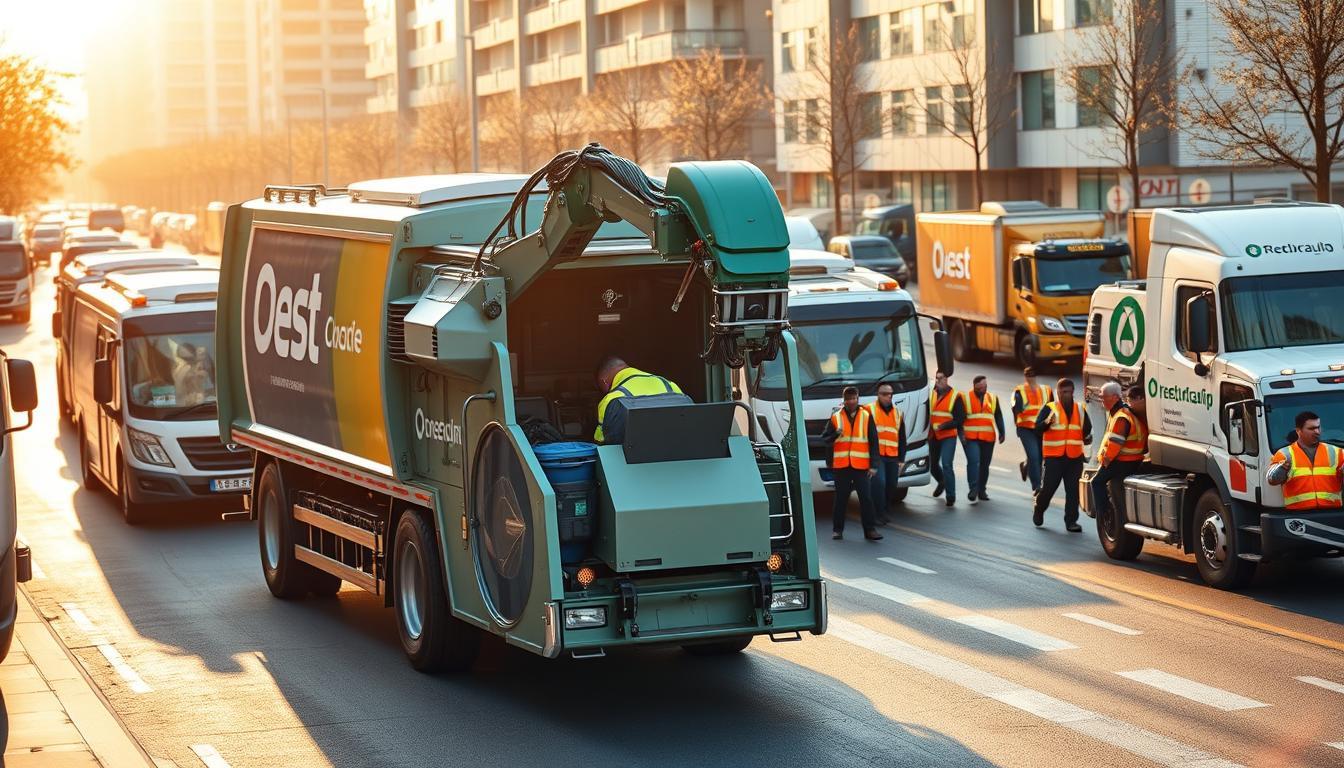
Today’s garbage trucks use smart route planning to save fuel and cut costs. They analyze traffic, road conditions, and schedules to find the best paths.
This smart planning helps garbage trucks in several ways:
- It cuts down on fuel use, which means less pollution and lower costs.
- It shortens travel times, making waste collection more efficient.
- It helps keep customers happy by sticking to their collection times.
The Role of Technology in Operations
Technology is a big help for garbage trucks. Many are now equipped with GPS, route planning software, and other digital tools. These tools make their work easier and more efficient.
Some important technologies for garbage trucks include:
| Technology | Description | Benefits |
|---|---|---|
| GPS Tracking | Monitors the location and status of garbage trucks in real-time. | Improves route optimization, reduces fuel consumption. |
| Route Optimization Software | Analyzes data to determine the most efficient routes for waste collection. | Reduces travel time, lowers emissions. |
| Digital Waste Management Systems | Manages waste collection schedules, customer information, and operational data. | Enhances customer service, improves operational efficiency. |
Thanks to these technologies, garbage trucks can work better. They reduce their environmental impact and make waste management more effective.
Environmental Benefits of Effective Waste Collection
Garbage trucks do more than just pick up trash. They play a big role in keeping our environment clean and healthy. Their work helps us all live in a better place.
Reducing Landfill Waste
Using garbage collection trucks helps cut down landfill waste. This is good because landfills are bad for the environment. They pollute and look ugly.
- Less methane, a harmful gas, is made.
- Soil and water stay cleaner.
- More land is available for good uses.
Promoting Recycling and Composting
Recycling trucks help communities recycle more. They sort waste so recyclables get recycled right. This saves resources and cuts down on pollution.
- People start to recycle more.
- It saves natural resources.
- Less energy is used to make new stuff.
Minimizing Traffic Congestion
Sanitation trucks also help with traffic. They plan their routes well. This means fewer cars on the road, less traffic, and less pollution.
Garbage trucks have a big impact on our environment. They help keep our community clean and healthy. Good waste management is essential for a better place to live.
Challenges Faced by Garbage Truck Operators
Garbage truck operators face many daily challenges. They must navigate crowded urban areas and handle different types of waste. This is a complex task.
Navigating Urban Areas
Navigating urban areas is a big challenge. Narrow streets, heavy traffic, and parked cars make it hard to move waste collection vehicles. Drivers need to be very skilled to avoid damage or delays.
Urban areas also have strict rules and tight schedules for waste collection. This adds more complexity to their job.
Dealing with Hazardous Waste
Handling hazardous waste is another big challenge. Refuse trucks sometimes find materials that need special care. Operators must know how to handle these safely to avoid accidents and harm to the environment.
Not disposing of hazardous waste properly can harm health and the environment. So, garbage truck operators play a key role in keeping everyone safe.
To tackle these challenges, operators need good training and the right tools. This includes software for better routes and safety gear for hazardous materials.
Innovations in Garbage Truck Design
The newest garbage trucks have cool features that help the planet and keep drivers safe. As we deal with more waste, how garbage trucks are made is key.
Eco-Friendly Options
Today’s garbage trucks are made to be kinder to the Earth. They use fuels like compressed natural gas (CNG) or electric power. This cuts down on pollution and saves money.
Eco-friendly garbage trucks also have smart tech like regenerative braking. This tech turns moving energy into electricity, making them more fuel-efficient.

Advanced Safety Features
Modern garbage trucks also focus on safety. They have enhanced visibility systems like backup cameras and sensors. These help avoid accidents.
Some trucks have systems that warn drivers about dangers, like people or cars. This lowers the chance of crashes.
These improvements will keep getting better. Soon, garbage trucks will be safer and better for the planet.
The Impact of Garbage Trucks on Public Health
Garbage trucks are key to keeping our communities healthy. They help keep our environment clean and safe for everyone.
Reducing Pest Populations
Garbage trucks play a big role in controlling pests. They collect waste that pests like, like rodents and insects. If waste isn’t picked up, pests can multiply, spreading diseases.
Regular garbage collection has many benefits:
- It lowers the risk of disease
- It reduces pest problems
- It makes our living spaces cleaner
Preventing Contamination
Garbage trucks also stop contamination. They collect and dispose of waste well. This stops harmful stuff from getting into our water and soil.
Here’s how garbage trucks help our health:
| Aspect | Benefit |
|---|---|
| Reducing Pest Populations | It cuts down on disease and pests |
| Preventing Contamination | It keeps our water and soil clean |
Knowing how garbage trucks help us stay healthy is important. It shows how vital good waste management is for our community.
Community Engagement and Education
Educating people about waste management is key to a cleaner community. You help keep our environment clean by joining waste management efforts. This includes adopting sustainable practices.
Supporting Waste Management Efforts
You can help in many ways:
- Join community clean-up events. These are organized by local groups or waste agencies.
- Sort your waste correctly. This helps garbage trucks and recycling trucks do their job better.
- Use items that can be reused. This reduces waste and supports sustainability.
These actions help make your community cleaner. They also make waste management vehicles more effective.
Organizing Community Clean-Up Events
Community clean-up events are a great way to improve your neighborhood. Here’s how you can help:
- Reach out to your local waste agency or community group for event info.
- Volunteer to help out or join the clean-up efforts.
- Use social media or local boards to spread the word about these events.
Together, we can keep our community clean and healthy for all.
The Future of Garbage Trucks
You are witnessing a new era in waste collection, driven by innovations in garbage trucks. The industry is moving towards more efficient and environmentally friendly solutions.
Trends in Automation
Automation is changing the waste management sector. Automated garbage trucks are being developed to improve efficiency and reduce labor costs. These vehicles use advanced navigation systems and sensors to collect waste, minimizing human error and improving safety.
The benefits of automation in garbage trucks include:
- Increased operational efficiency
- Reduced labor costs
- Enhanced safety features
The Shift Towards Electric Vehicles
The waste management industry is also moving towards electric garbage trucks. These trucks offer a cleaner alternative to traditional diesel-powered vehicles. Electric trucks produce zero emissions, reducing air pollution and contributing to a healthier environment.
Some key advantages of electric garbage trucks are:
- Zero emissions
- Lower operating costs
- Reduced noise pollution
As the industry continues to adopt these innovations, you can expect to see more efficient and environmentally friendly garbage trucks on the roads.
Conclusion: The Essential Service of Garbage Trucks
Garbage trucks are key to keeping our communities clean and healthy. They are more than just vehicles. They are part of a system that depends on good technology and work.
Recognizing the Efforts of Waste Collectors
The people who drive these trucks work hard to keep our places clean. Their work is important for our health and the planet. By thanking them, we can help make our community better.
Get Involved in Your Community’s Waste Management
You can help by joining local clean-up efforts and supporting recycling. Your help can make waste collection better and our environment cleaner. Start today and join in on waste management efforts in your area.
FAQ
What is the primary function of garbage trucks in waste management?
What are the different types of garbage trucks used for waste collection?
How do garbage trucks contribute to reducing environmental impact?
What challenges do garbage truck operators face in their daily operations?
How are garbage trucks evolving to become more eco-friendly?
What role do garbage trucks play in protecting public health?
How can residents support waste management efforts in their community?
What is the future of garbage trucks in terms of technology and innovation?
How do waste collection vehicles, such as garbage trucks and recycling trucks, work together?
What is the significance of sanitation trucks in maintaining community cleanliness?
How do garbage collection trucks handle hazardous waste?
What are the benefits of using refuse trucks in waste management?
How do solid waste trucks contribute to environmental sustainability?
Note: Prices and specifications shown are for reference only and may change without notice. For the latest information, please contact Transtech directly on 021 948 4746.