
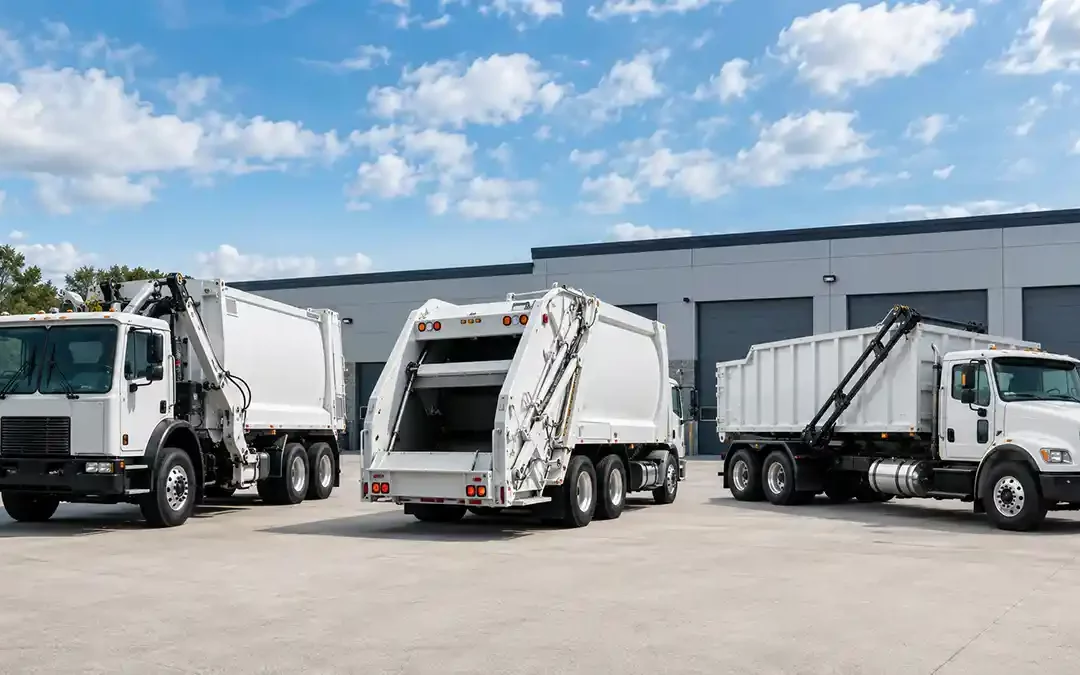
Types of Waste Disposal Trucks and What Each One Is Used For
The types of waste disposal trucks used on a site or route depend on the waste volume, access space, bin type and collection method. A residential street, shopping centre, factory, construction site and recycling facility all need different vehicles. Choosing the wrong truck can slow down collections, increase labour costs and create access problems.
This guide explains the main types of waste disposal trucks, how they work, and where each one fits best. It also helps you understand which truck may suit your waste collection, cleanup, recycling or bulk waste removal needs.
Why Different Waste Disposal Trucks Exist
Waste collection is not a one-size-fits-all service. A truck that works well for household wheelie bins may be unsuitable for a construction site. A vehicle built for commercial dumpsters may be too large for narrow residential roads.
Waste disposal trucks are designed around four main factors:
- Waste type: general waste, recyclables, garden waste, rubble, bulky waste or hazardous waste.
- Collection method: manual loading, bin lifting, side loading, front loading or container loading.
- Route type: residential roads, industrial parks, commercial properties or construction sites.
- Volume: small daily collections, high-volume commercial waste or heavy project waste.
Once you understand these differences, it becomes easier to match the right waste disposal truck to the job.
Main Types of Waste Disposal Trucks
The most common types of waste disposal trucks include front loaders, rear loaders, side loaders, compactor trucks, roll-off trucks, recycling trucks and specialised waste vehicles.
| Truck Type | Best Used For | Typical Waste Type | Main Benefit |
|---|---|---|---|
| Front loader truck | Commercial and industrial sites | General waste in large bins | Fast collection of large containers |
| Rear loader truck | Residential and mixed routes | Bagged waste and wheelie bins | Flexible loading from the back |
| Side loader truck | Residential wheelie bin routes | Household waste and recycling | Efficient kerbside collection |
| Compactor truck | High-volume collection routes | Compressible general waste | Reduces waste volume inside the truck |
| Roll-off truck | Construction, demolition and cleanups | Rubble, bulky waste and project waste | Moves large open containers |
| Recycling truck | Recycling collection services | Paper, plastic, cans and glass | Keeps recyclable materials separated |
| Specialised waste truck | Controlled or sensitive waste streams | Hazardous, medical, e-waste or liquid waste | Built for specific handling requirements |
1. Front Loader Waste Disposal Trucks
A front loader waste disposal truck is commonly used for commercial and industrial waste collection. It has hydraulic forks at the front of the vehicle. These forks slide into sleeves on a large waste container, lift the container over the cab, and tip the waste into the truck body.
Where front loader trucks are used
- Shopping centres
- Factories
- Office parks
- Apartment blocks
- Industrial yards
- Large commercial properties
Benefits of front loader trucks
- They handle large commercial bins.
- The driver can operate the loading system from the cab.
- They work well on planned commercial routes.
- They reduce manual lifting for collection teams.
- They suit high-volume, repeat waste collection.
A front loader is a good choice when a site has fixed waste containers and enough space for the truck to approach, lift and turn safely.
2. Rear Loader Waste Disposal Trucks
A rear loader truck collects waste from the back of the vehicle. Workers can load bags, bins or loose waste into the rear hopper. Some rear loaders also have bin lifters to empty wheelie bins with less manual handling.
Where rear loader trucks are used
- Residential streets
- Older suburbs with narrow access
- Small businesses
- Areas with mixed waste containers
- Routes where manual loading is still needed
Benefits of rear loader trucks
- They are flexible for different waste types.
- They can work in tighter areas than larger front loaders.
- They handle bags, bins and some bulky items.
- They suit mixed residential and commercial routes.
Rear loaders remain one of the most practical types of waste disposal trucks because they can handle many collection situations without needing highly standardised containers.
3. Side Loader Waste Disposal Trucks
A side loader truck collects waste from the side of the vehicle. Many side loaders use a mechanical arm to grab, lift and empty wheelie bins into the truck. The driver can often complete the collection without leaving the cab.
Where side loader trucks are used
- Residential wheelie bin routes
- Kerbside general waste collection
- Kerbside recycling collection
- Suburbs with standardised bin placement
Benefits of side loader trucks
- They speed up wheelie bin collection.
- They reduce manual lifting.
- They can lower staffing needs on suitable routes.
- They keep the driver inside the cab for much of the route.
Side loaders work best when bins are placed correctly and routes are consistent. They are less suitable for areas where bins are blocked by parked cars, trees or street furniture.
4. Compactor Waste Disposal Trucks
A compactor truck compresses waste inside the truck body. This allows the vehicle to carry more waste before it needs to offload. Compaction is useful for general waste, packaging waste and other materials that can be compressed.
How compactor trucks work
Waste is loaded into the hopper. A hydraulic blade or plate pushes the waste into the body and compresses it. This reduces the volume of the load and gives the truck more usable capacity.
Benefits of compactor trucks
- They carry more waste per trip.
- They reduce the number of disposal trips.
- They improve route efficiency.
- They help control loose waste during transport.
Compactor trucks are common in municipal, commercial and private waste collection fleets. They are one of the core vehicle types used in modern waste management.
5. Roll-Off Waste Disposal Trucks
A roll-off truck carries large open containers, often called roll-off bins. The truck uses a hydraulic hoist, cable or hook system to load and unload the container. The bin can be left on-site and collected once full.
Where roll-off trucks are used
- Construction sites
- Demolition projects
- Large cleanups
- Factory waste removal
- Commercial renovation projects
- Bulk garden waste removal
Benefits of roll-off trucks
- They handle large volumes of waste.
- They allow bins to remain on-site during a project.
- They suit bulky and heavy waste.
- They make project waste removal easier to plan.
Roll-off trucks are ideal when waste builds up over days or weeks, rather than through daily bin collections.
6. Recycling Trucks
Recycling trucks are designed to collect recyclable materials while keeping them separate from general waste. Some recycling trucks collect one material type, while others have split bodies for more than one waste stream.
Common materials collected by recycling trucks
- Paper and cardboard
- Plastic packaging
- Glass
- Metal cans
- Mixed dry recyclables
Benefits of recycling trucks
- They support recycling programmes.
- They reduce contamination between waste streams.
- They help divert recyclable materials from landfill.
- They can collect from homes, businesses and recycling points.
Recycling trucks are a good fit for municipalities, shopping centres, schools, business parks and residential recycling routes.
7. Grapple Trucks
A grapple truck has a hydraulic claw or grab arm. It is used to pick up bulky or awkward waste that cannot be loaded easily by hand or standard bin lifters.
Where grapple trucks are used
- Tree branch removal
- Storm cleanup
- Illegal dumping cleanup
- Bulky waste collection
- Light construction debris removal
Grapple trucks are useful when waste is loose, heavy, irregular in shape or spread across an area.
8. Hazardous Waste Trucks
Hazardous waste trucks are built for waste that needs controlled handling. This can include chemical waste, certain industrial waste, contaminated materials and other regulated waste streams.
These vehicles may include sealed compartments, spill control systems, special tank bodies, warning markings and strict loading procedures. The exact truck design depends on the material being transported.
Why hazardous waste trucks are different
- They help prevent leaks and spills.
- They support controlled transport procedures.
- They protect drivers, the public and the environment.
- They are used for waste that cannot go into standard refuse trucks.
Hazardous waste should always be handled by licensed professionals using the correct equipment and disposal channels.
9. E-Waste Disposal Trucks
E-waste trucks collect electronic waste such as computers, printers, cables, batteries, screens and small electronic devices. E-waste must be handled carefully because it can contain valuable recyclable materials and components that should not end up in general landfill.
Where e-waste trucks are used
- Office cleanouts
- School and university collections
- IT asset disposal projects
- Retail collection points
- Municipal e-waste drives
Some e-waste collection vehicles include shelving, secure storage, covered loading areas or separated compartments to protect equipment during transport.
How to Choose the Right Waste Disposal Truck
Choosing between the types of waste disposal trucks starts with the job, not the vehicle. The right truck depends on what you need collected, how much waste there is, and how easily the truck can access the site.
Ask these questions first
- What type of waste needs to be collected?
- How much waste will be generated?
- Is the waste loose, bagged, in bins or in large containers?
- Is the site residential, commercial, industrial or construction-based?
- Is there enough space for the truck to turn, reverse and load?
- Does the waste need compaction, separation or special handling?
- Will collection happen once-off, weekly, daily or during a project?
Best Truck Type by Waste Collection Need
| Waste Collection Need | Recommended Truck Type | Why It Works |
|---|---|---|
| Commercial bin collection | Front loader | Handles large fixed containers quickly |
| Residential waste collection | Rear loader or side loader | Suits wheelie bins, bags and kerbside routes |
| Large cleanup project | Roll-off truck | Leaves a large container on-site |
| High-volume general waste | Compactor truck | Compresses waste to increase capacity |
| Recycling programme | Recycling truck | Keeps recyclable materials separate |
| Bulky loose waste | Grapple truck | Uses a grab arm for awkward materials |
| Controlled waste streams | Specialised waste truck | Designed for specific handling needs |
Safety Features in Modern Waste Disposal Trucks
Waste disposal trucks work around pedestrians, parked cars, workers, bin areas and busy access points. Good safety features matter because these vehicles stop, reverse and load many times a day.
Modern trucks may include:
- Rear-view and side-view cameras
- Proximity sensors
- Warning alarms
- Emergency stop controls
- Improved mirrors
- In-cab loading controls
- Hydraulic bin lifting systems
Automation can also reduce manual lifting and help workers spend less time standing near moving traffic.
Environmental Trends in Waste Disposal Trucks
Waste disposal truck design is changing as fleets look for lower emissions, lower fuel use and quieter collection routes. Electric refuse trucks, route optimisation tools and alternative fuels are becoming part of modern fleet planning.
Heavy-duty vehicle rules now include refuse haulers in broader emissions standards for vocational vehicles. EPA heavy-duty standards apply to vehicle categories such as refuse haulers, delivery trucks, public utility trucks and buses. Electric refuse models are also being developed for stop-start urban collection routes, where regenerative braking and quieter operation can be useful.
Common Mistakes When Choosing a Waste Disposal Truck
Many collection problems start with the wrong vehicle choice. A truck may have enough capacity but poor access. Another may fit the road but lack the right loading system.
Avoid these common mistakes:
- Choosing a truck before checking site access.
- Using a general waste truck for waste that needs separation.
- Underestimating the total waste volume.
- Ignoring bin type and loading method.
- Using a large truck where a smaller unit would work better.
- Failing to plan for recycling or bulky waste.
Final Thoughts
The main types of waste disposal trucks each serve a different purpose. Front loaders work well for commercial bins. Rear loaders are flexible for mixed routes. Side loaders suit standard wheelie bin collection. Compactor trucks reduce waste volume. Roll-off trucks handle large project waste. Recycling and specialised trucks support separated or controlled waste streams.
When you match the truck to the waste type, site access and collection volume, the job becomes faster, safer and easier to manage. If you are planning a cleanup, commercial collection route or bulk waste removal project, start by identifying the waste first. The right truck choice follows from there.
FAQs About Types of Waste Disposal Trucks
What are the main types of waste disposal trucks?
The main types of waste disposal trucks include front loaders, rear loaders, side loaders, compactor trucks, roll-off trucks, recycling trucks, grapple trucks and specialised waste trucks.
Which waste disposal truck is best for commercial waste?
A front loader is often best for commercial waste because it can lift and empty large fixed containers quickly. It suits shopping centres, factories, office parks and apartment blocks.
Which truck is best for household waste collection?
Rear loaders and side loaders are common for household waste collection. Rear loaders are flexible for mixed routes, while side loaders work well with standard wheelie bins placed along the kerb.
What is a roll-off waste truck used for?
A roll-off waste truck is used to transport large open containers. It is common on construction sites, demolition sites, renovation projects and large cleanups.
What is the difference between a compactor truck and a normal waste truck?
A compactor truck compresses waste inside the truck body. This allows it to carry more waste before offloading. A non-compactor truck may carry loose waste without reducing its volume.
Can recycling trucks collect more than one material?
Yes. Some recycling trucks have split bodies or separate compartments, allowing them to collect different recyclable materials without mixing them.
Are electric waste disposal trucks available?
Yes. Electric refuse trucks are available in some markets and are being used for urban routes. They are quieter and produce no tailpipe emissions during operation.
How do I choose the right waste disposal truck?
Start with the waste type, volume, bin type and site access. Then match the truck to the collection method, route and loading requirements.
Note: Prices and specifications shown are for reference only and may change without notice. For the latest information, please contact Transtech directly on 021 948 4746.